





LONG LIVE THE LIVING SCHOOL (SÃO PAULO)
Tomie Ohtake Institute – São Paulo
10 June to 9 August, 2026
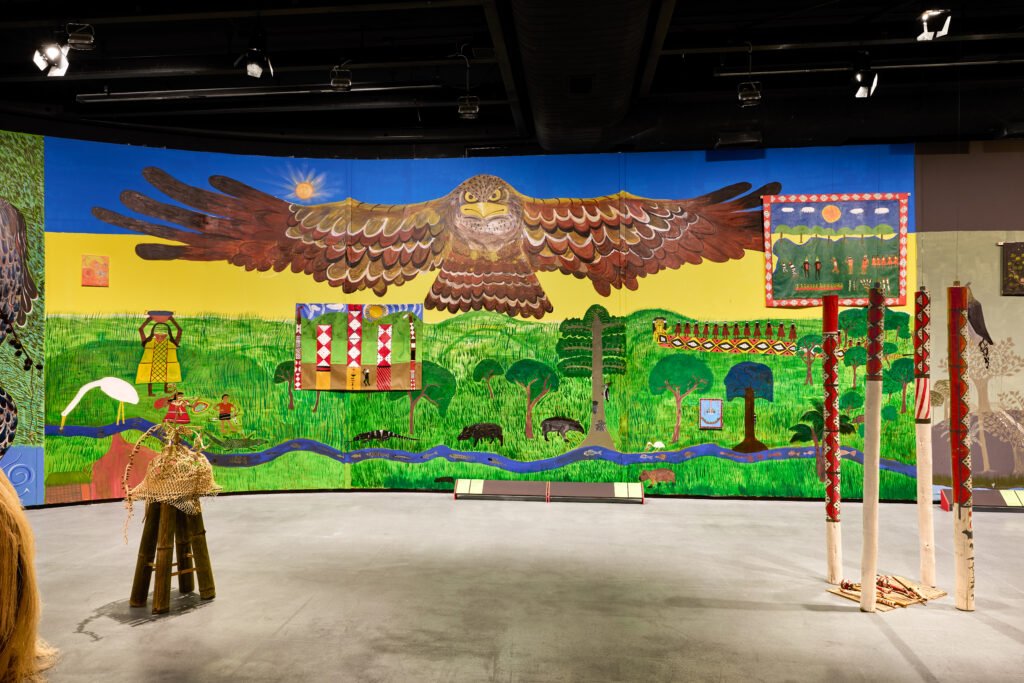
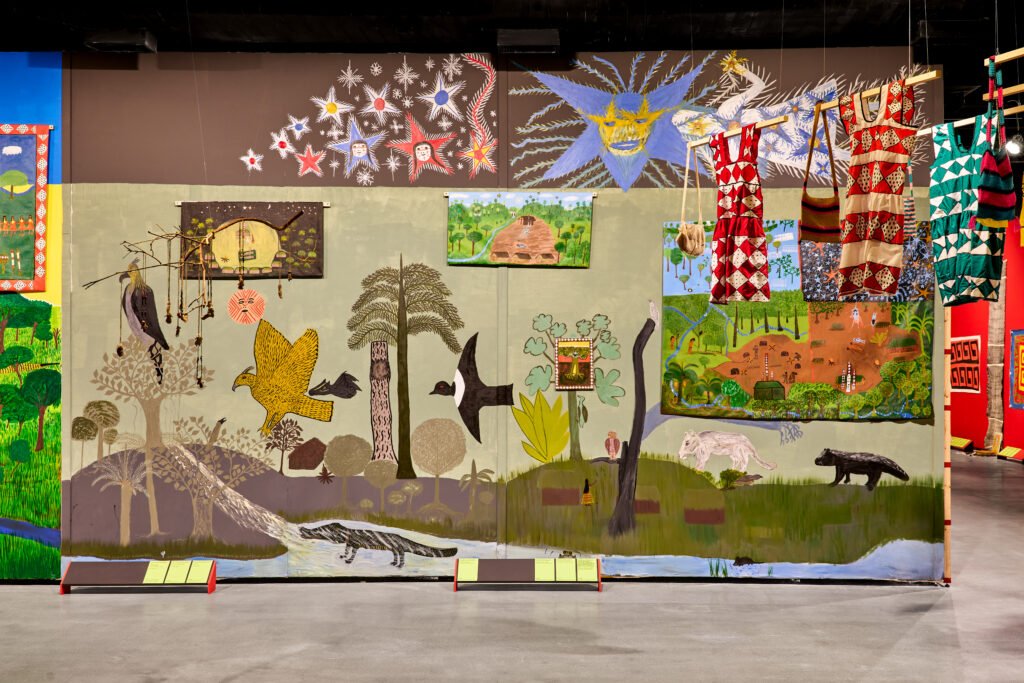
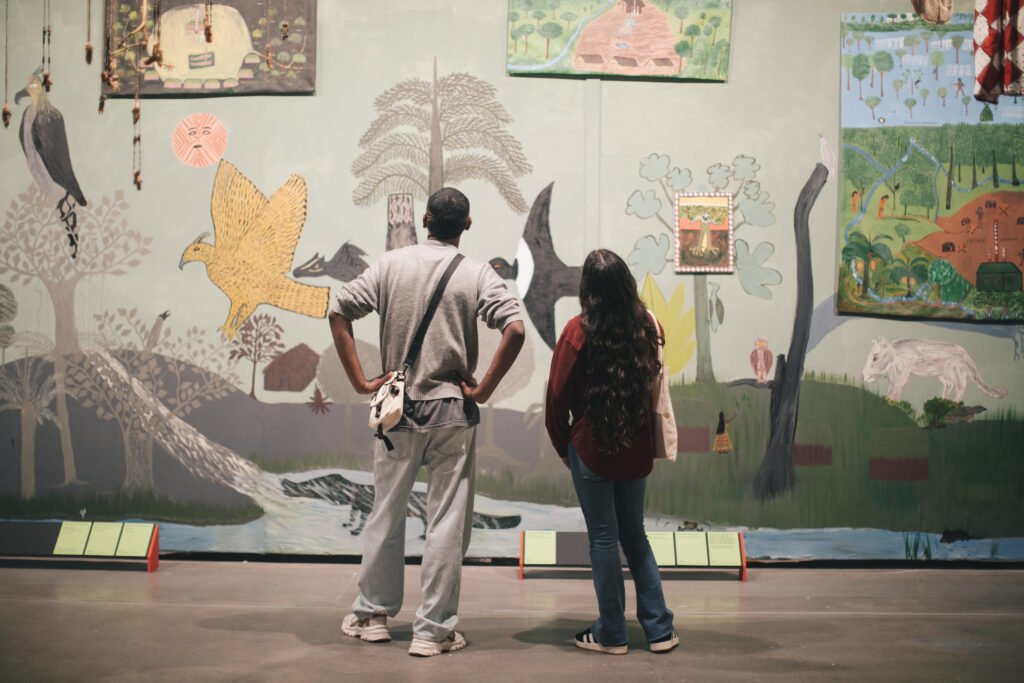
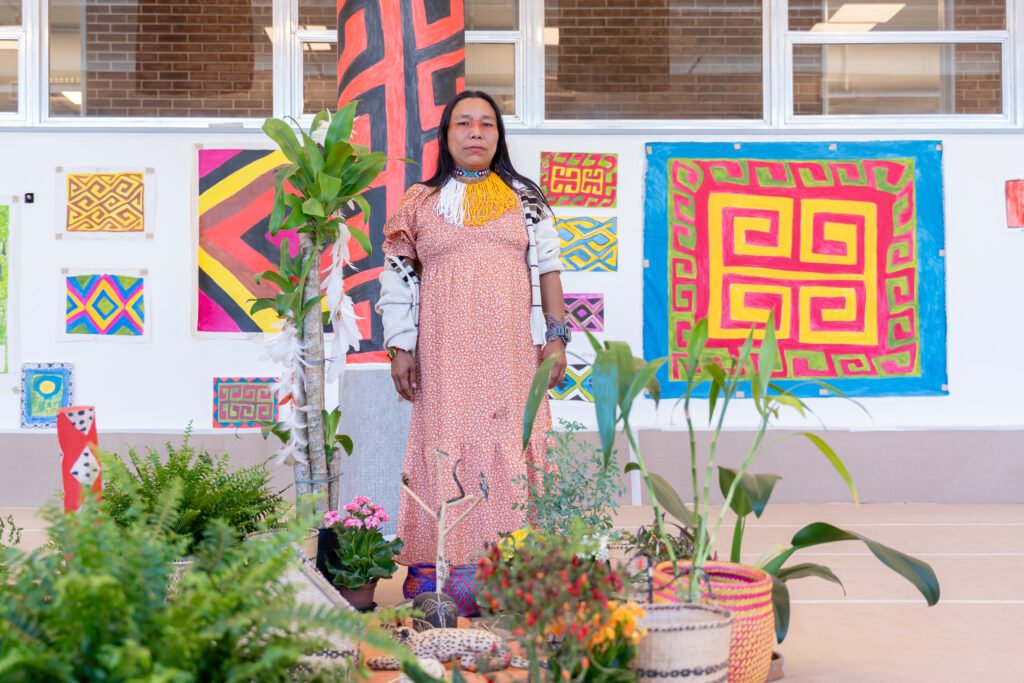
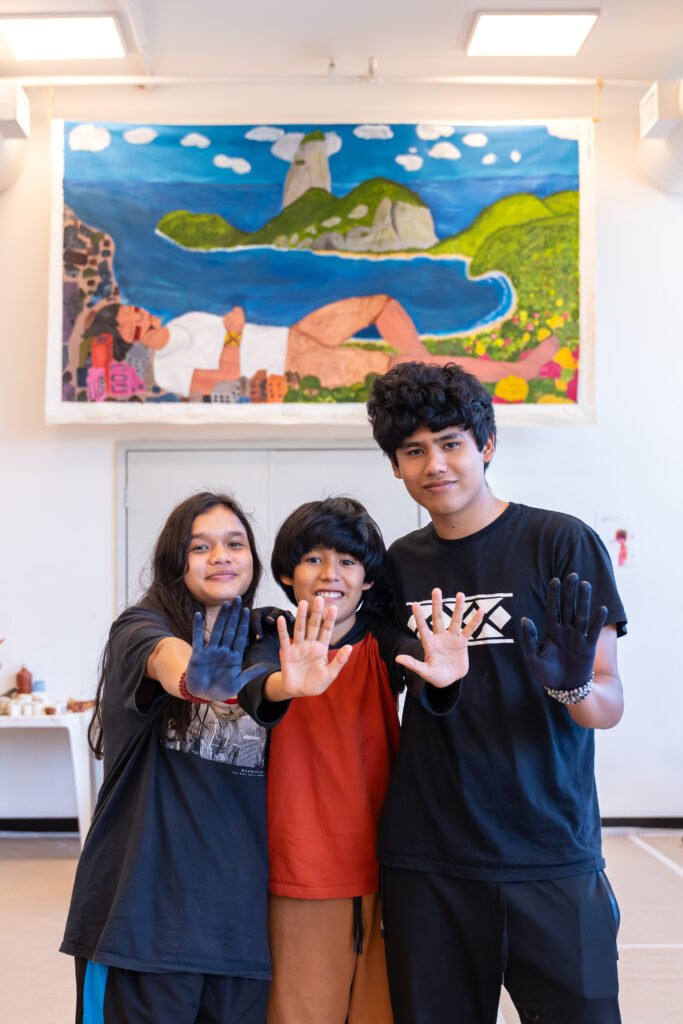
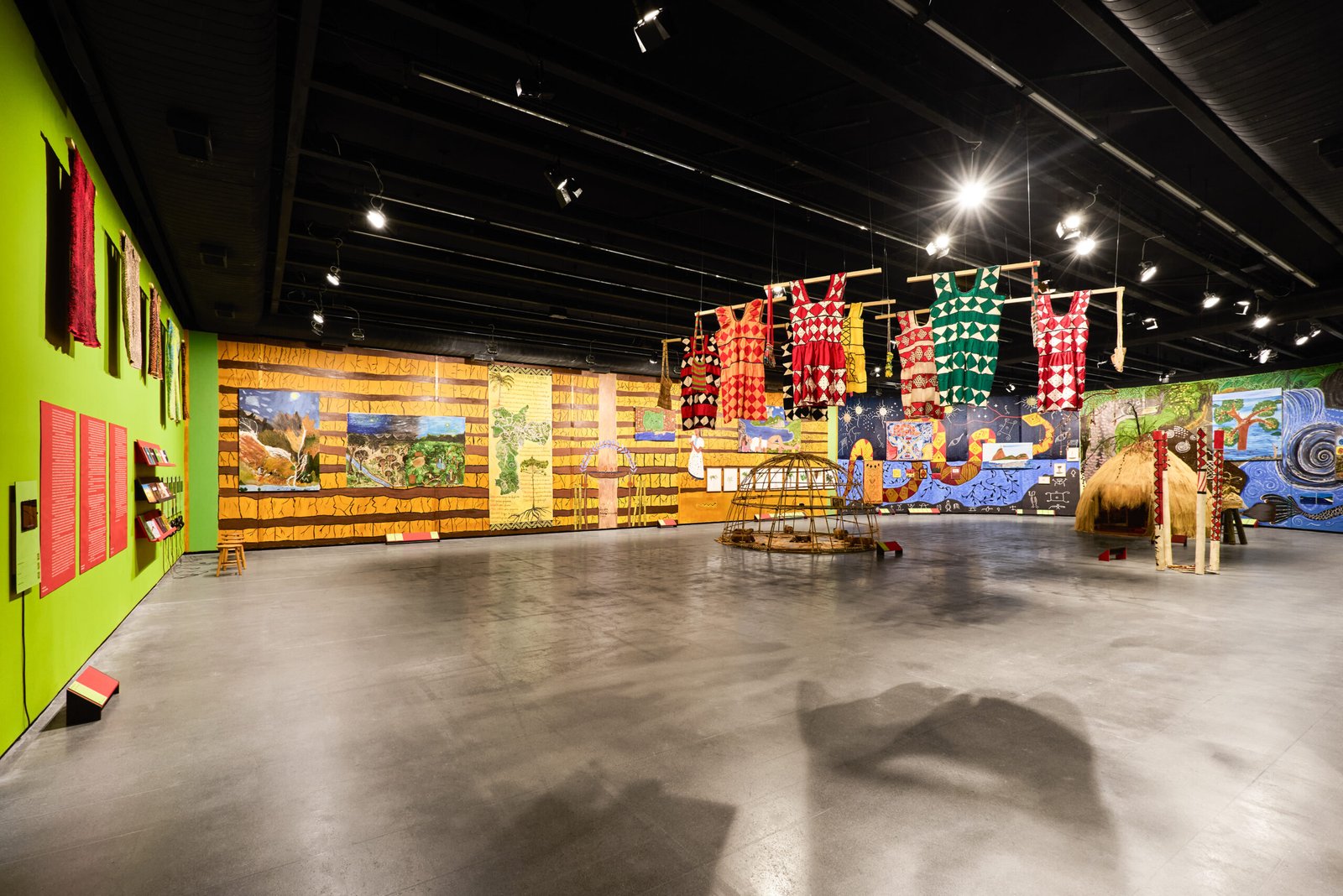
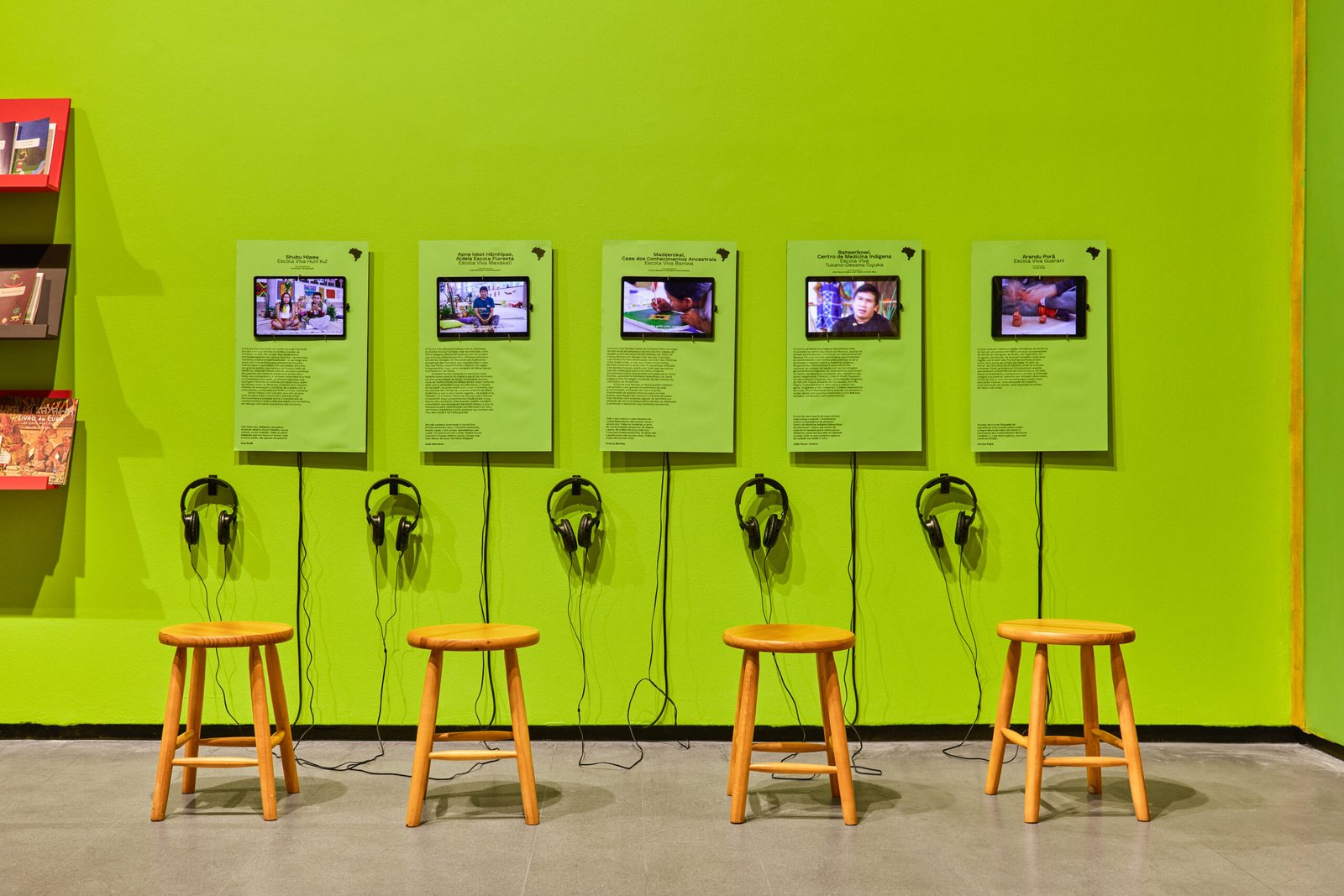
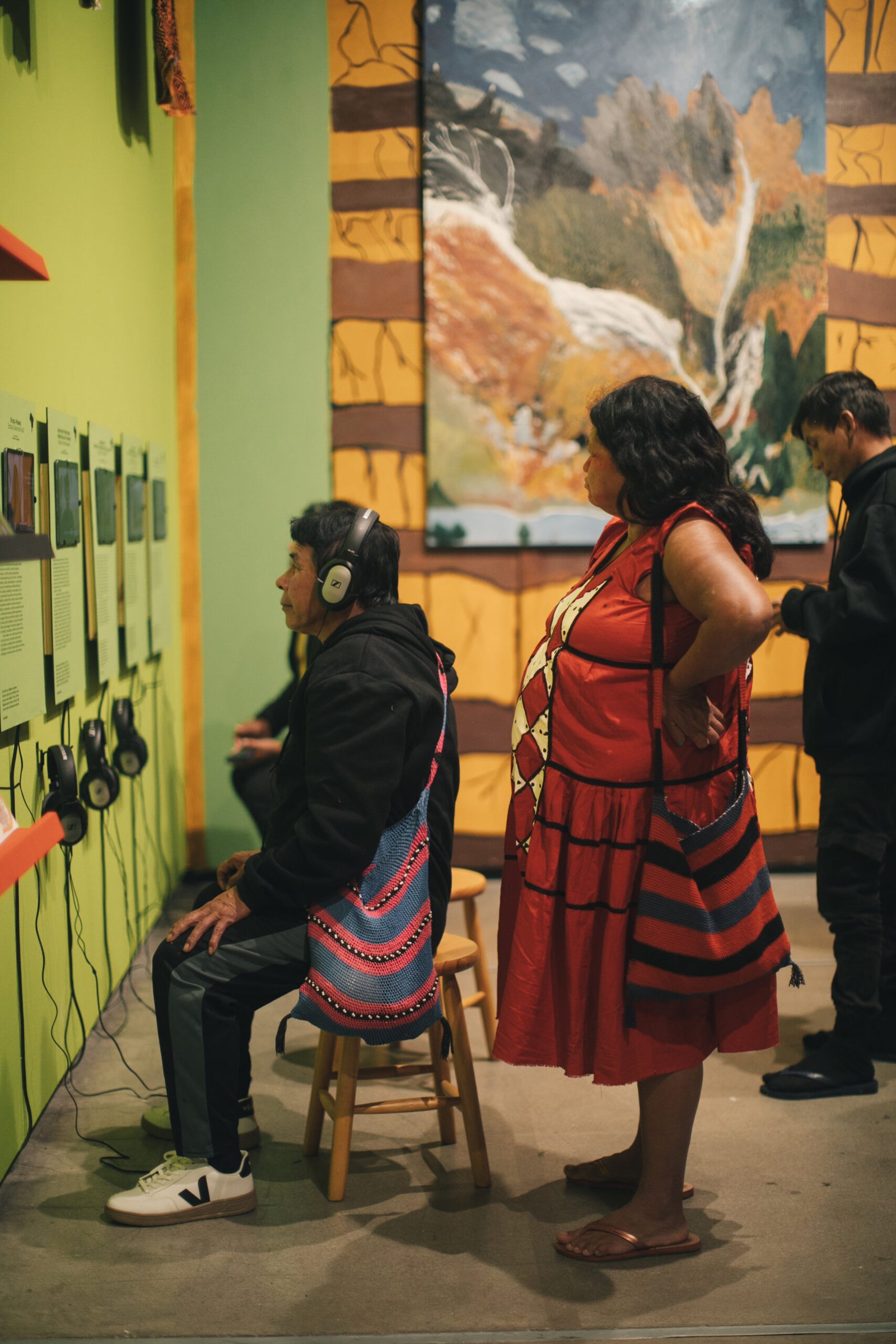
Between June and August 2026, the Tomie Ohtake Institute, in São Paulo, hosted the second edition of LONG LIVE THE LIVING SCHOOL exhibition, an exhibition that brought together the art and ideas of the five Living Schools – those of the Maxakali, Huni Kuin, Guarani, Baniwa and Tukano-Desana-Tuyuka peoples.
Presented through a partnership between Selvagem and the Tomie Ohtake Institute, and curated by Cristine Takuá, coordinator of the Living Schools, the exhibition was a direct outcome of the Indigenous artistic residency Living School House, which occupied the Museum of Modern Art of Rio de Janeiro (MAM Rio) for fifteen days in October 2025. It also continued the presence of Living Schools art within Selvagem’s activities, following the first Long Live the Living School exhibition, held in Rio de Janeiro, between December 2023 and January 2024.
Living Schools movement is the name of a movement supporting the strengthening and transmission of traditional knowledge across five indigenous territories. We make a monthly financial contribution of 10,000 BRL (1,900 USD) to each Living School and coordinate joint initiatives. Visit the Living Schools page to support this movement and learn more about the steps that led to the new exhibition.
PHOTO GALLERY
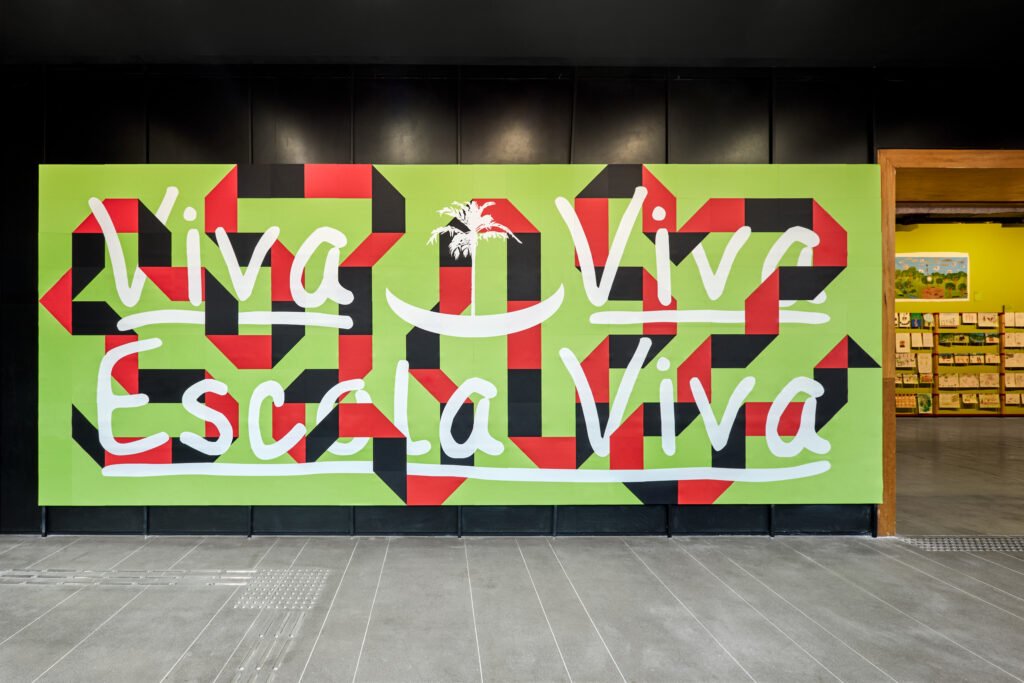
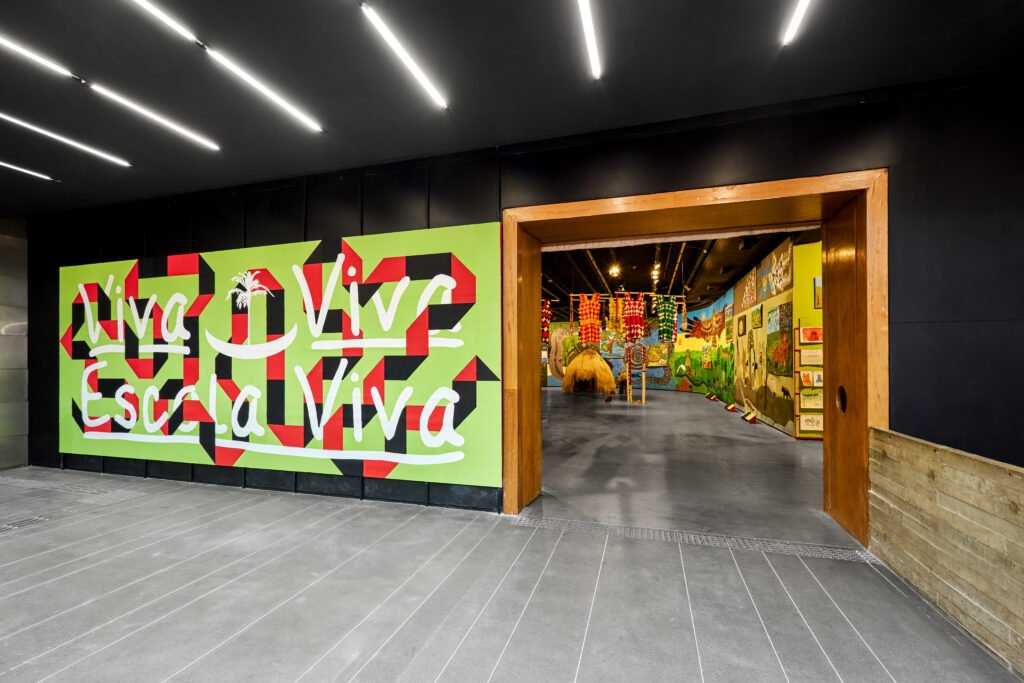
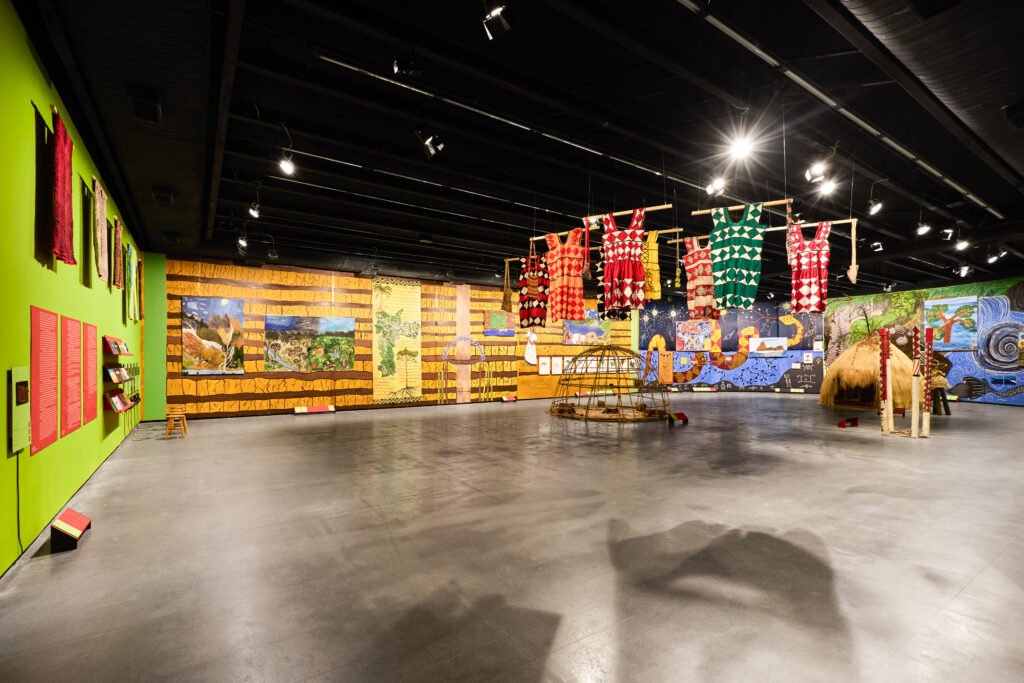
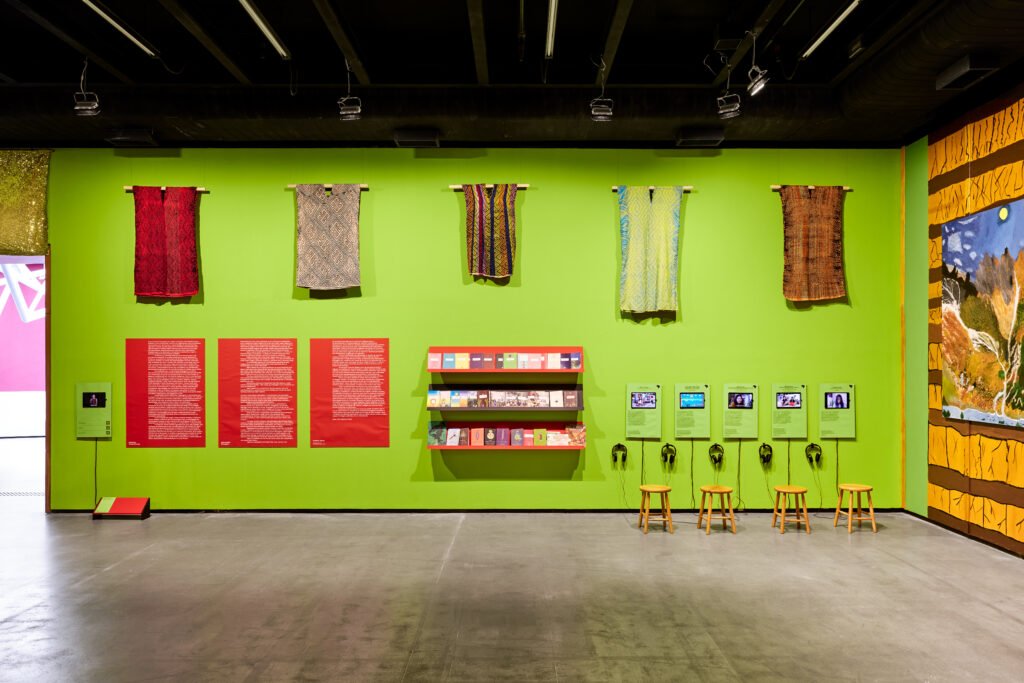
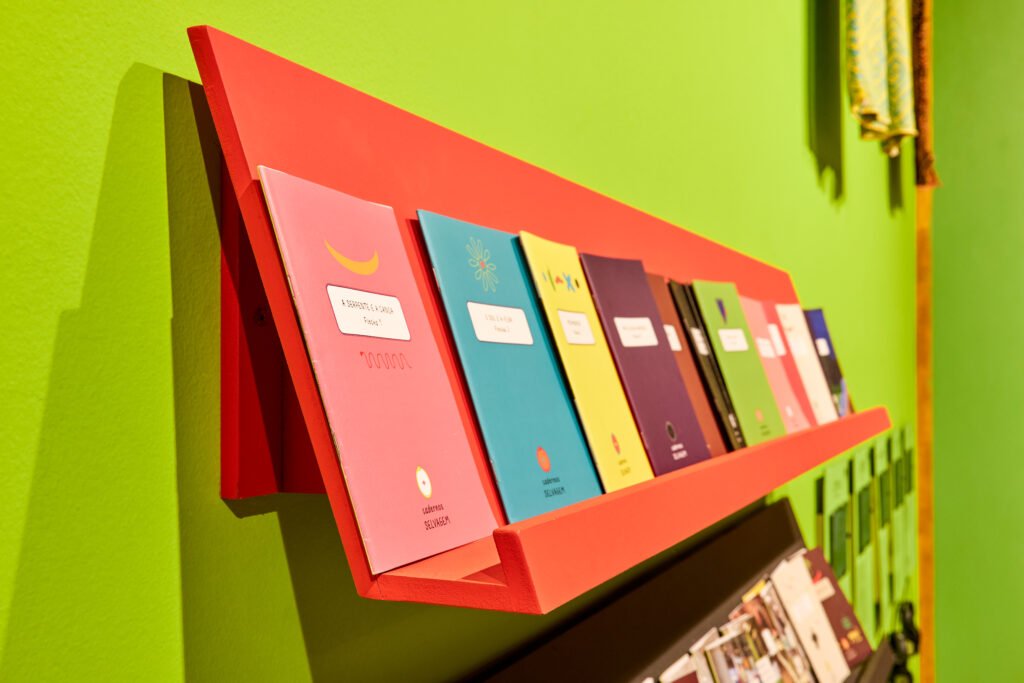
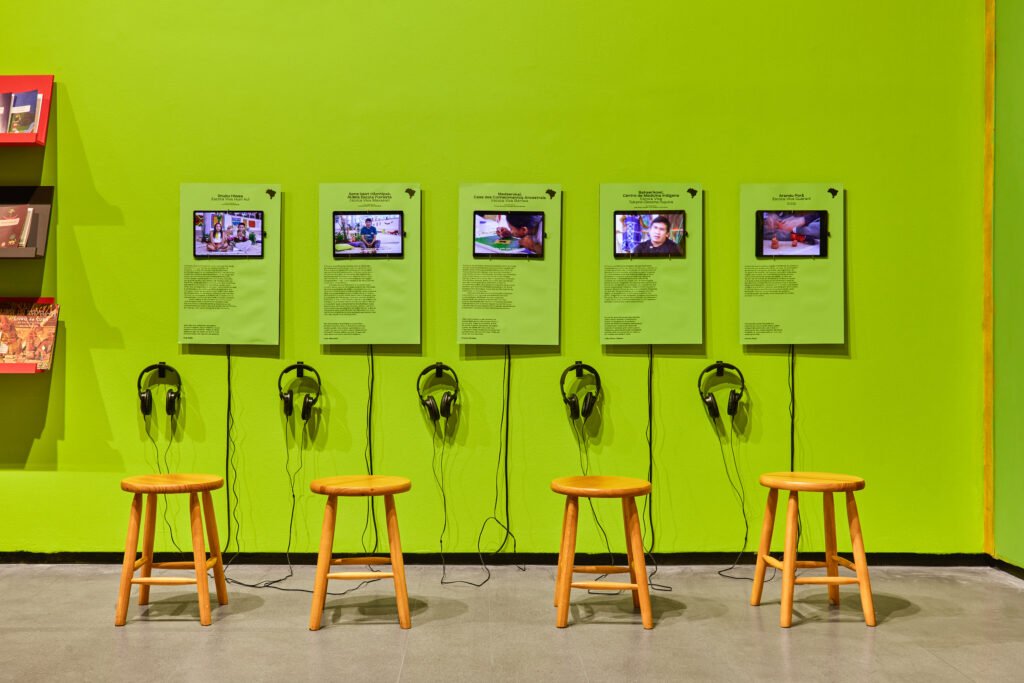
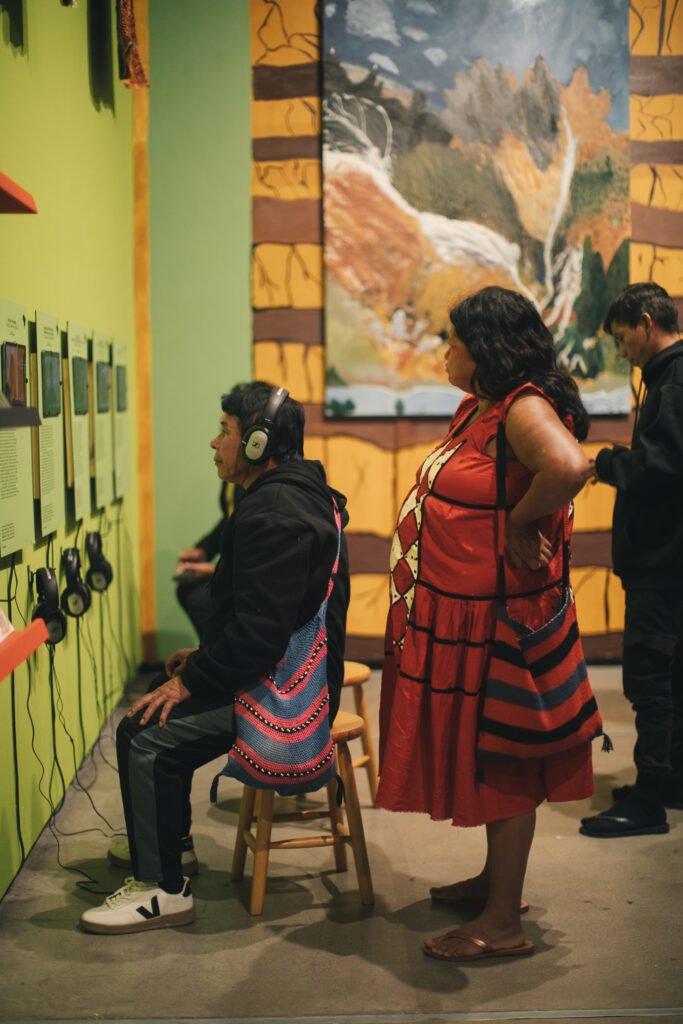
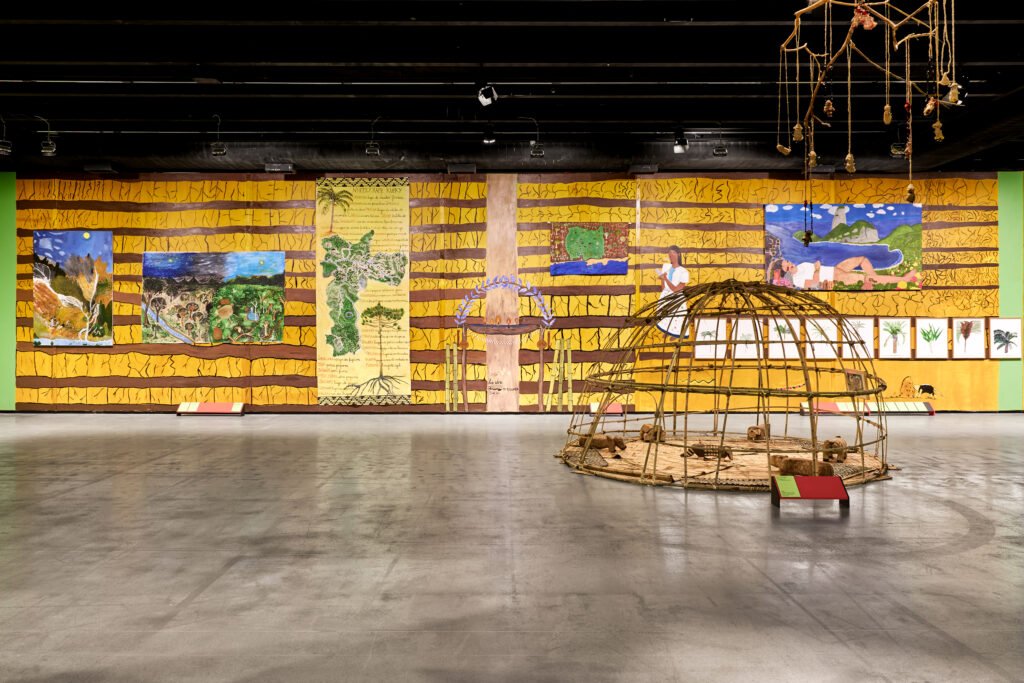
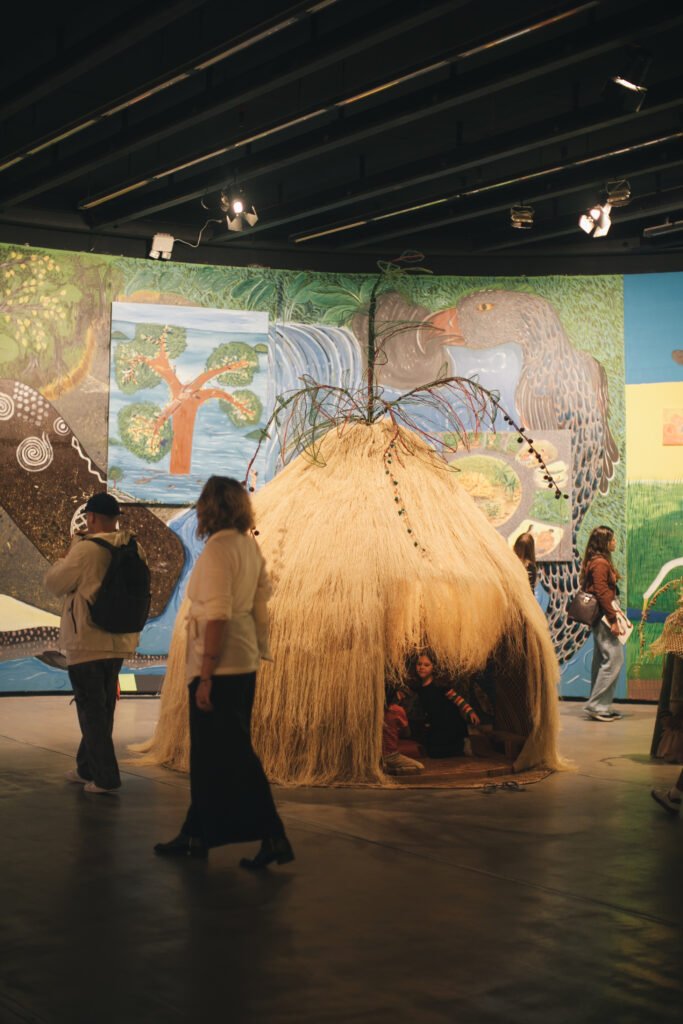
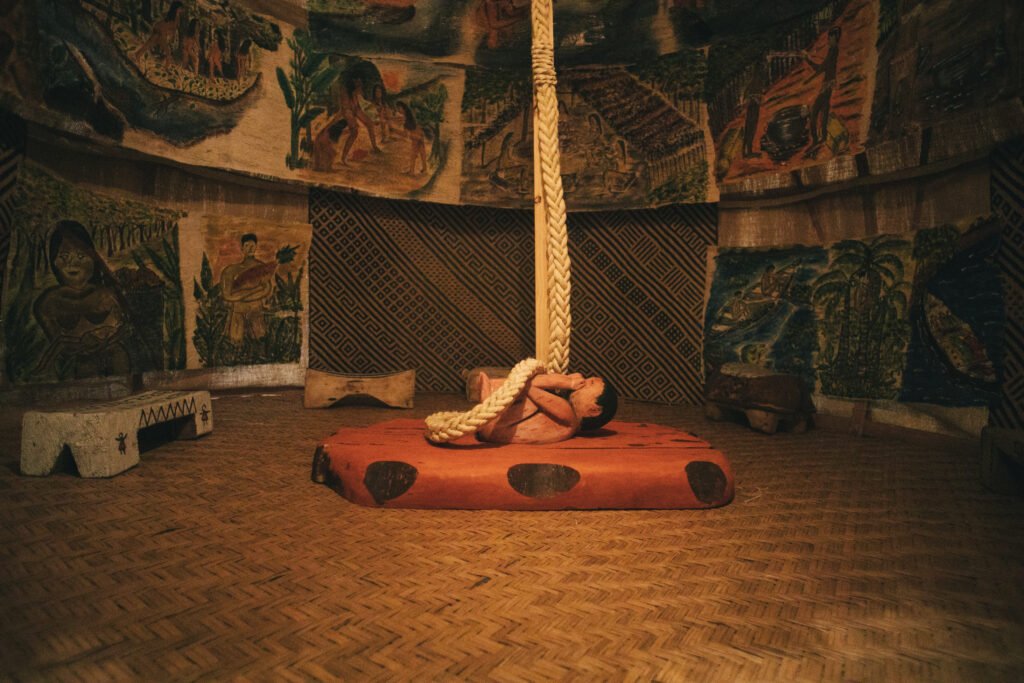
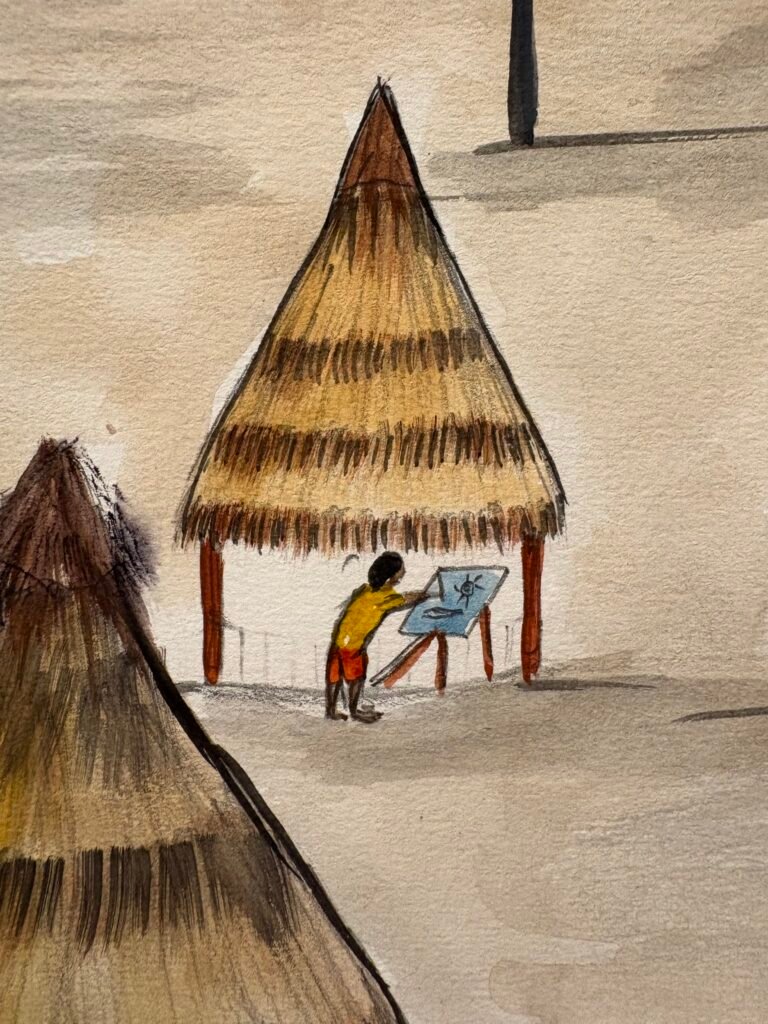
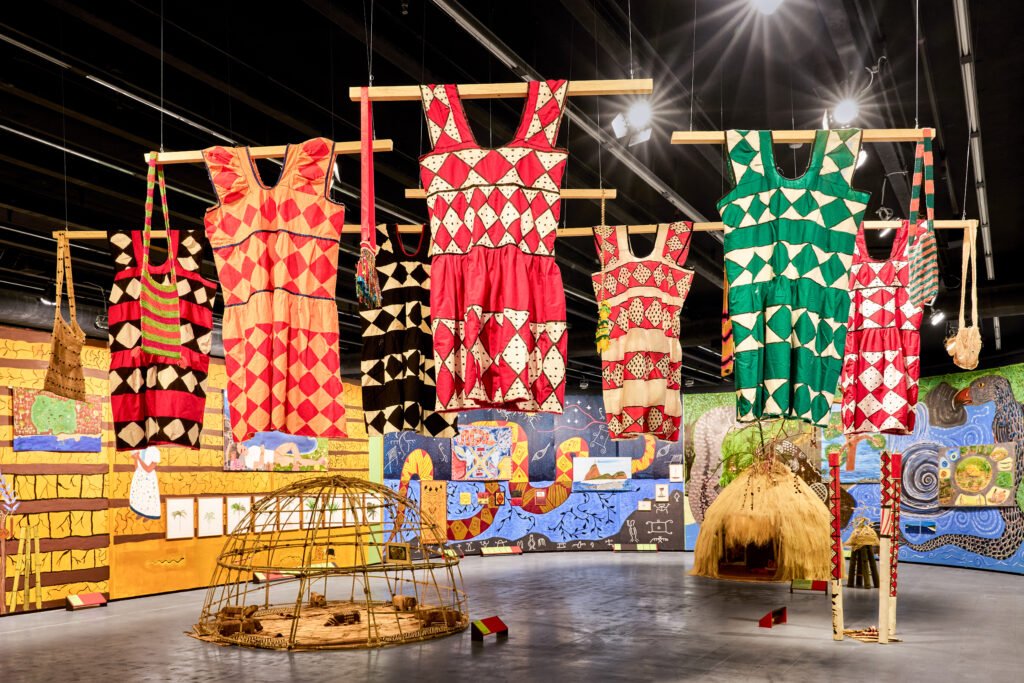
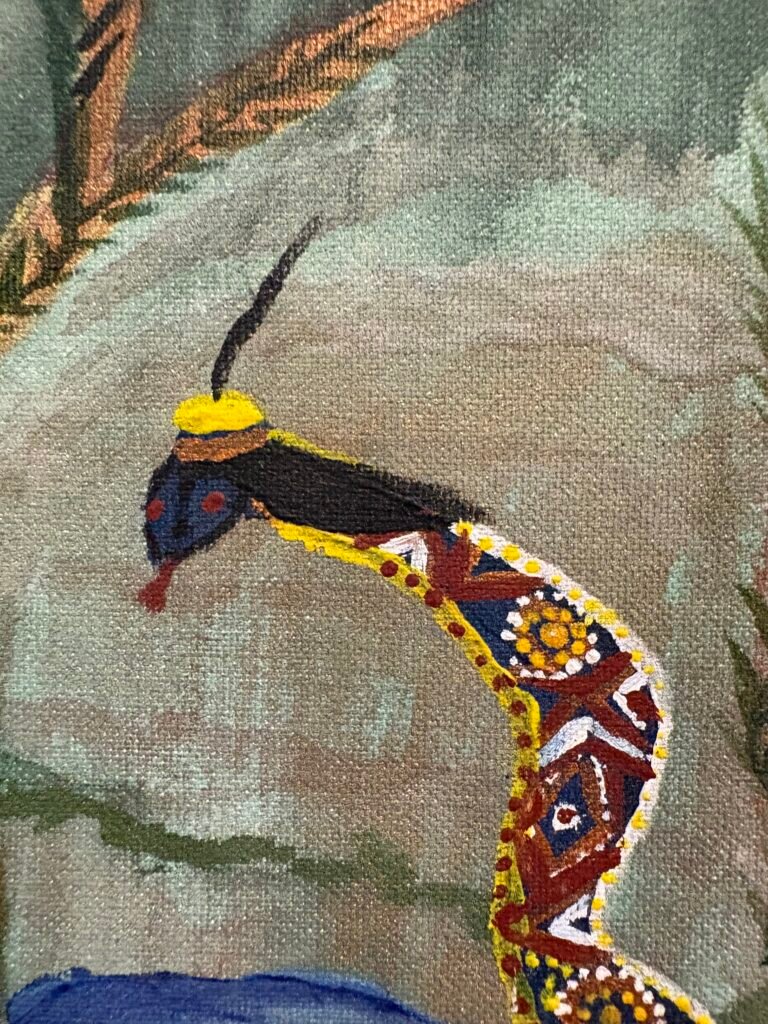
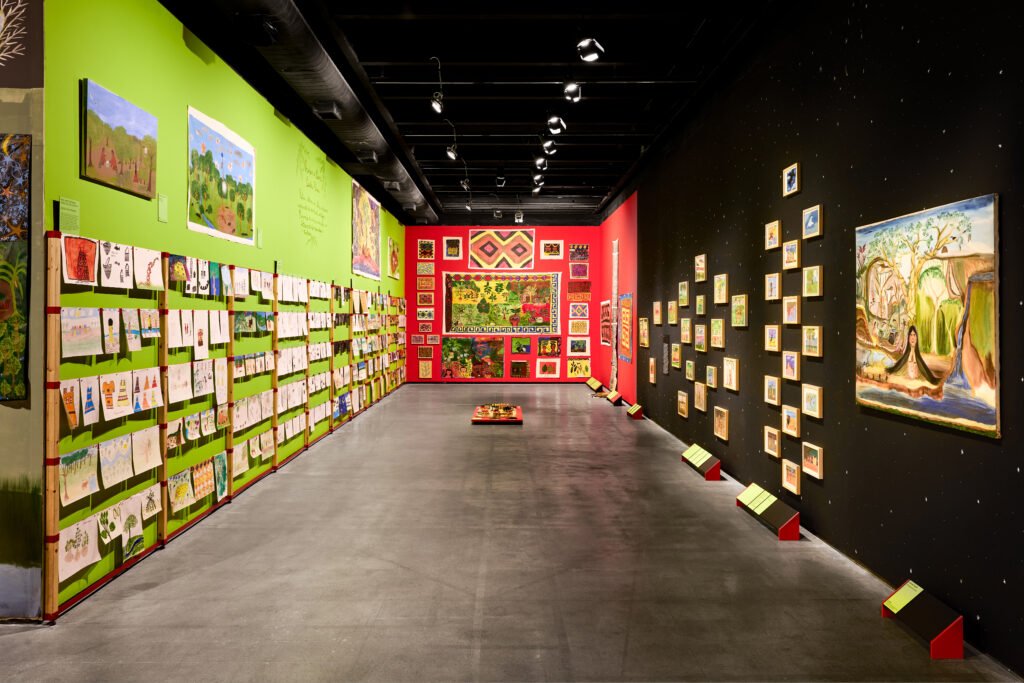
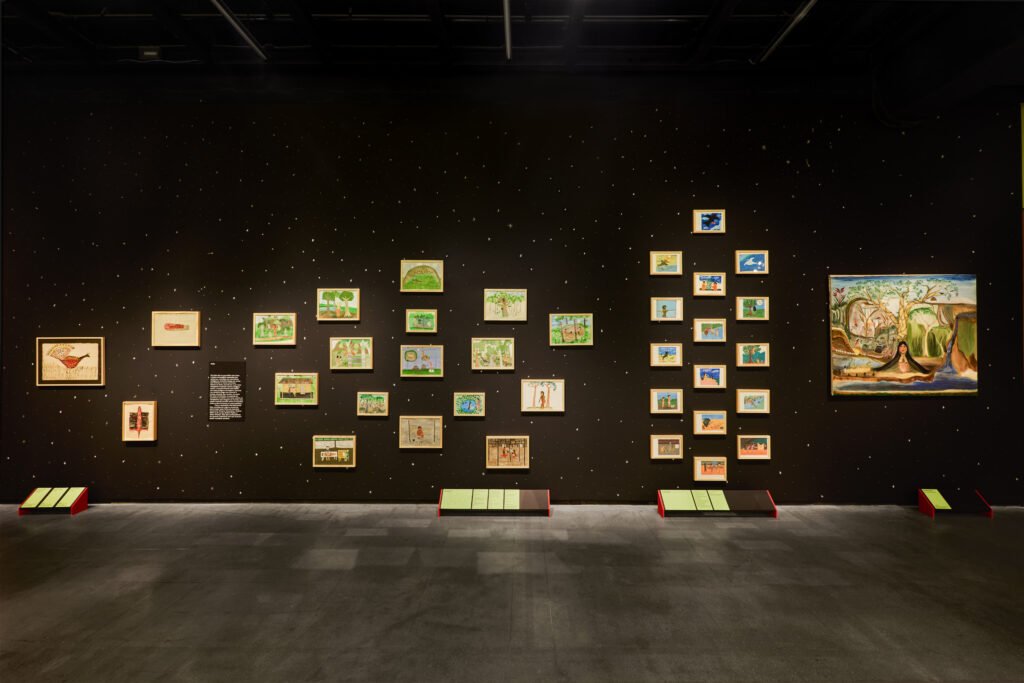
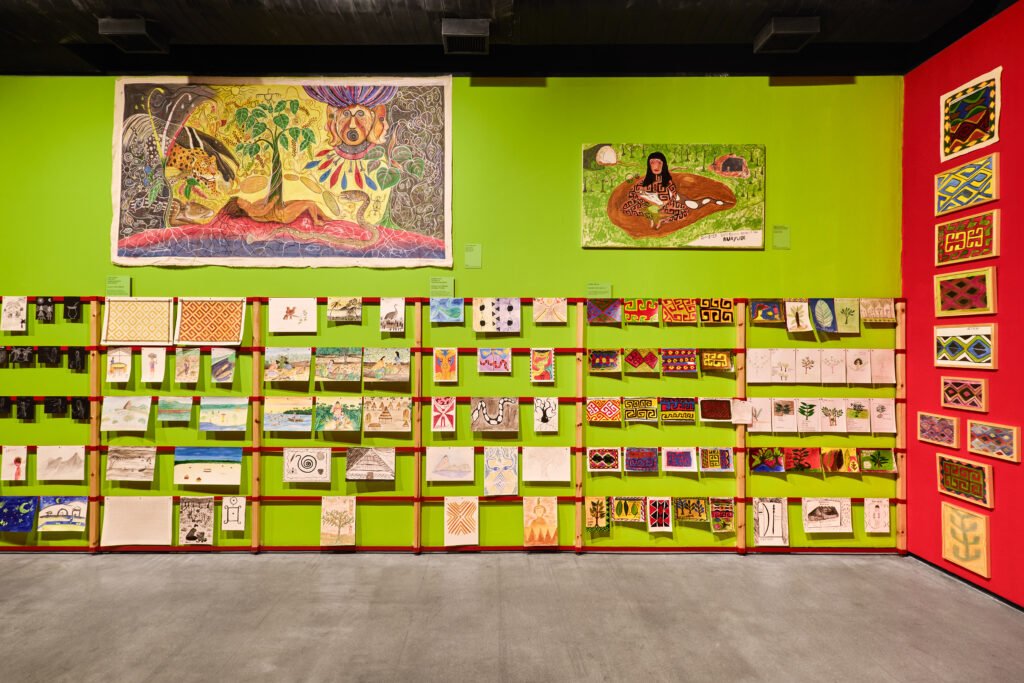
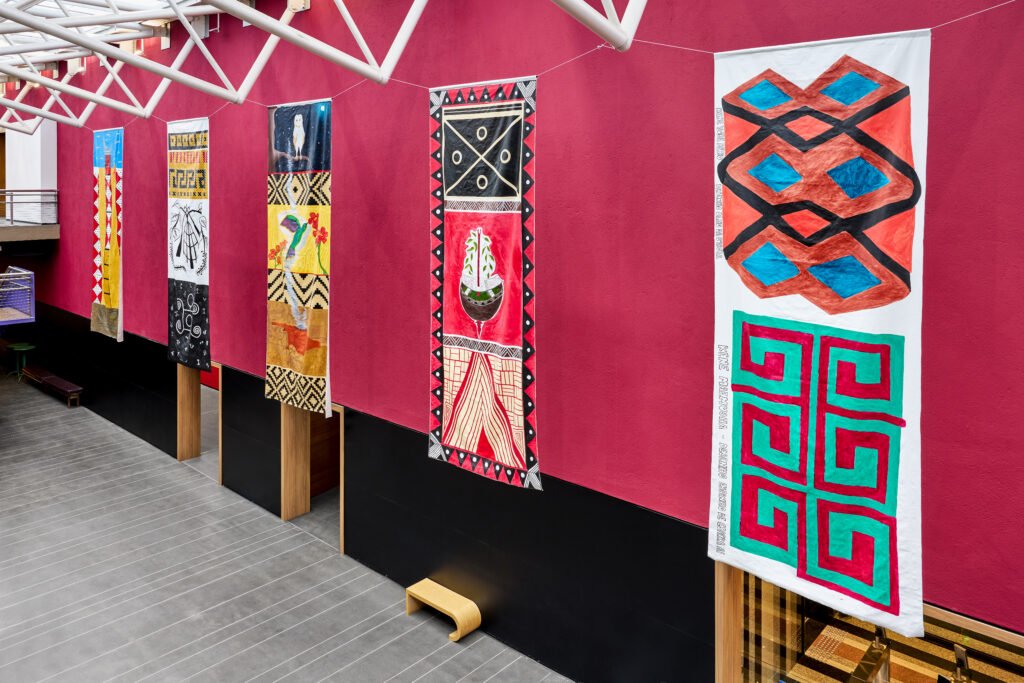
Photos: Filme d’Água / Estúdio Em obra / Selvagem collection
NEWS
Filter

- ABOUT THE EXHIBITION
- PUBLICATIONS
- BOOKLET
- BANIWA LIVING SCHOOL
- HUNI KUĨ LIVING SCHOOL
- GUARANI LIVING SCHOOL
- MAXAKALI LIVING SCHOOL
- TUKANO-DESANA-TUYUKA LIVING SCHOOL
- GRANDPARENTS
ABOUT THE EXHIBITION
“The Living Schools present themselves as a collective that seeks to transform the relationship between teaching and learning, and the relationship between what is truly useful and necessary in the constant exchange of knowledge that is ancestral but which, due to colonial and epistemological arrogance, has been distorted within a rigid, traditional school system. The art of the Living Schools is not art-as-commodity, but art-as-thought, art-as-dream and art-as-action for the empowerment of the lives of every culture.” – Cristine Takuá, coordinator of the Living Schools movement
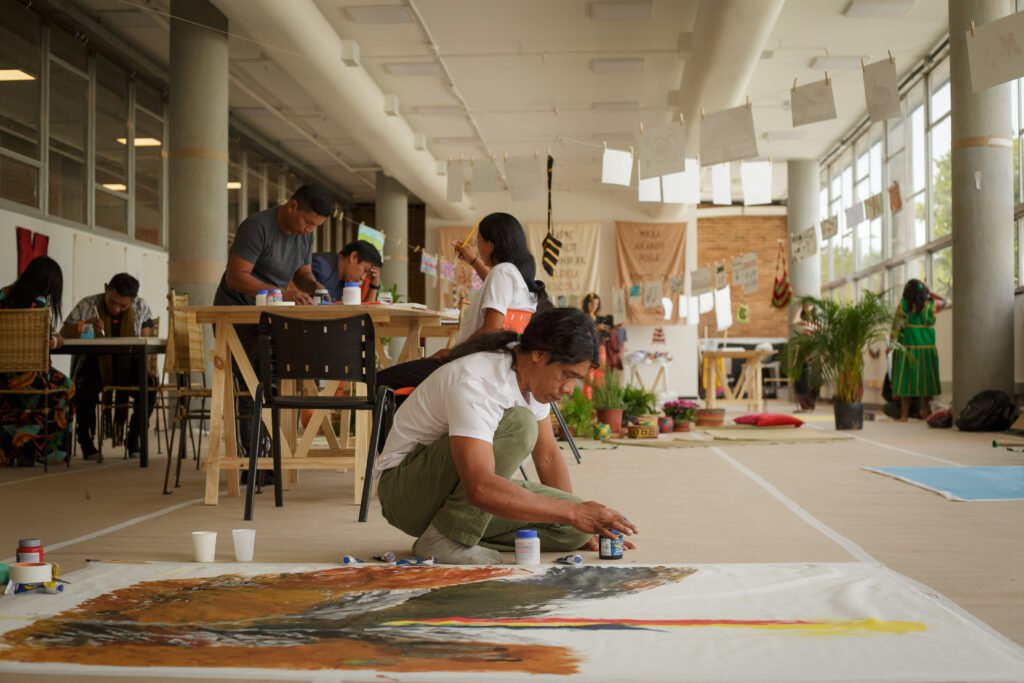
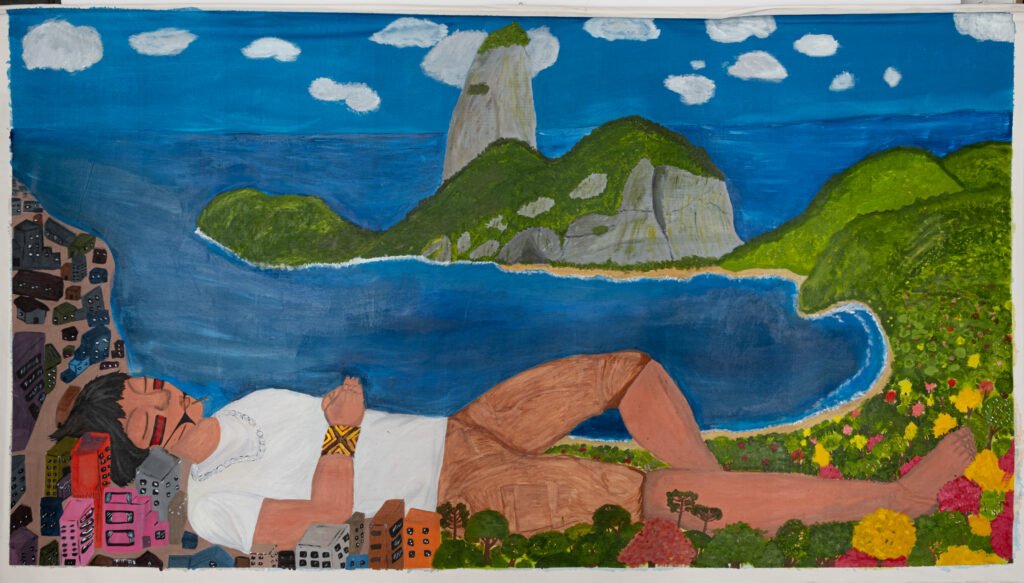
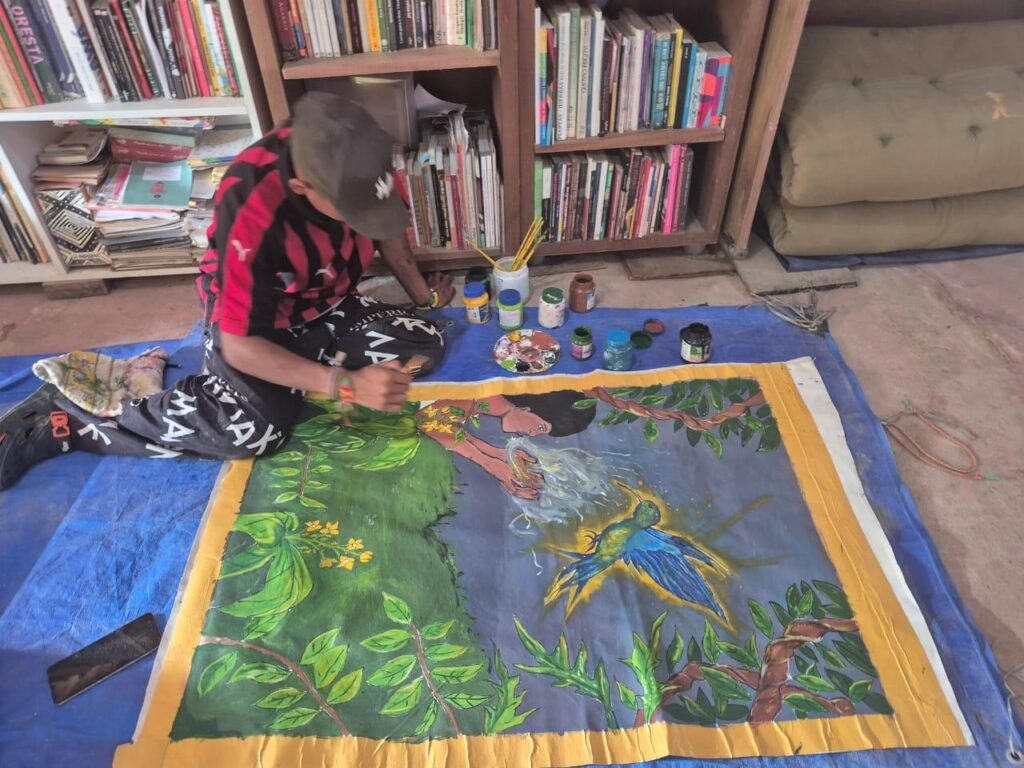
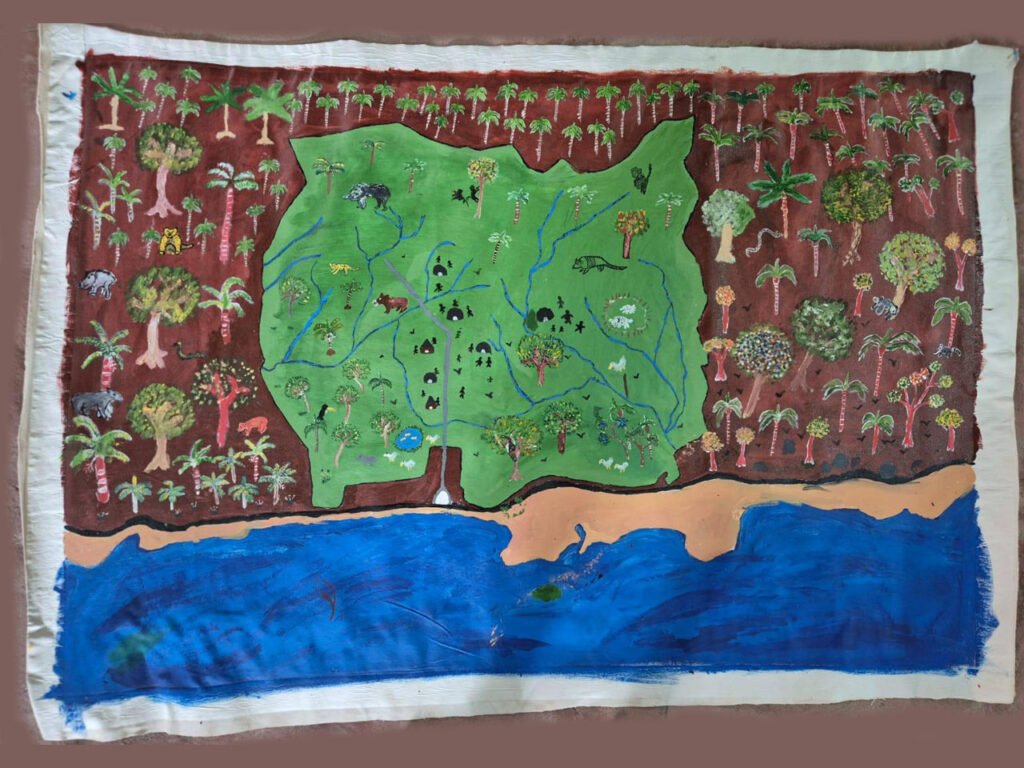
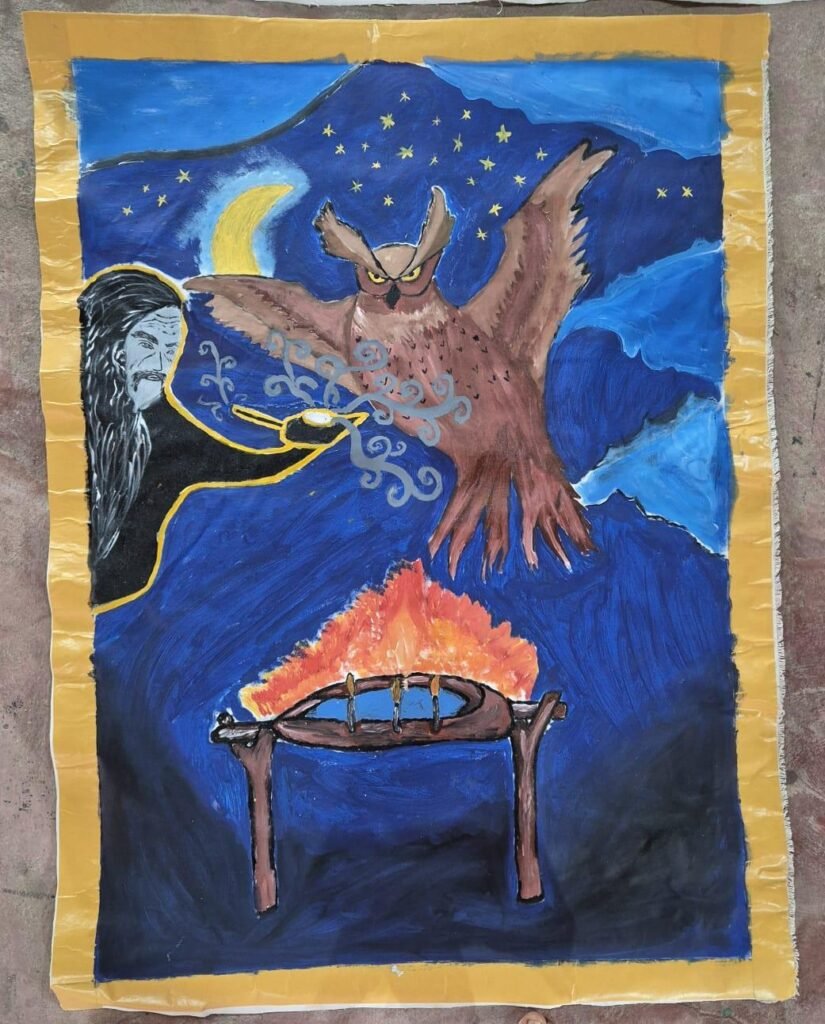
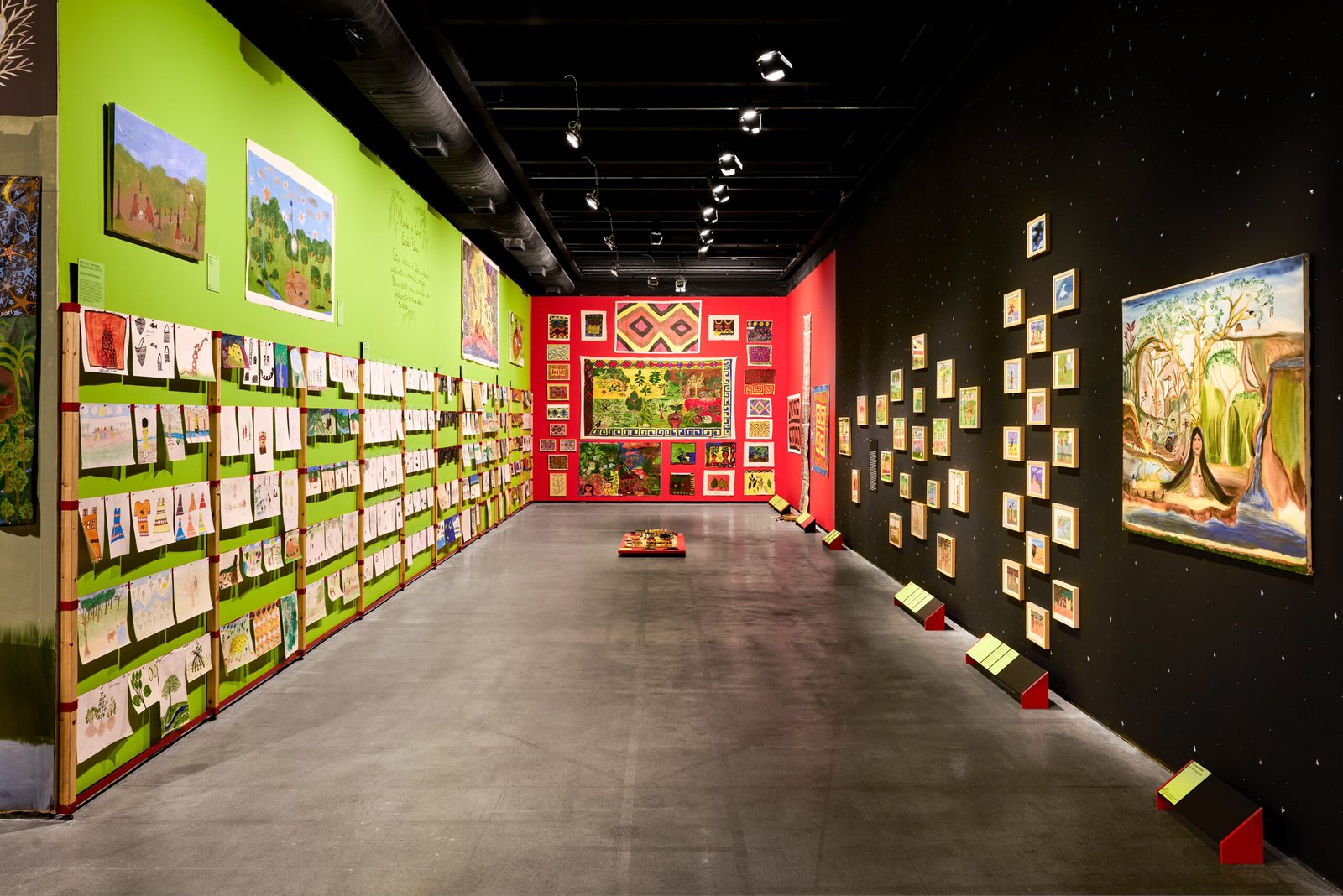
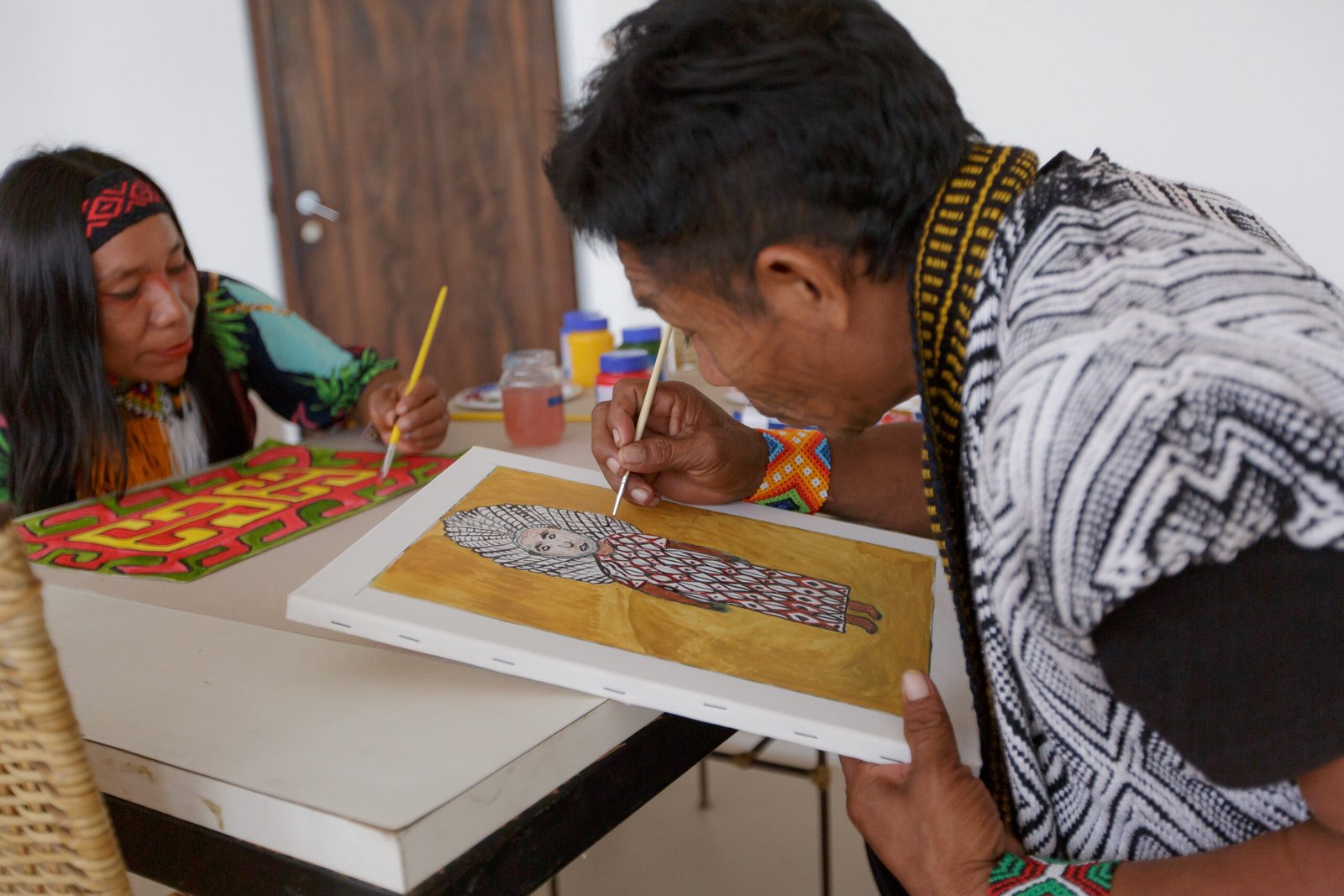
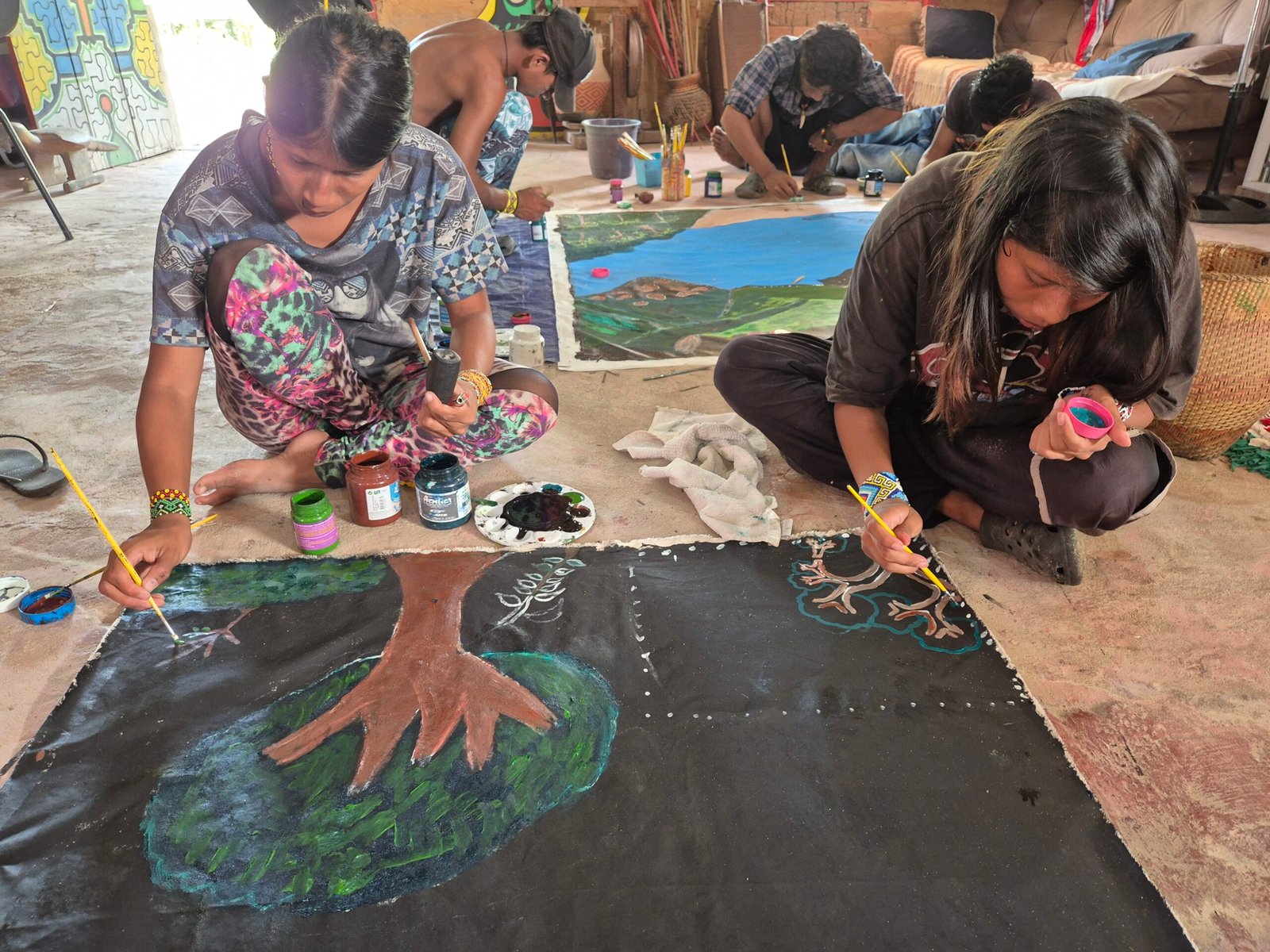
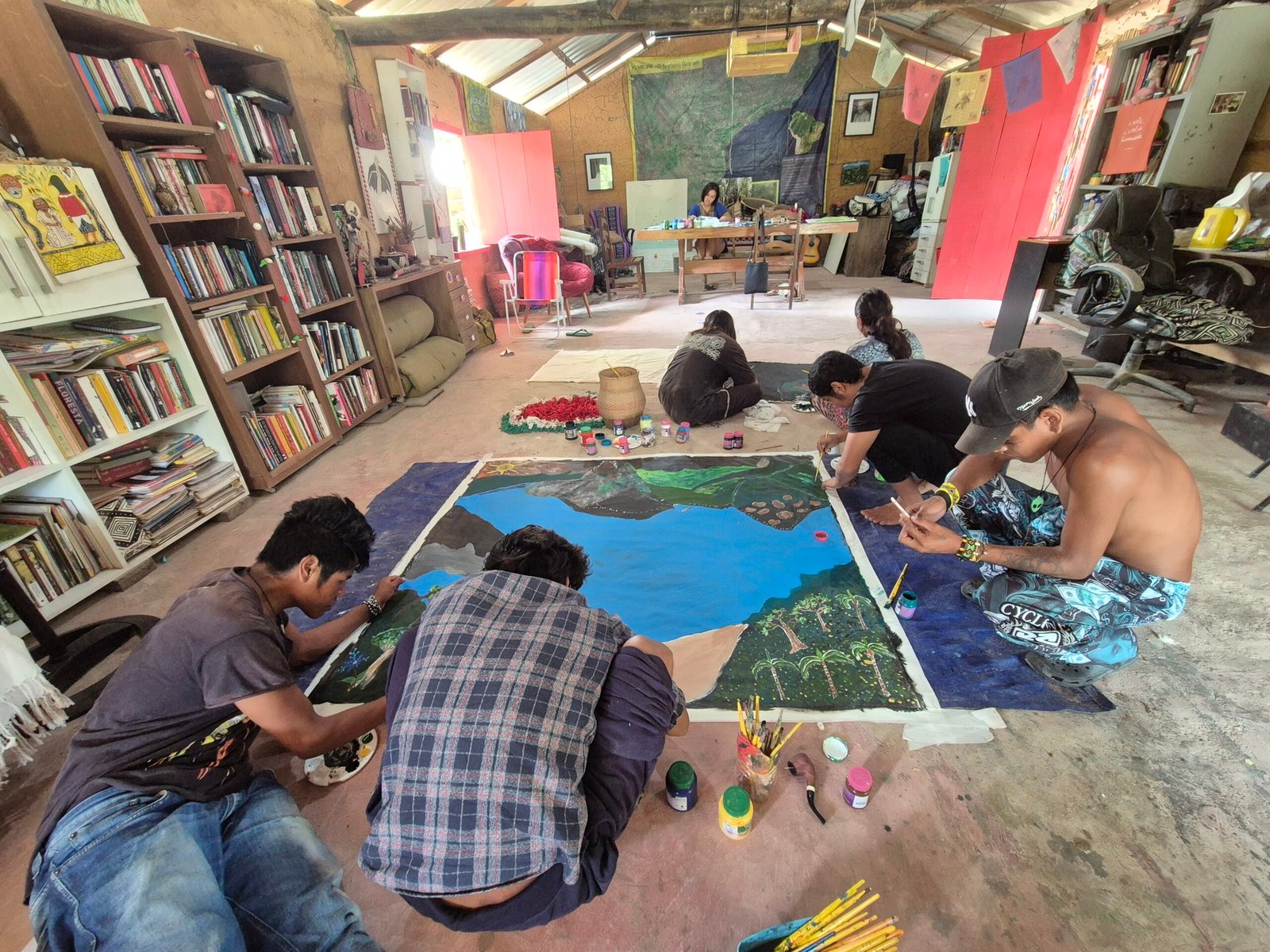
Before arriving at the Tomie Ohtake Institute, the first Living Schools exhibition was presented at Casa França Brasil in Rio de Janeiro, from December 2023 to January 2024. The works featured in the current exhibition were produced through workshops held in the territories of the Living Schools between 2024 and 2026, as well as during the Living School House residency, held in October 2025 no Museu de Arte Moderna do Rio de Janeiro, reunindo dez artistas indígenas em um processo de criação e troca de saberes.
You can find out more about this process, as well as access testimonials in video and written formats from the artists who took part in the residency in Rio de Janeiro, on the Living School House residency page, or in the article: “Long Live the Living School: paths of the new Living Schools exhibition”.
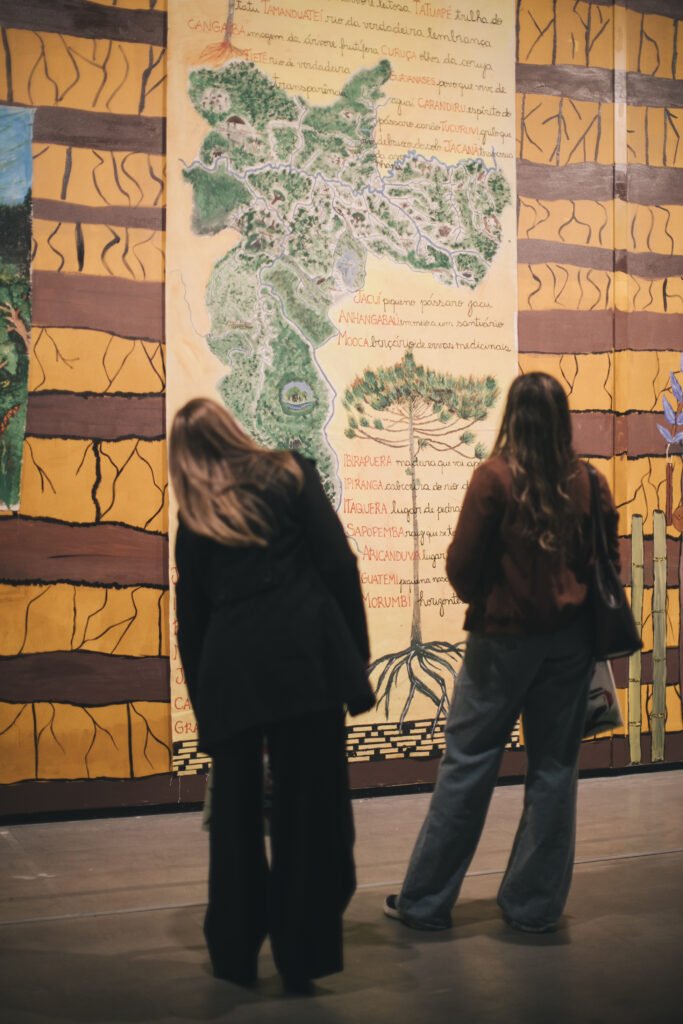
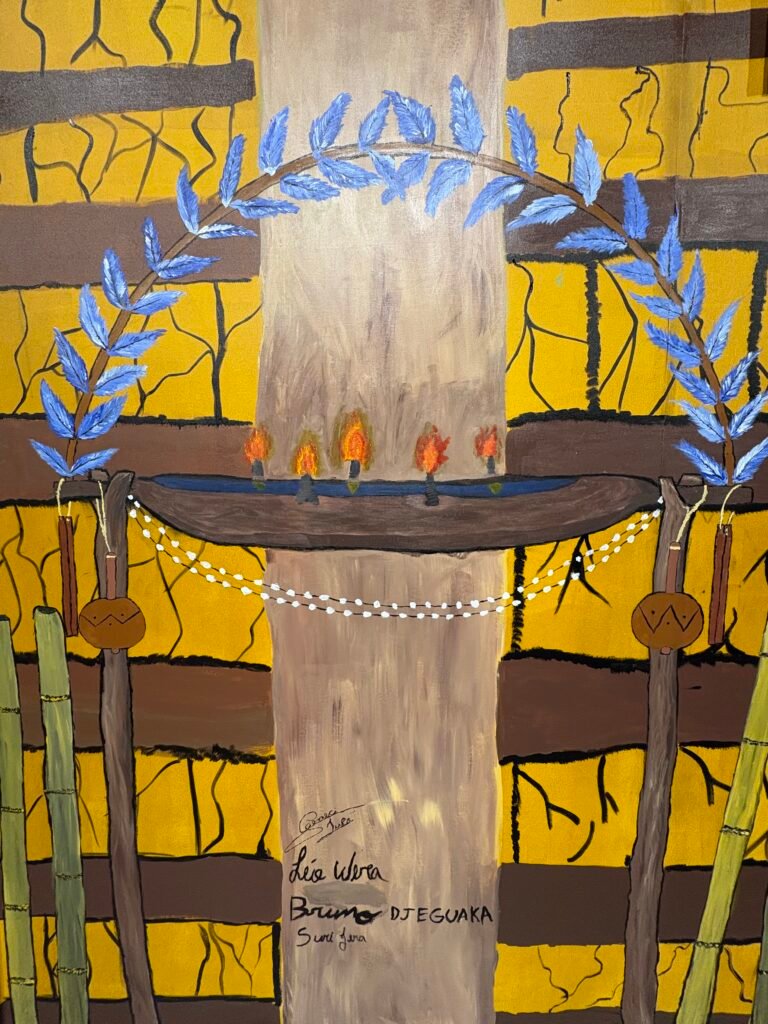
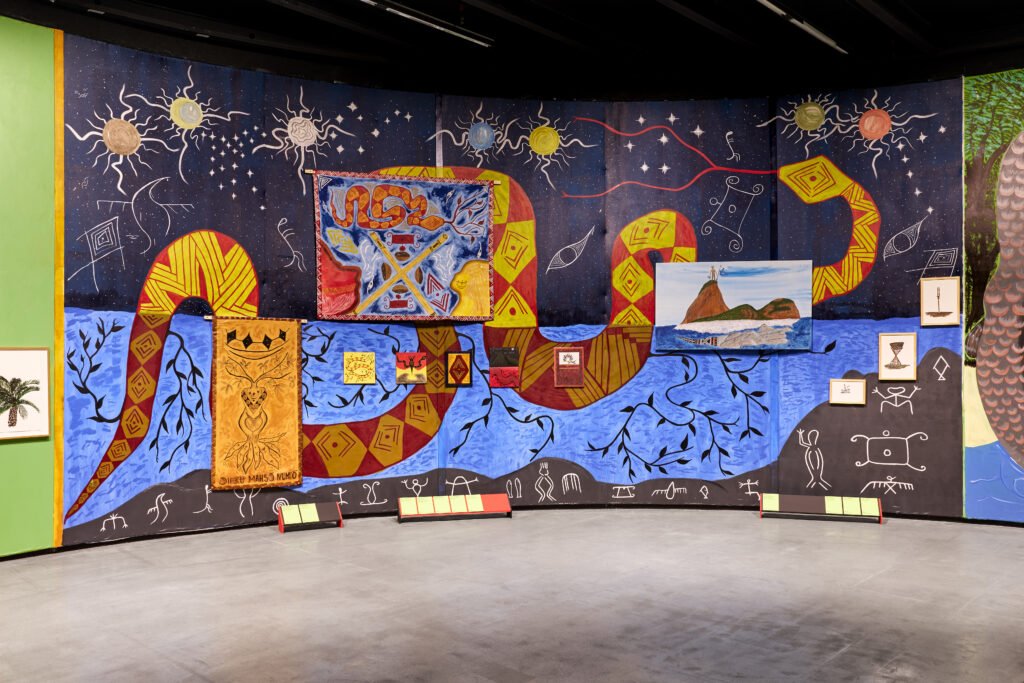
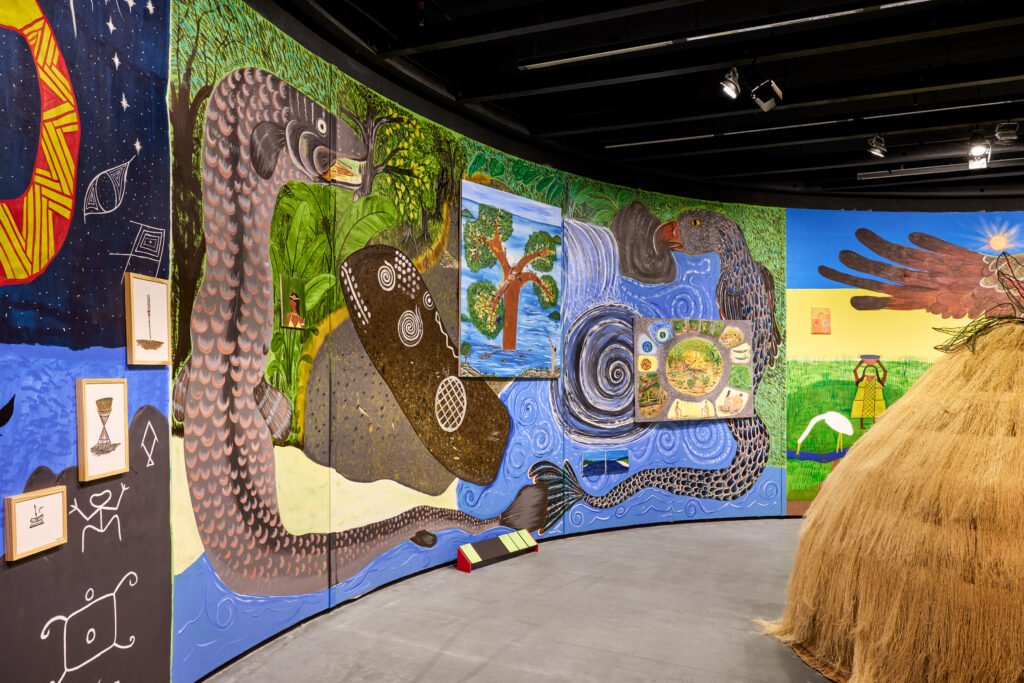
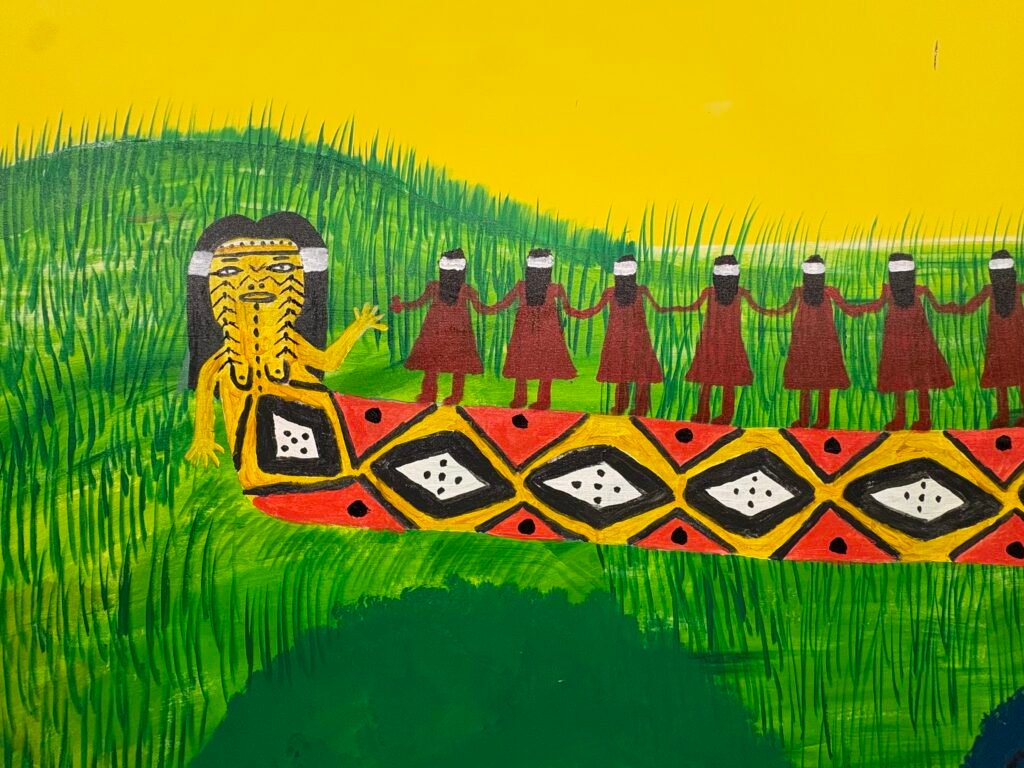
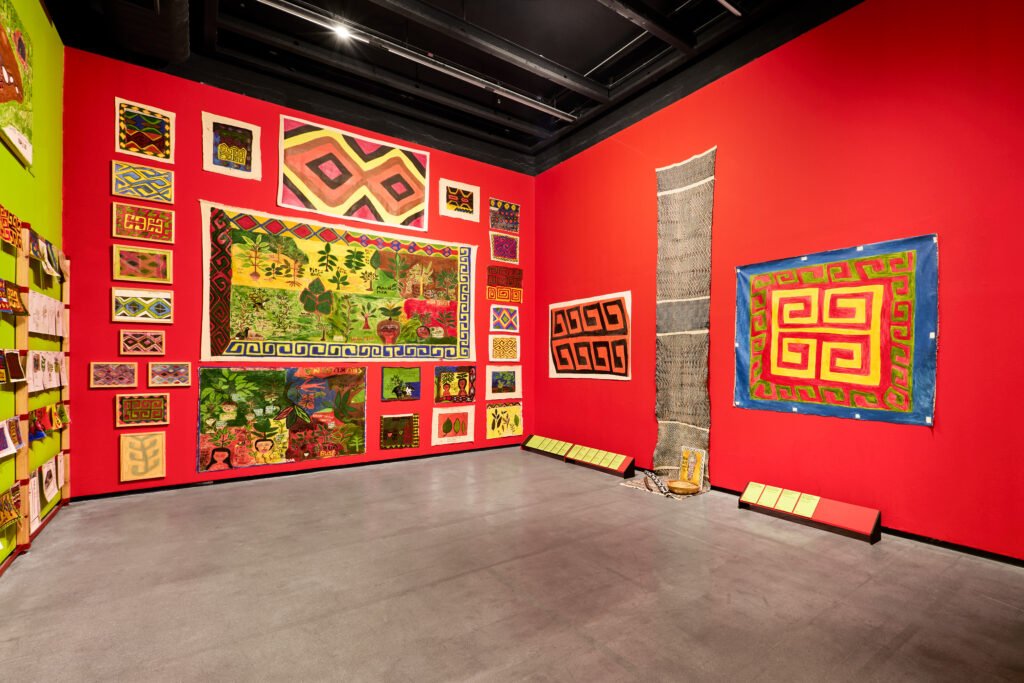
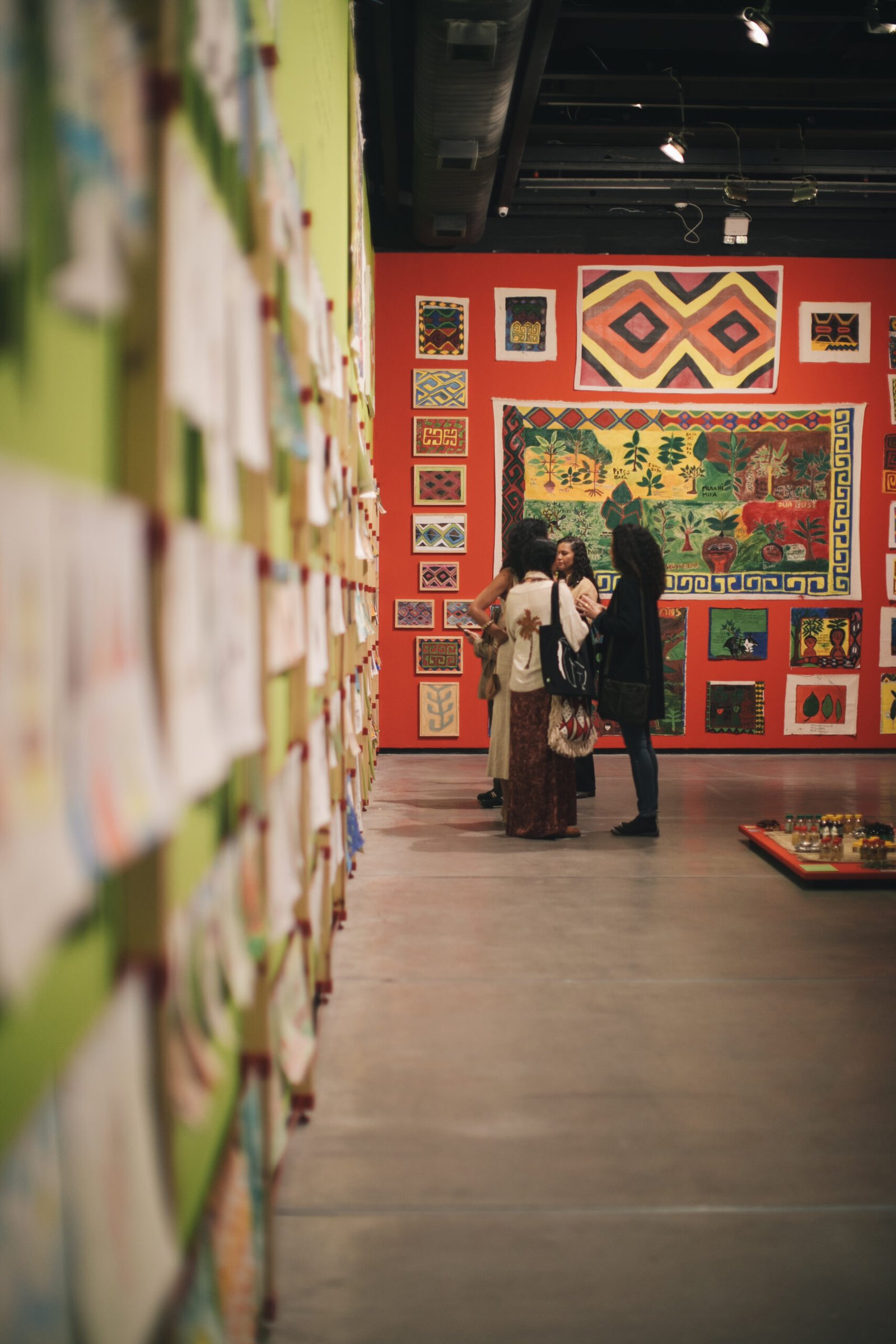
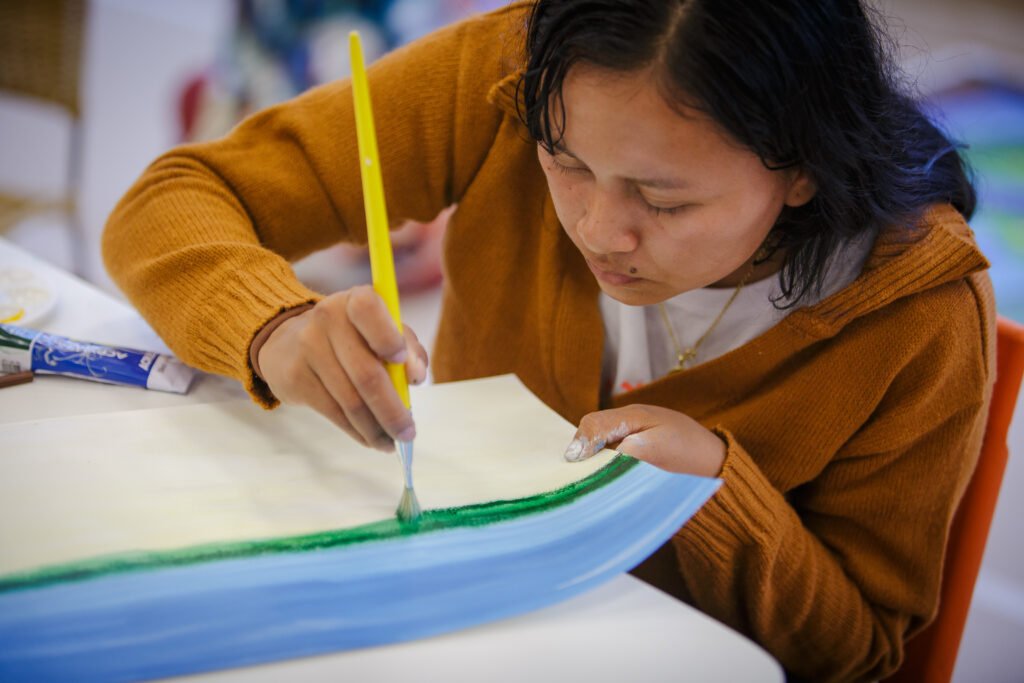
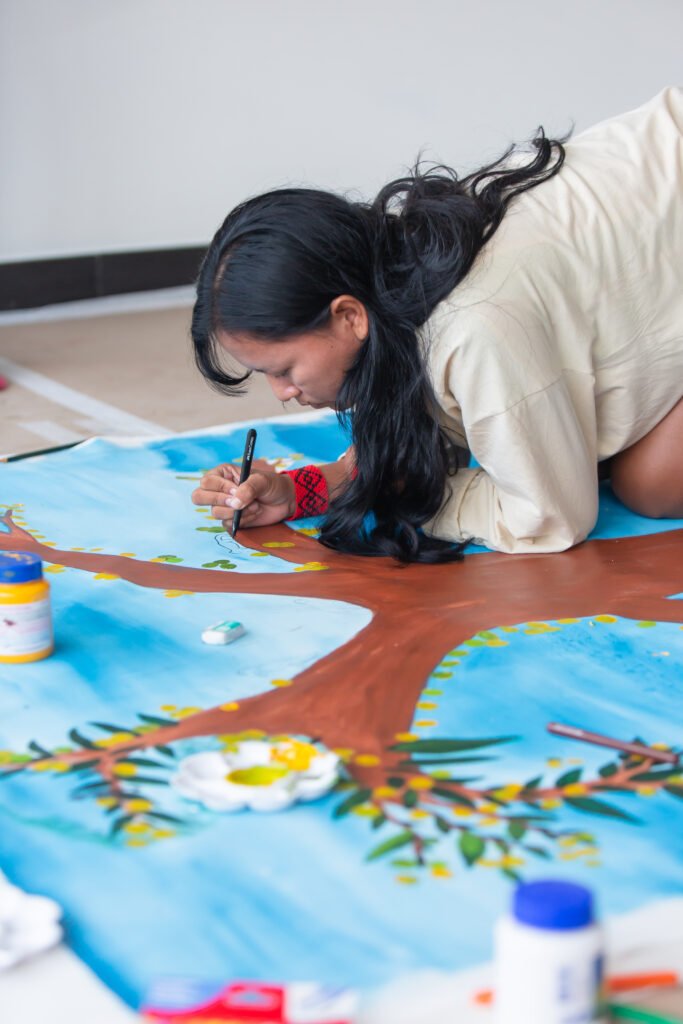
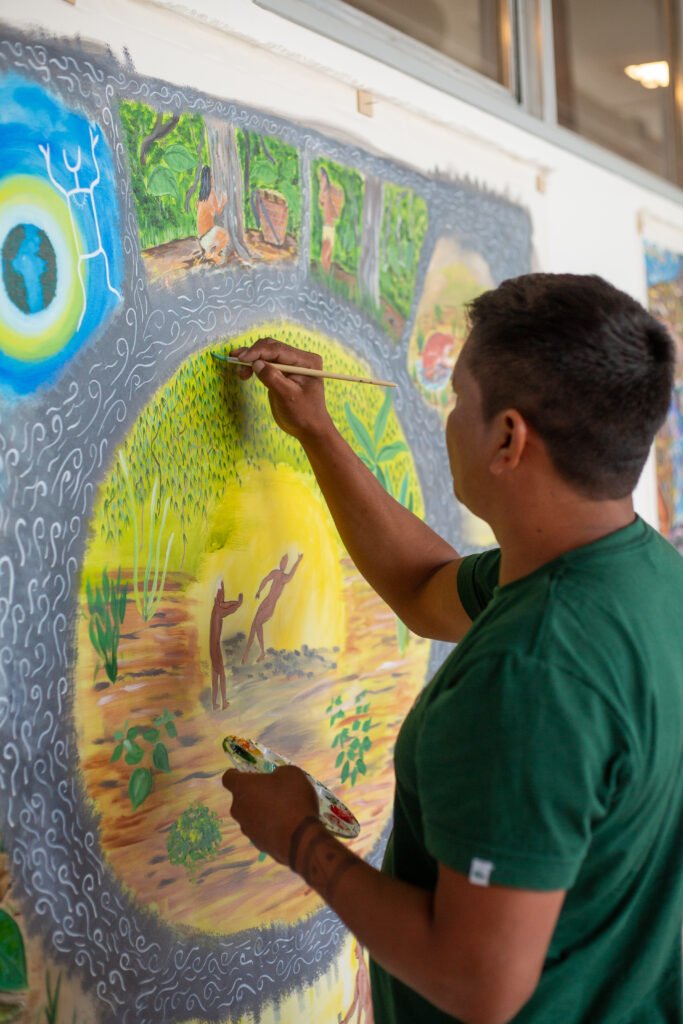
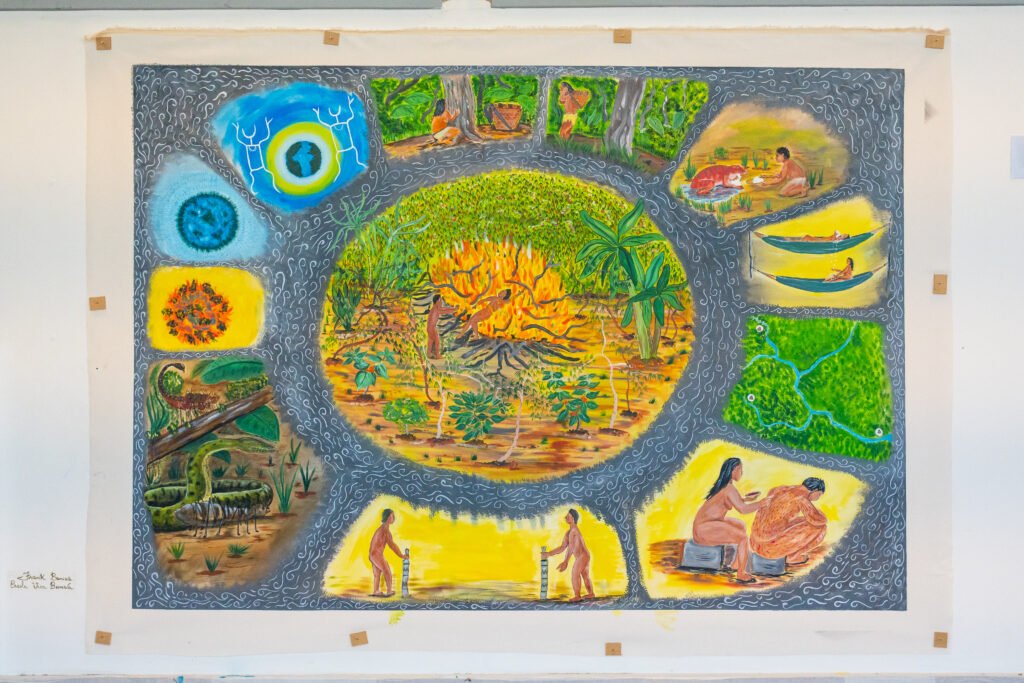
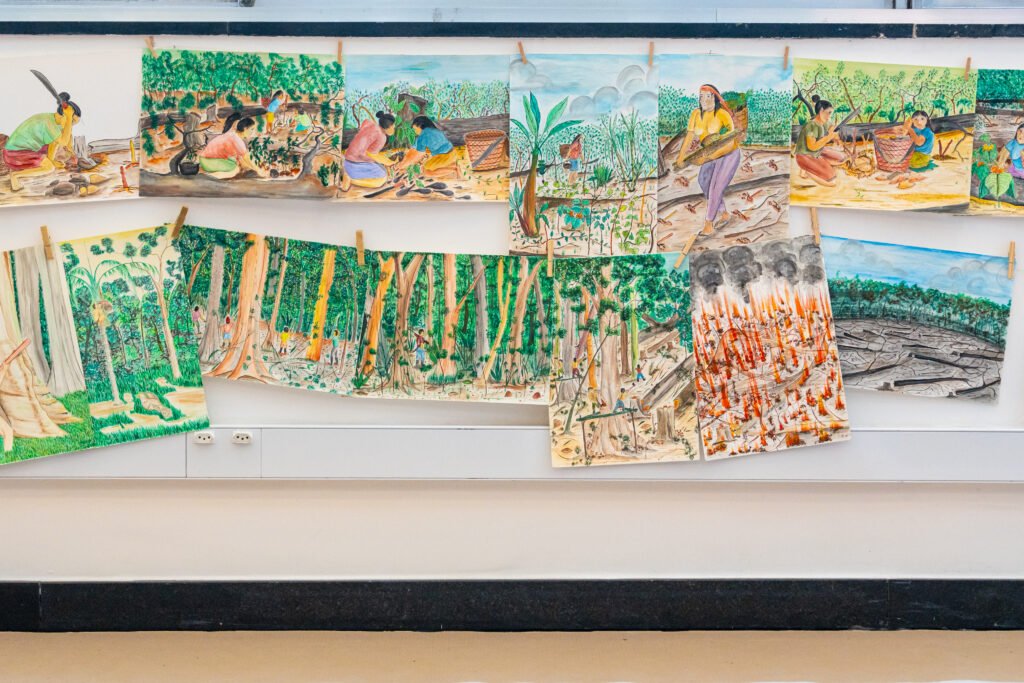
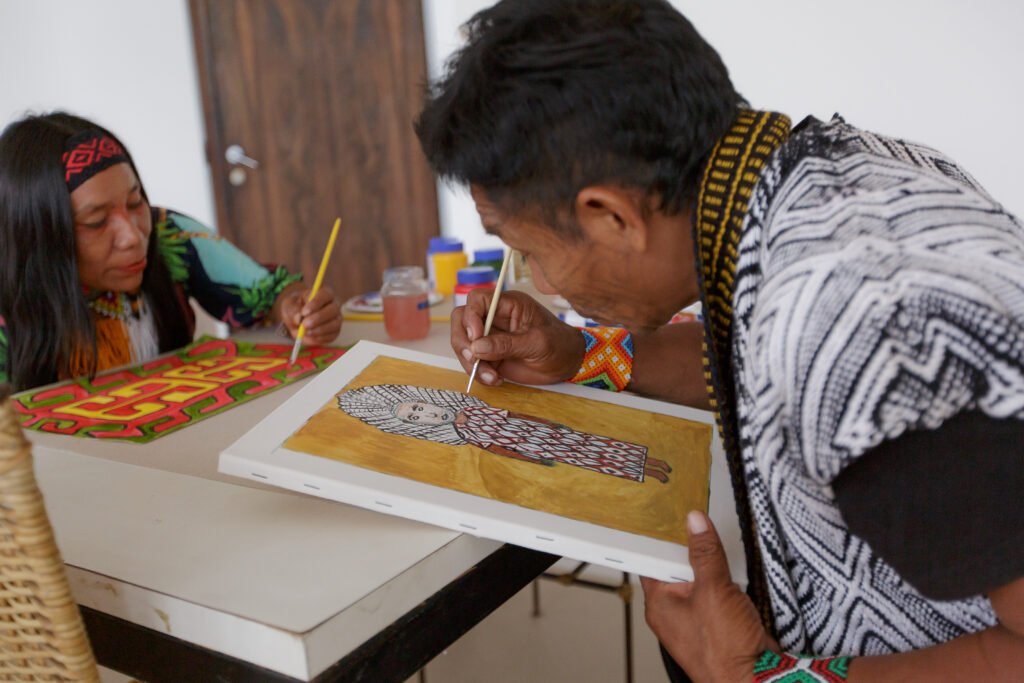
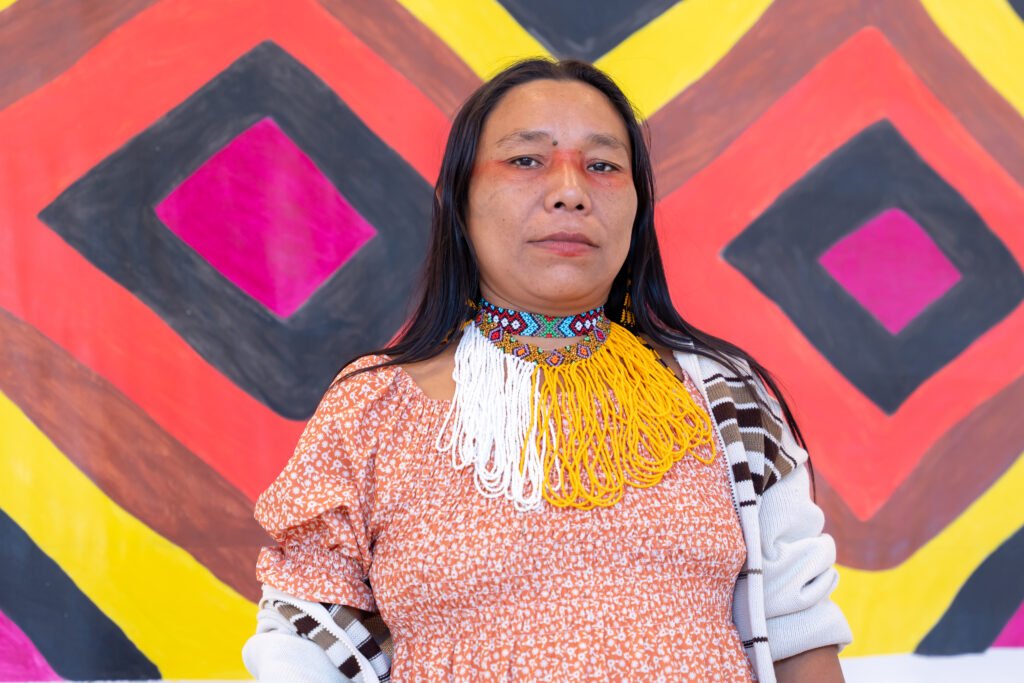
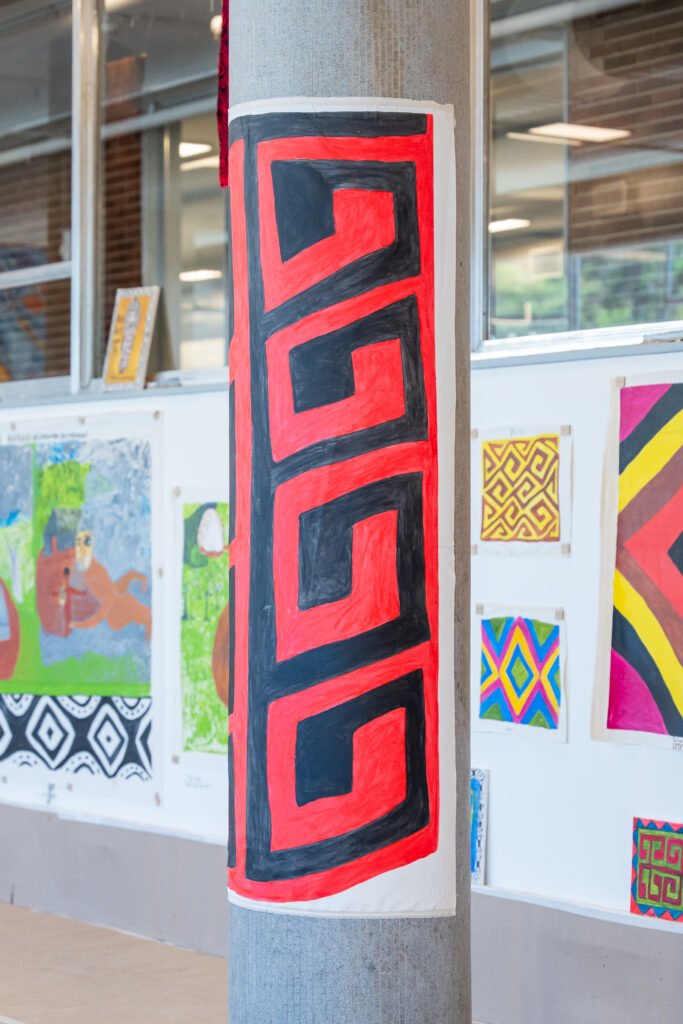
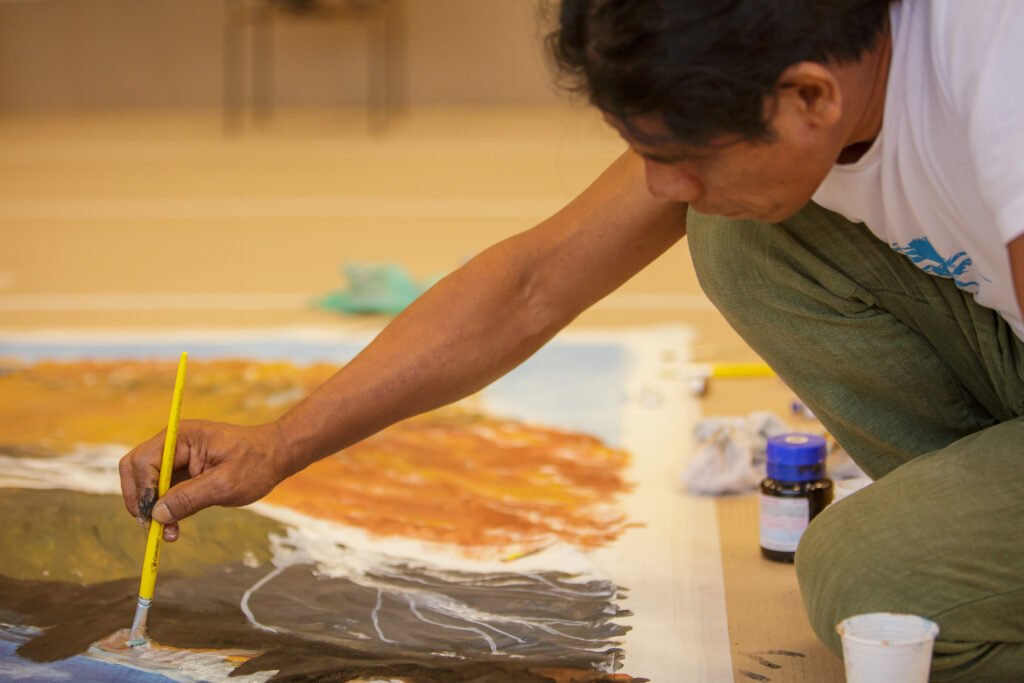
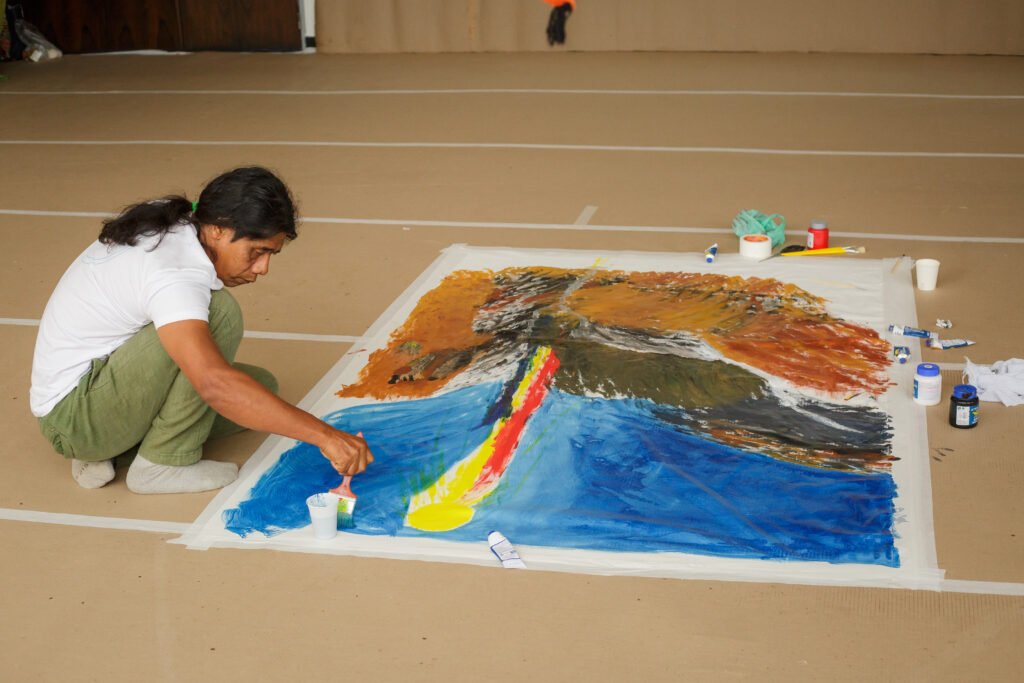
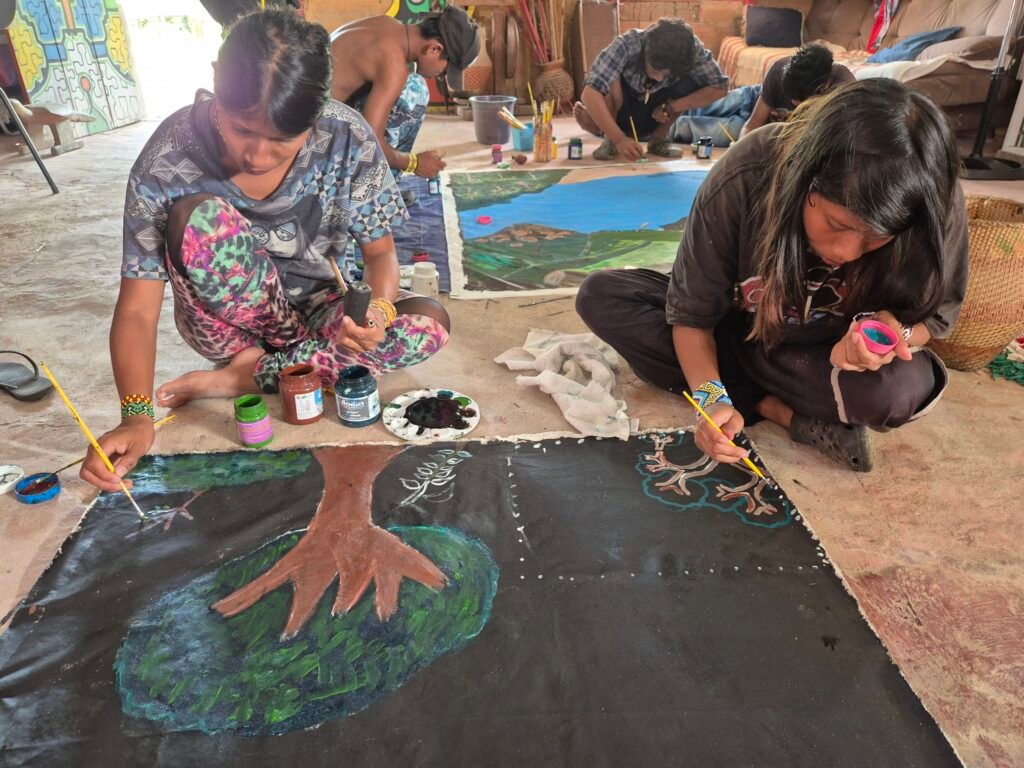
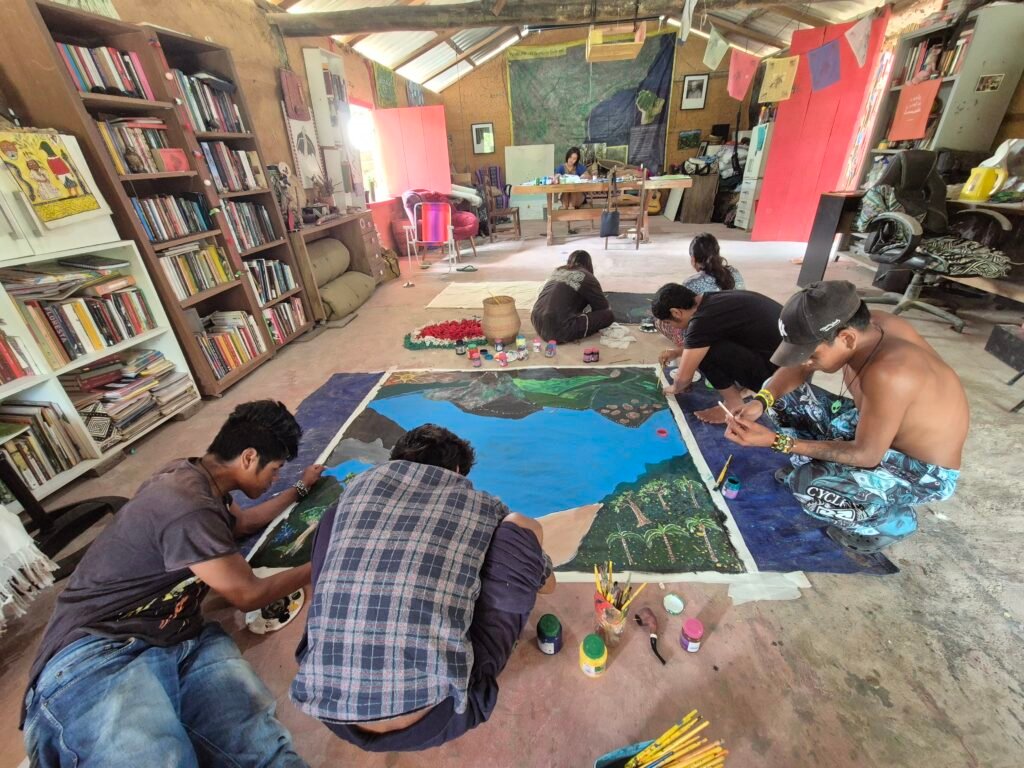
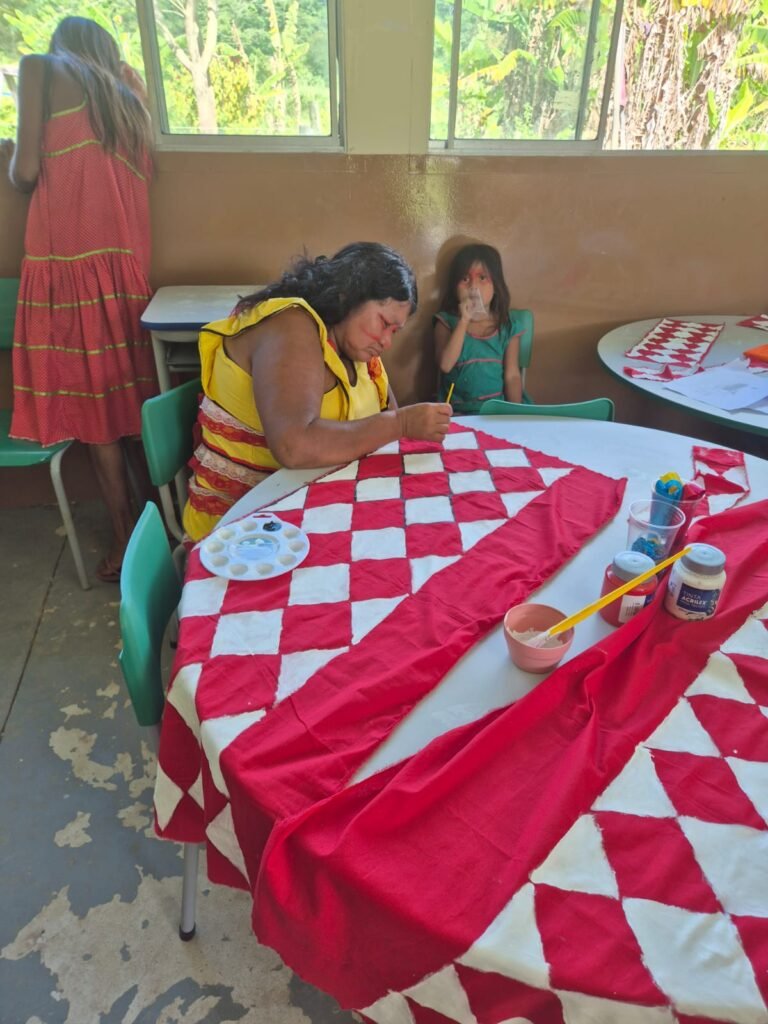
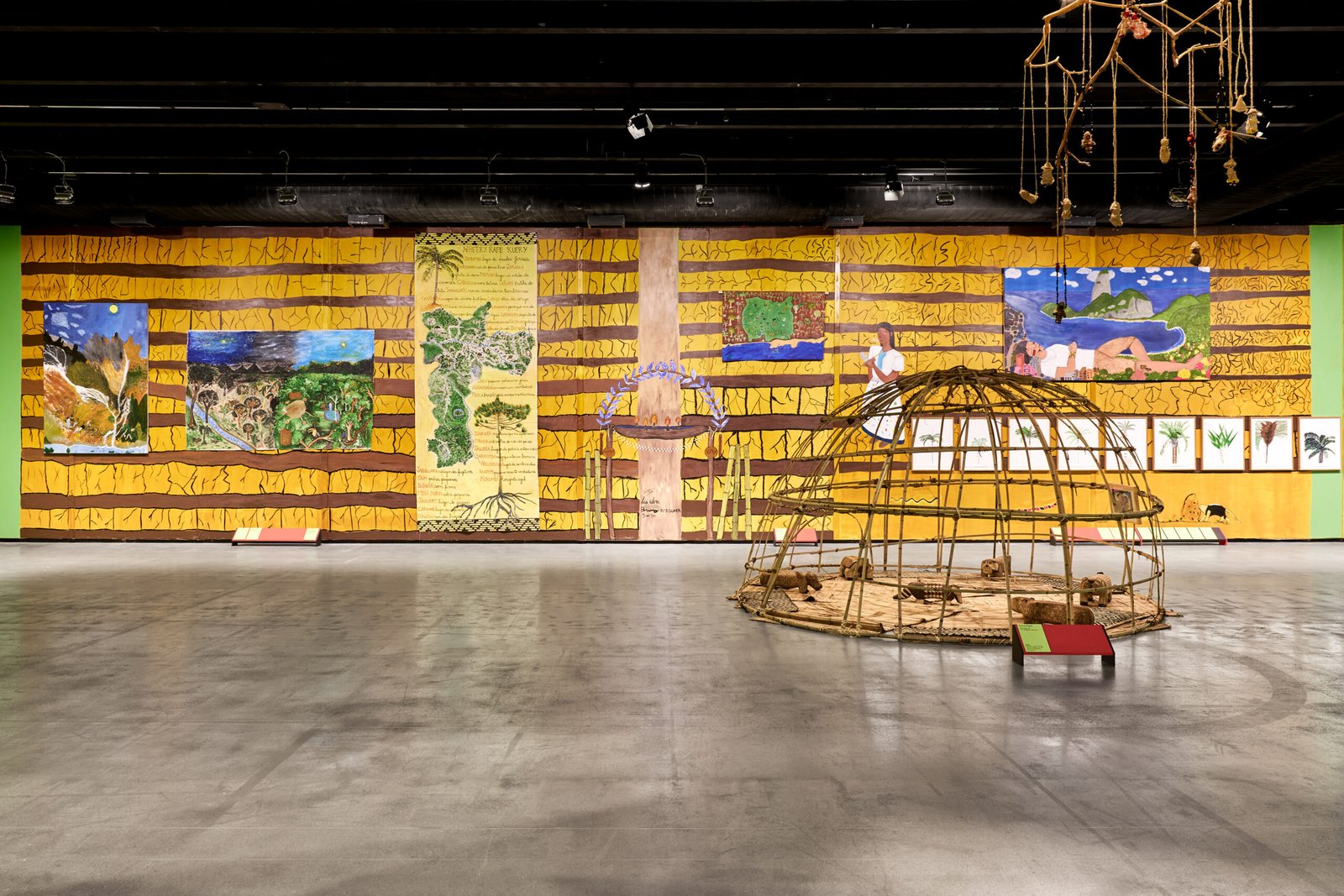
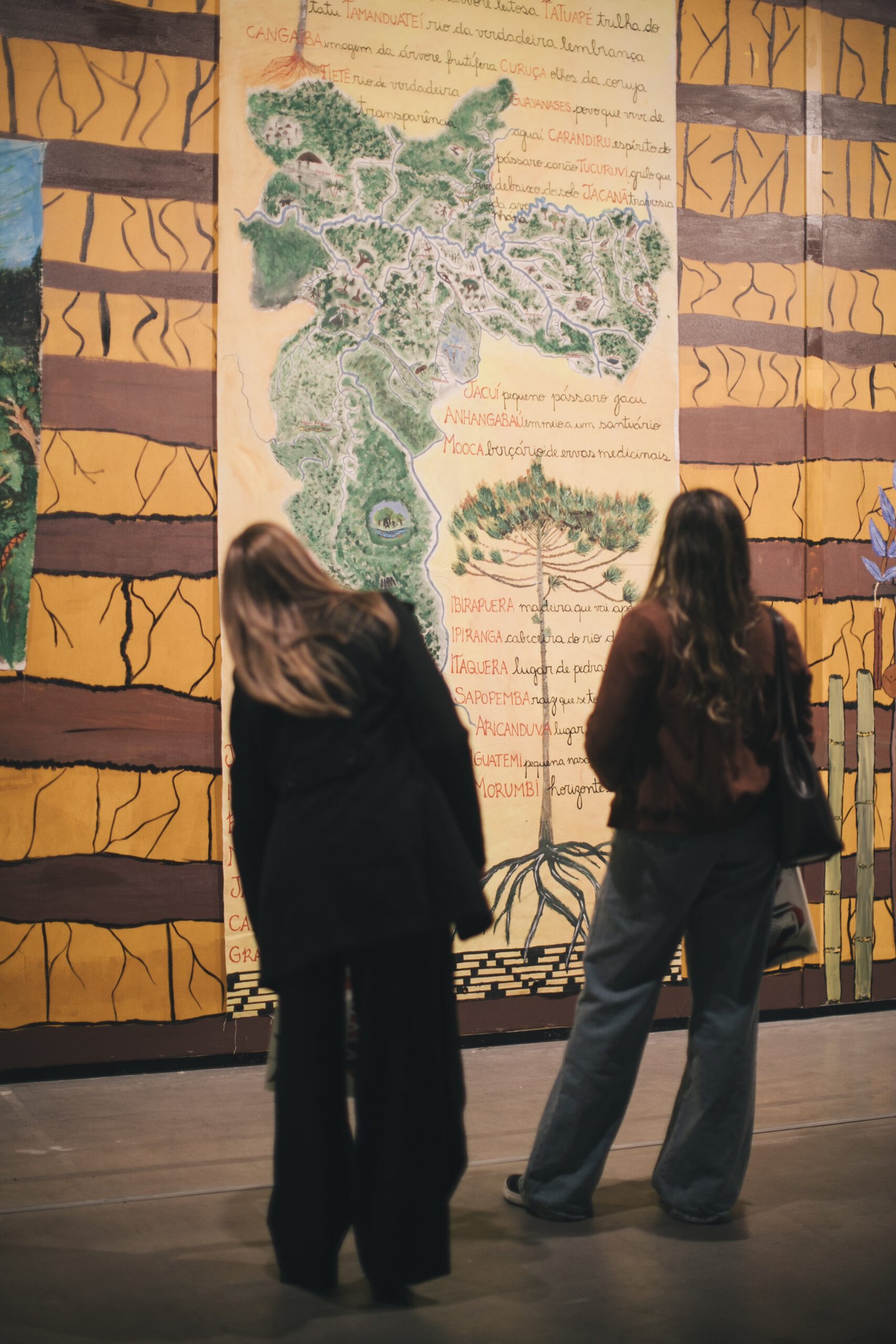
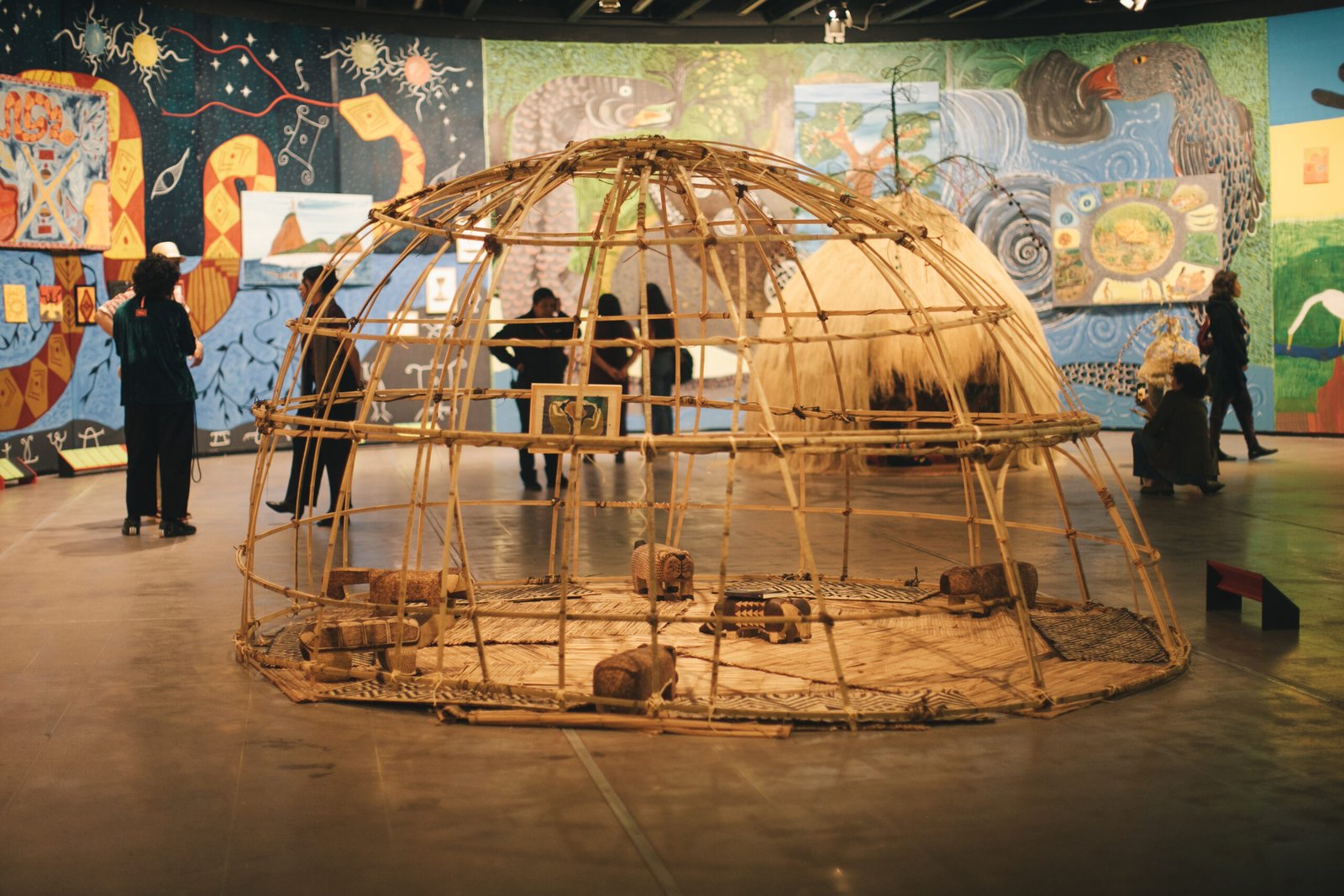
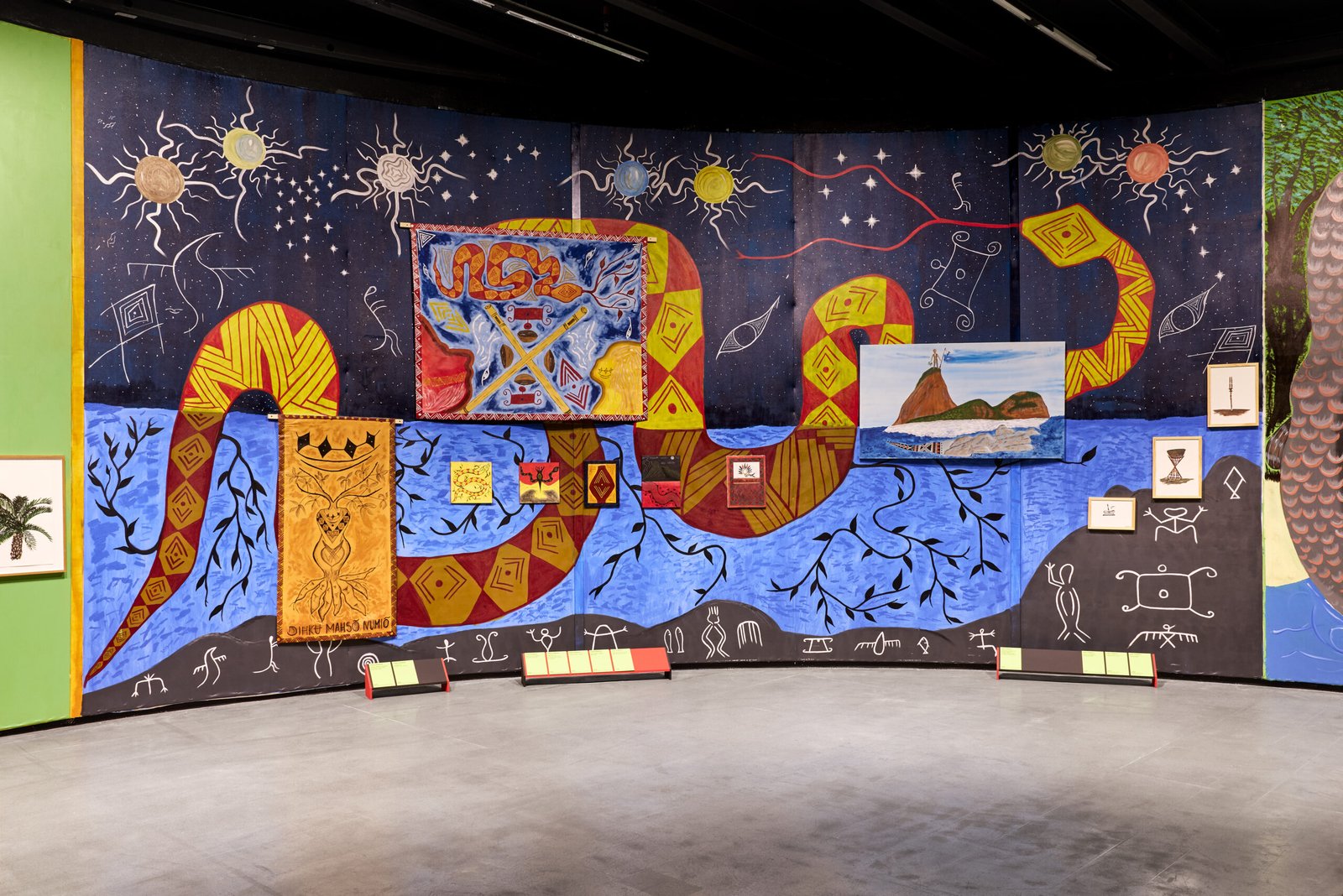
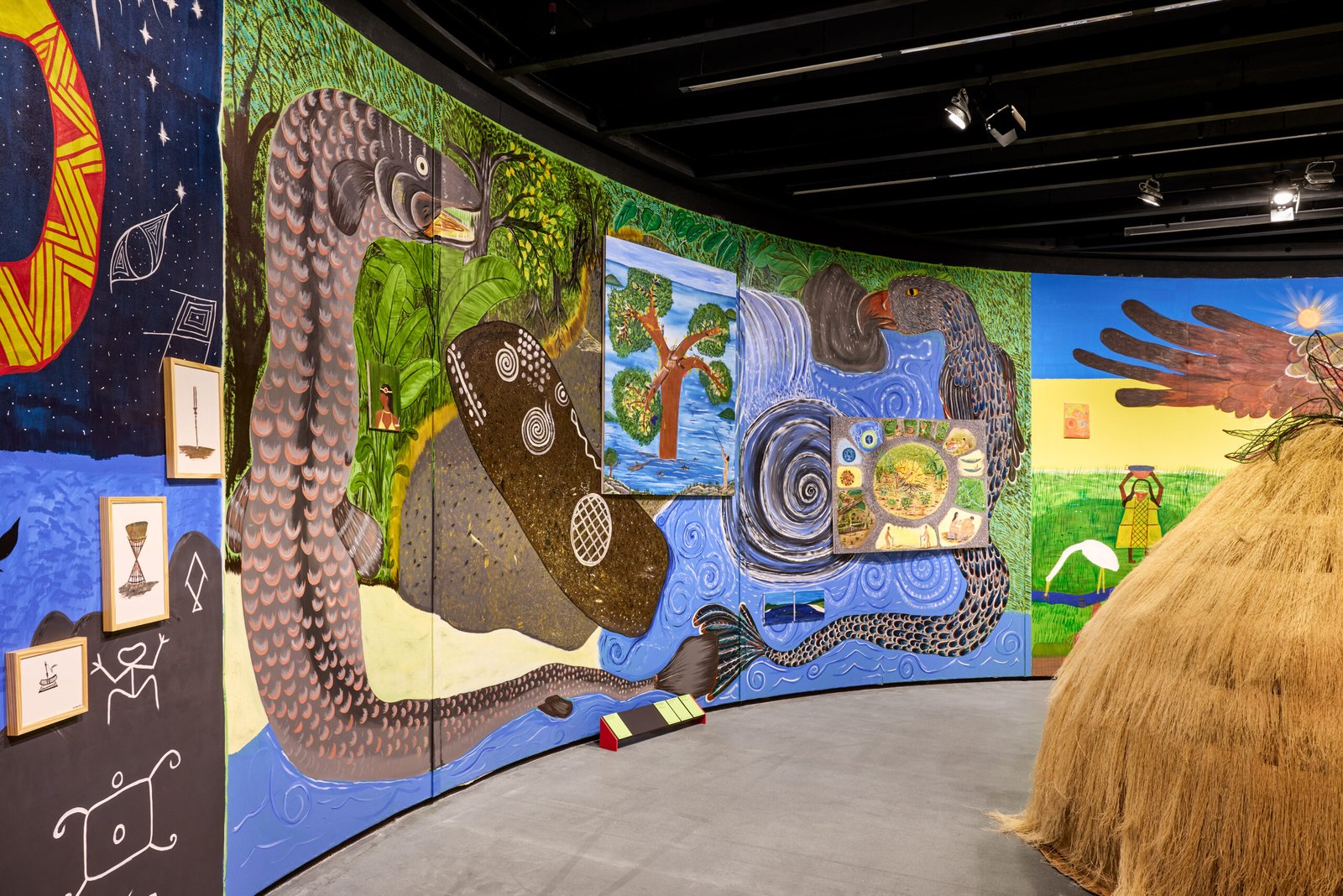
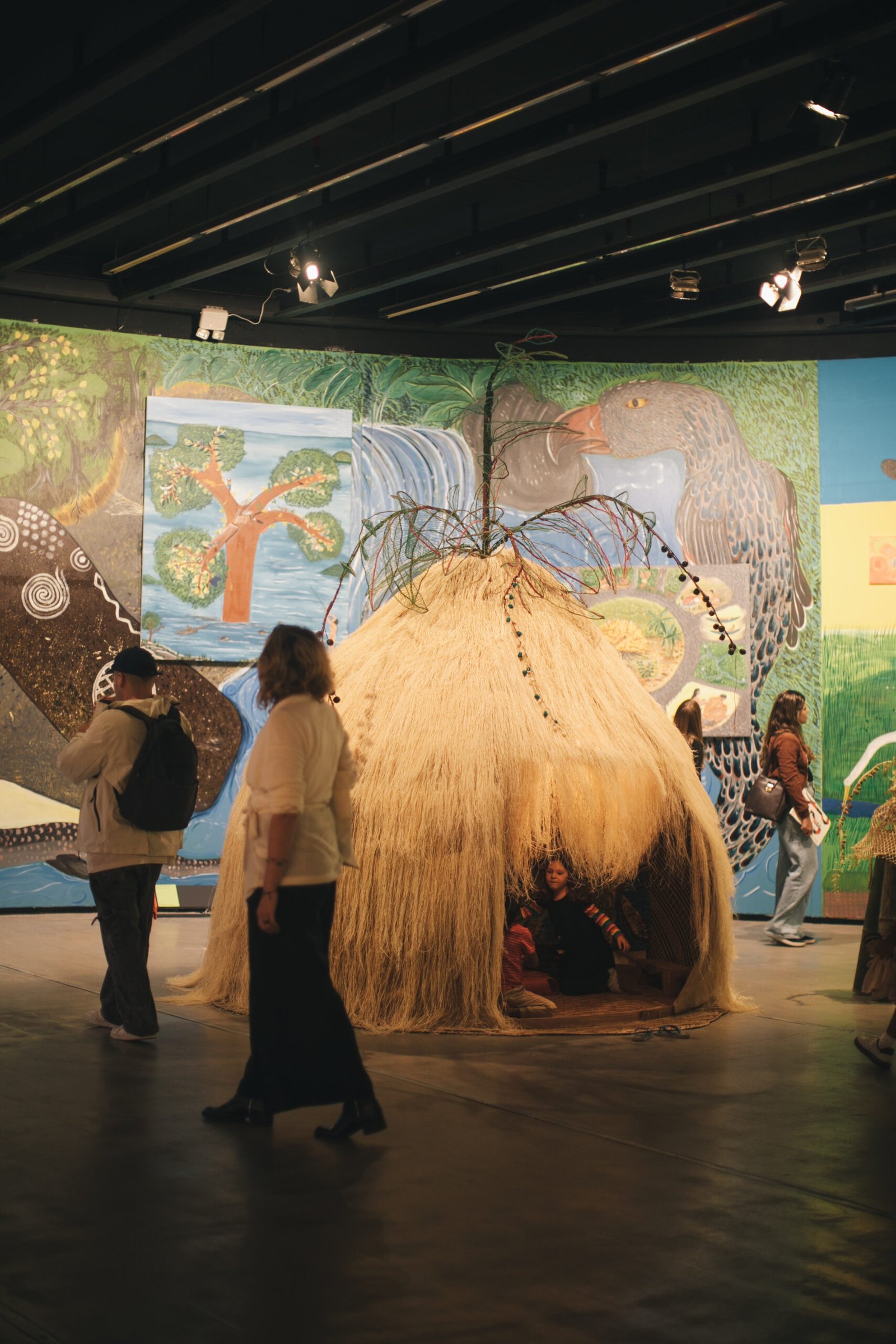
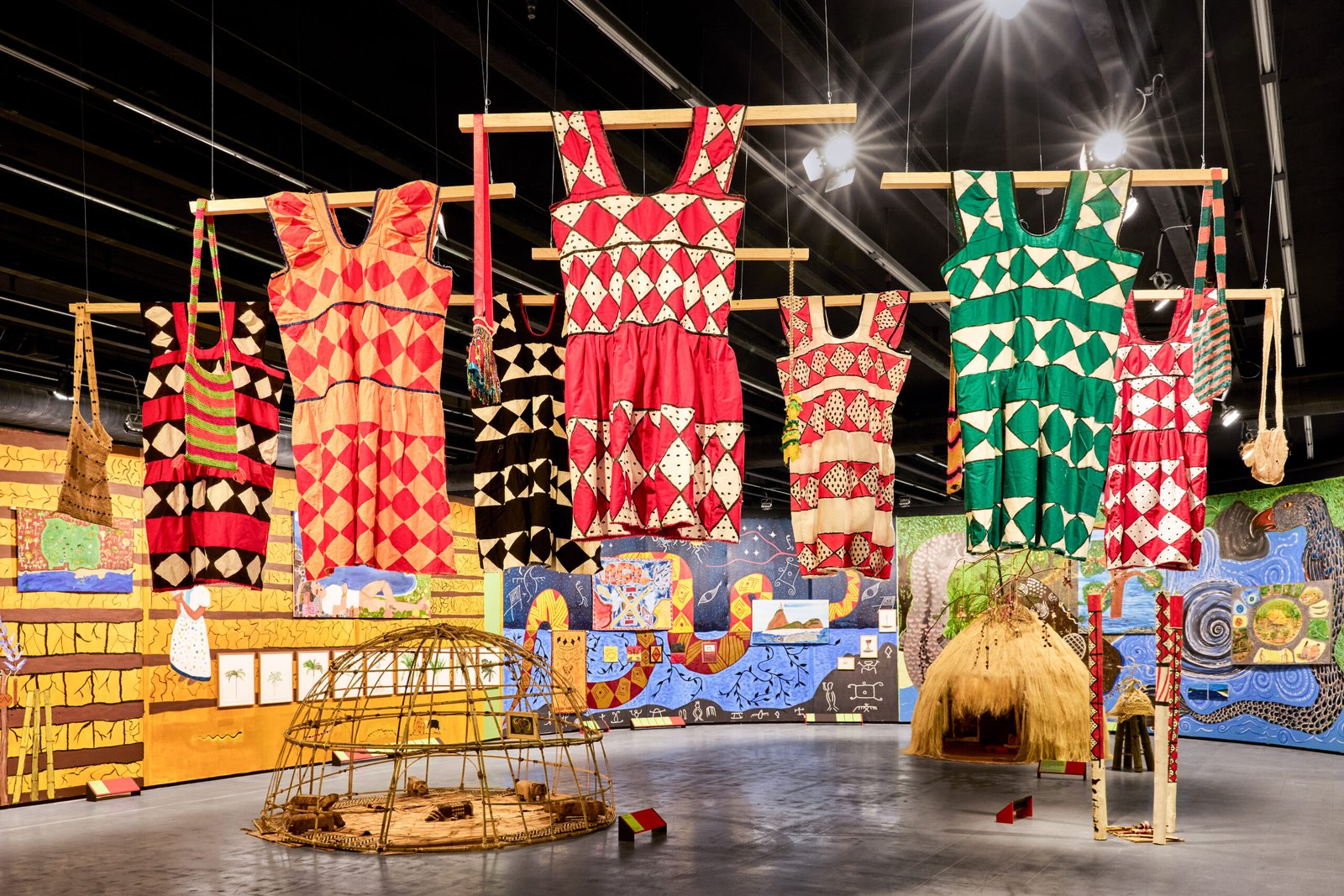
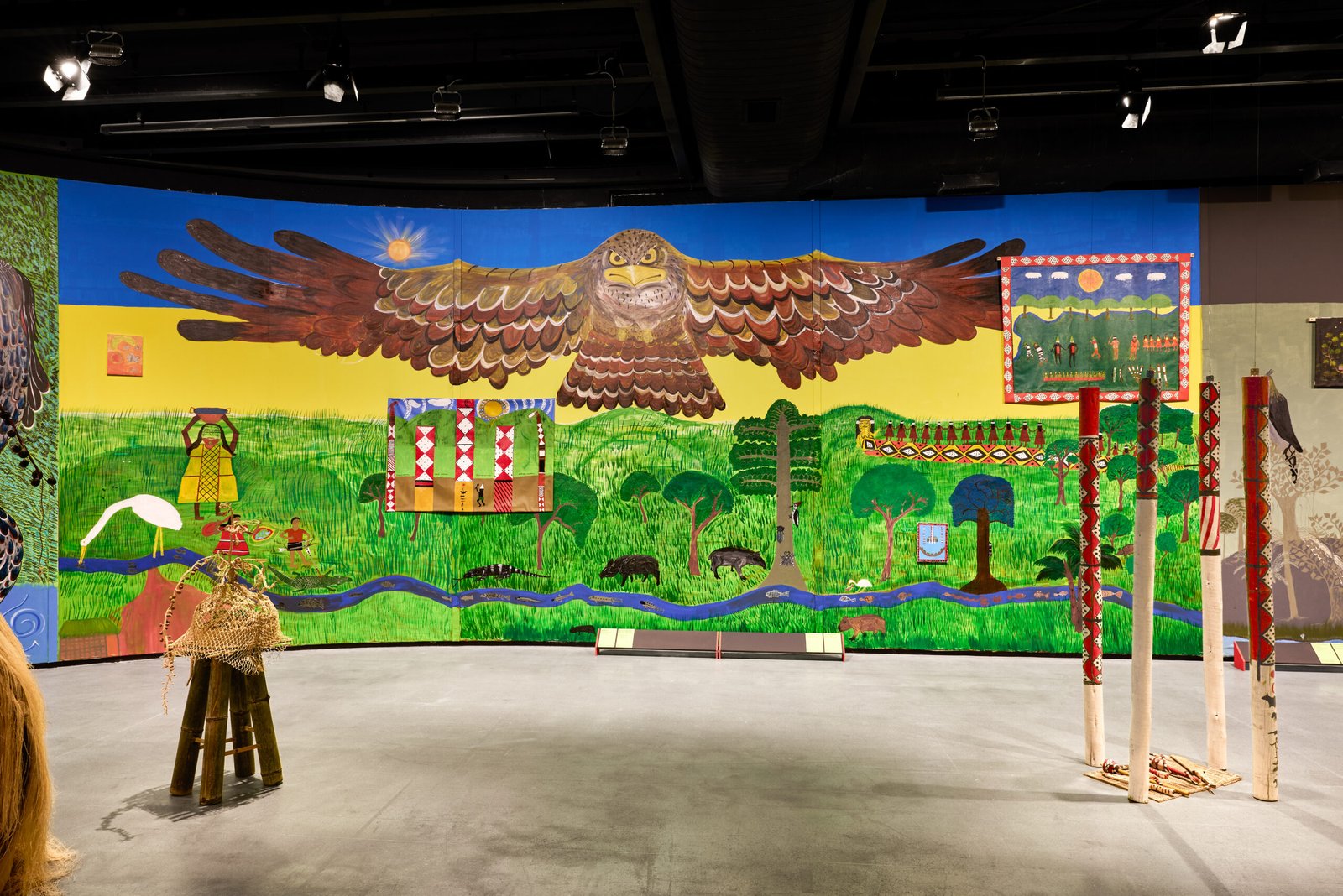
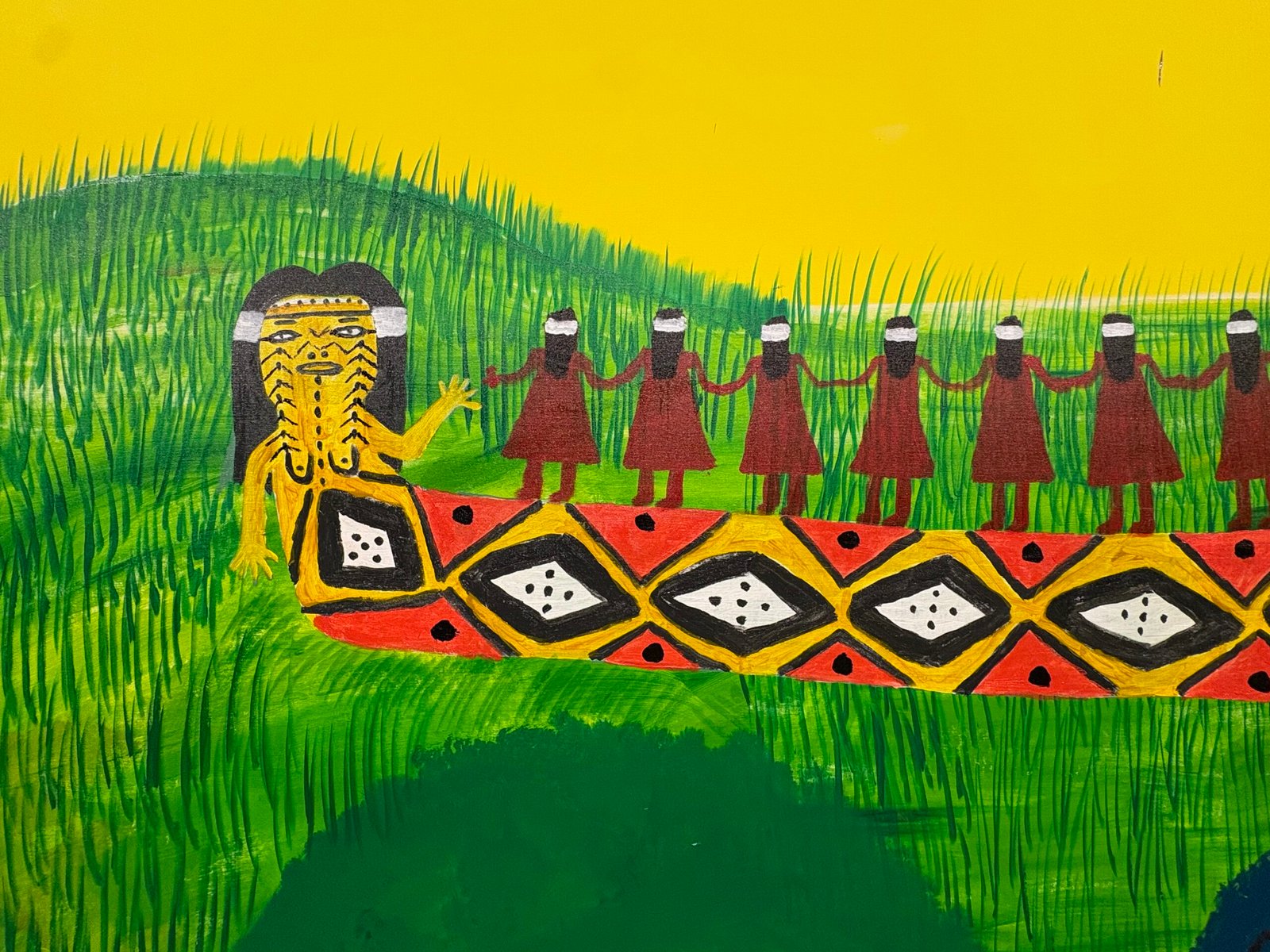
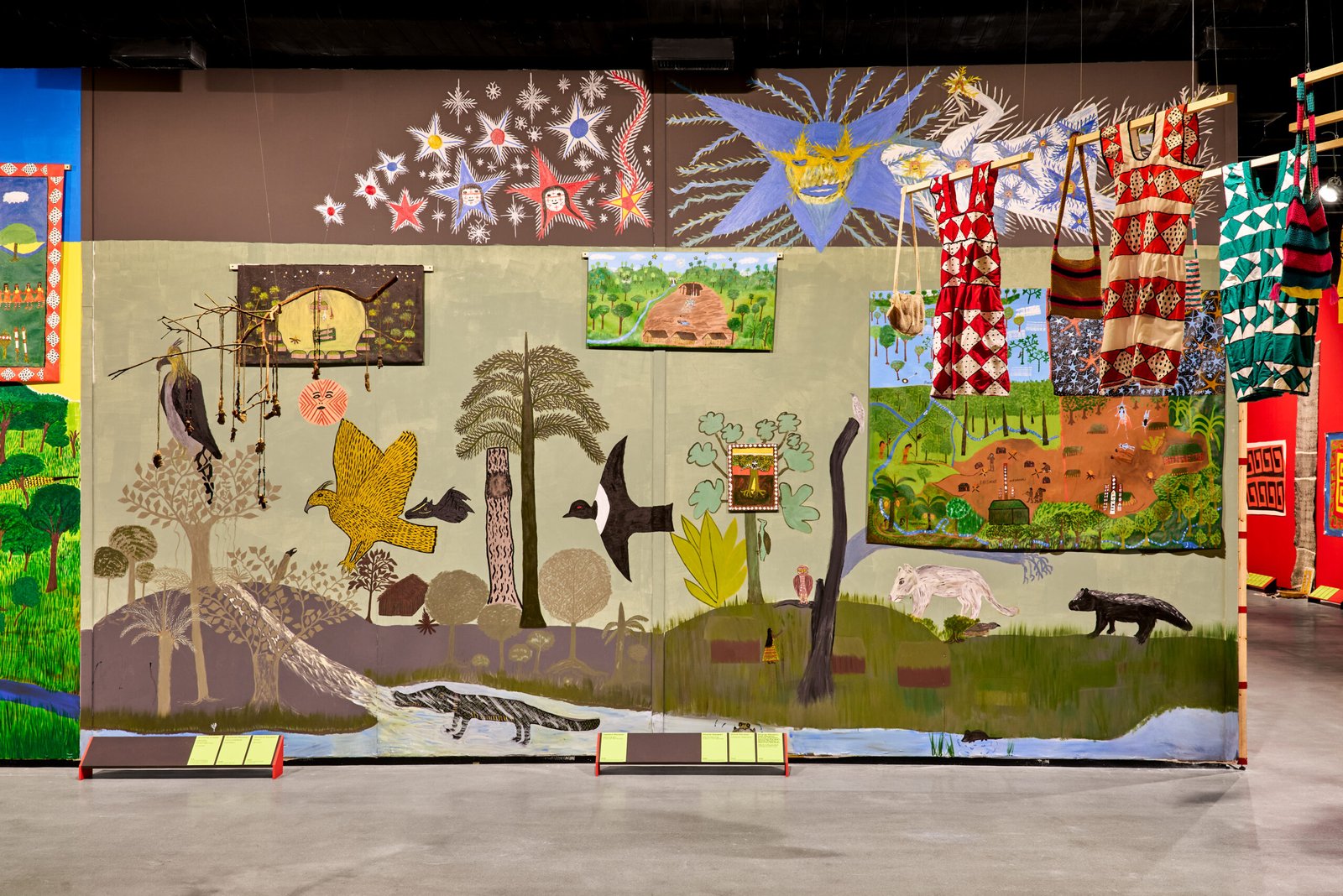
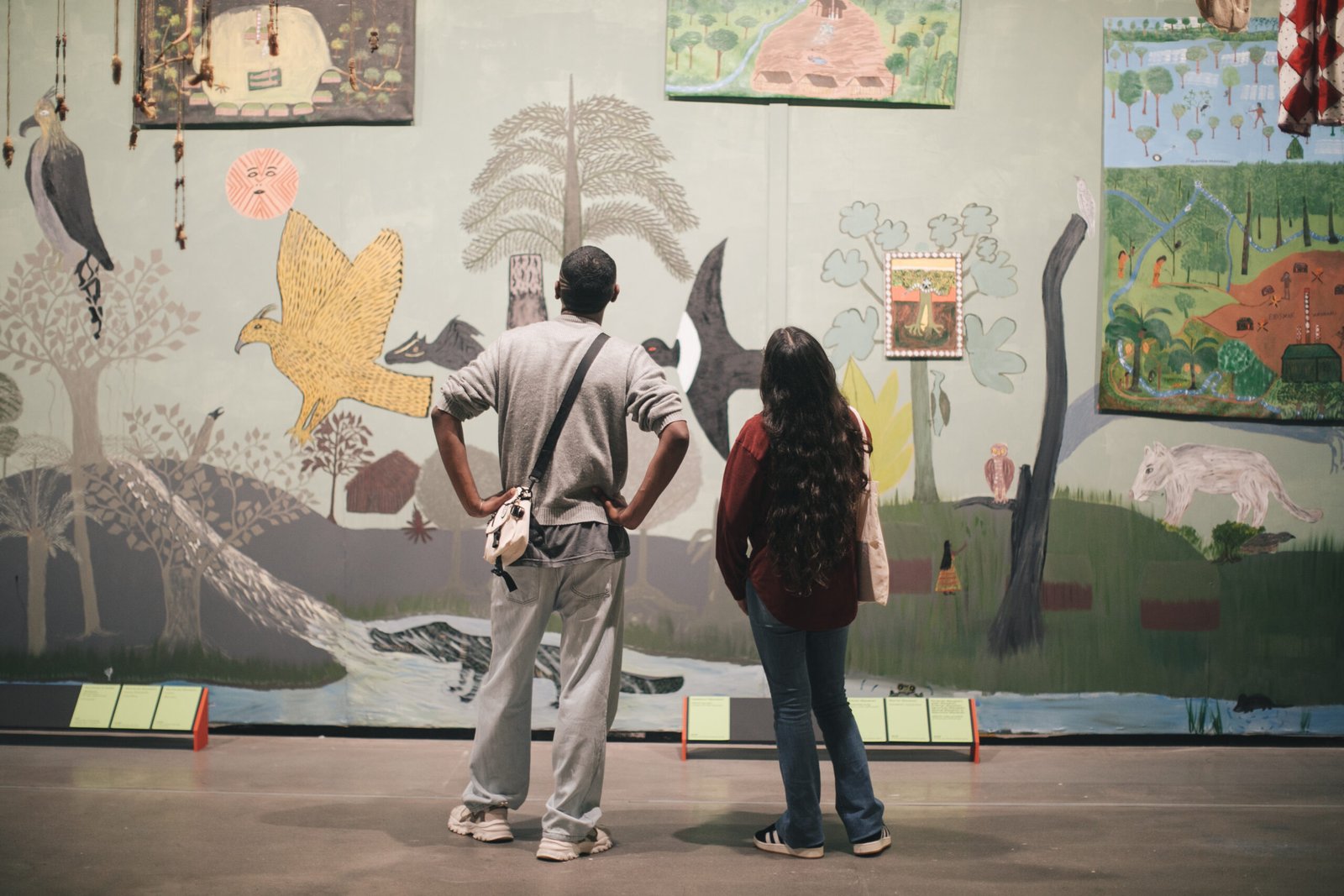
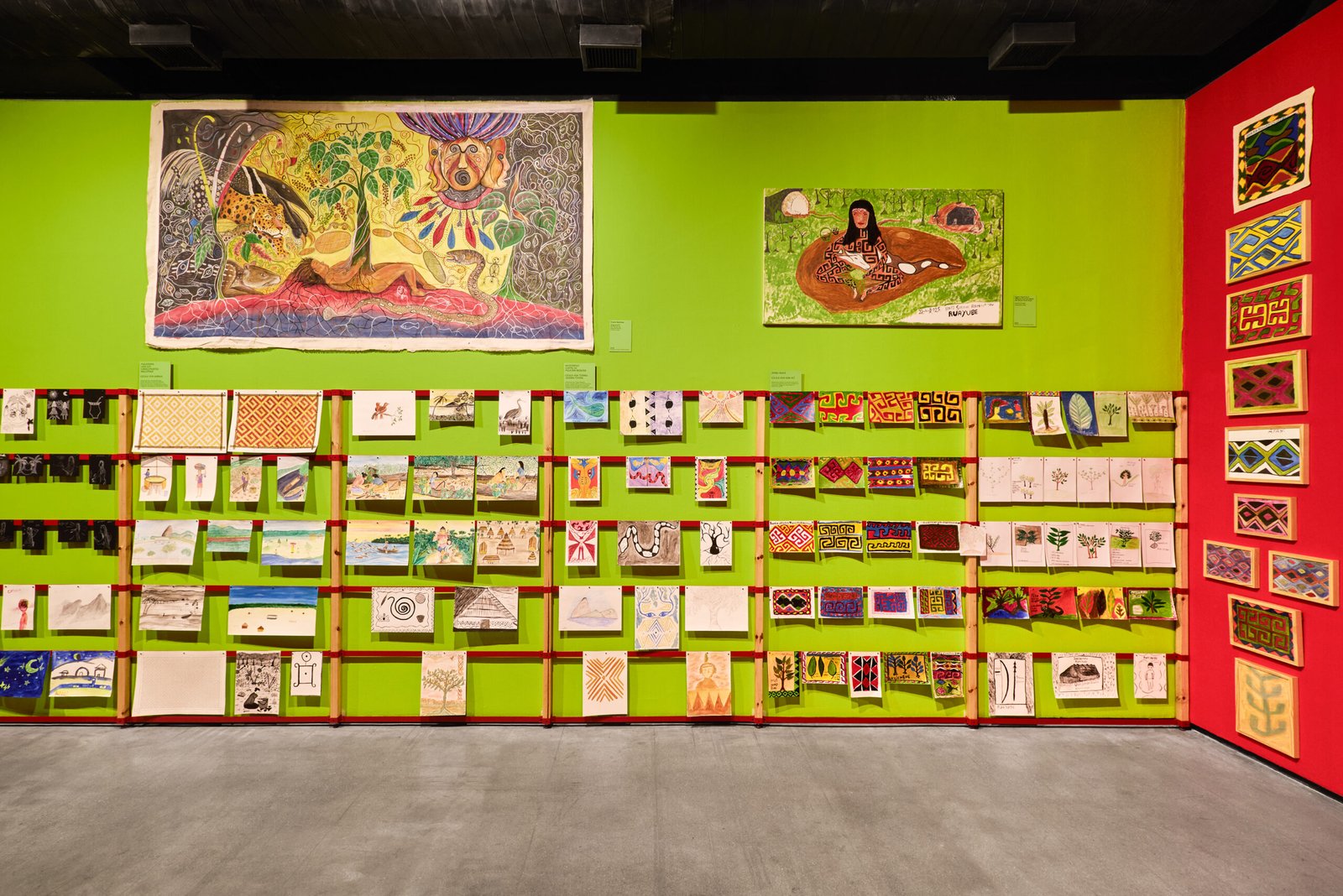
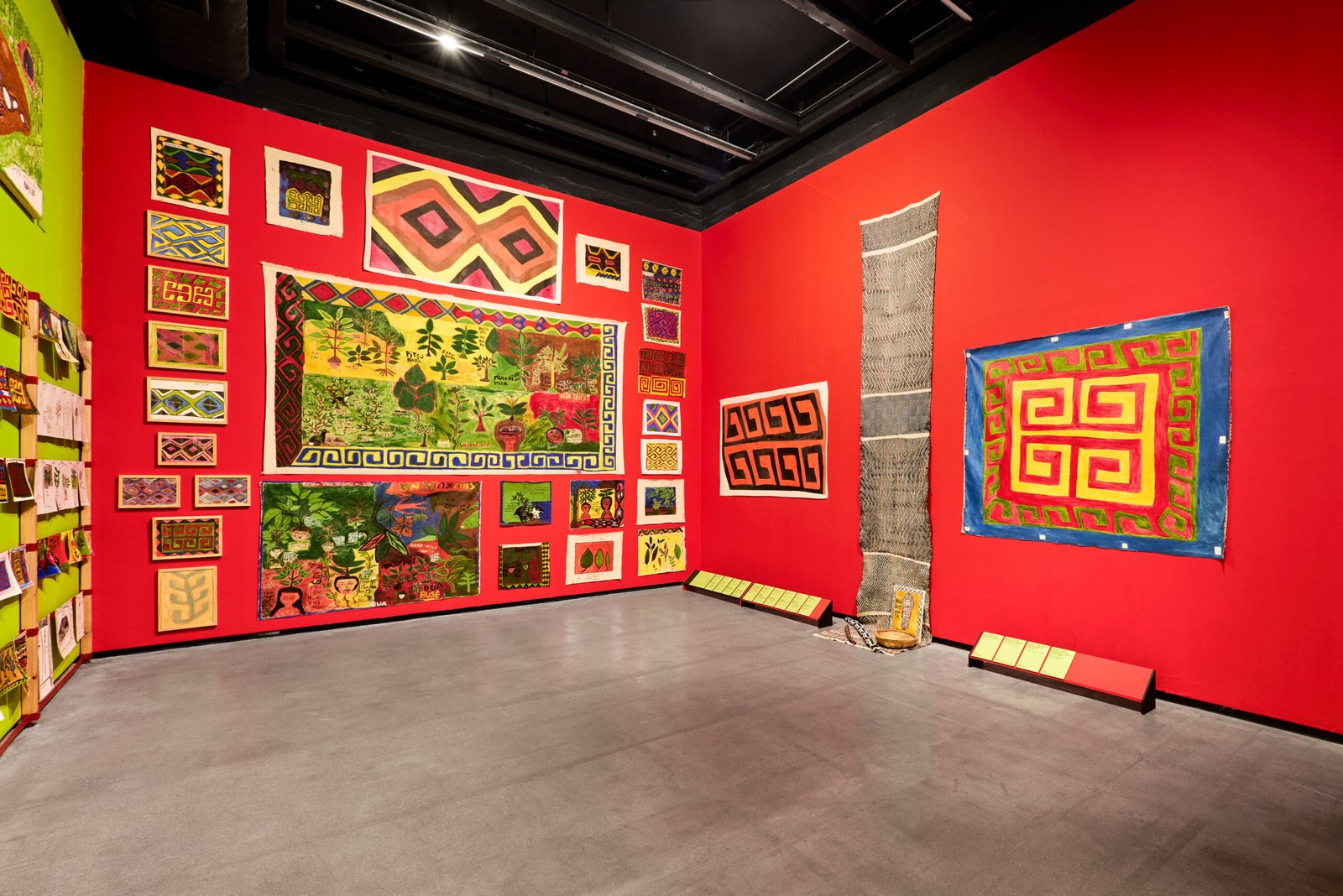
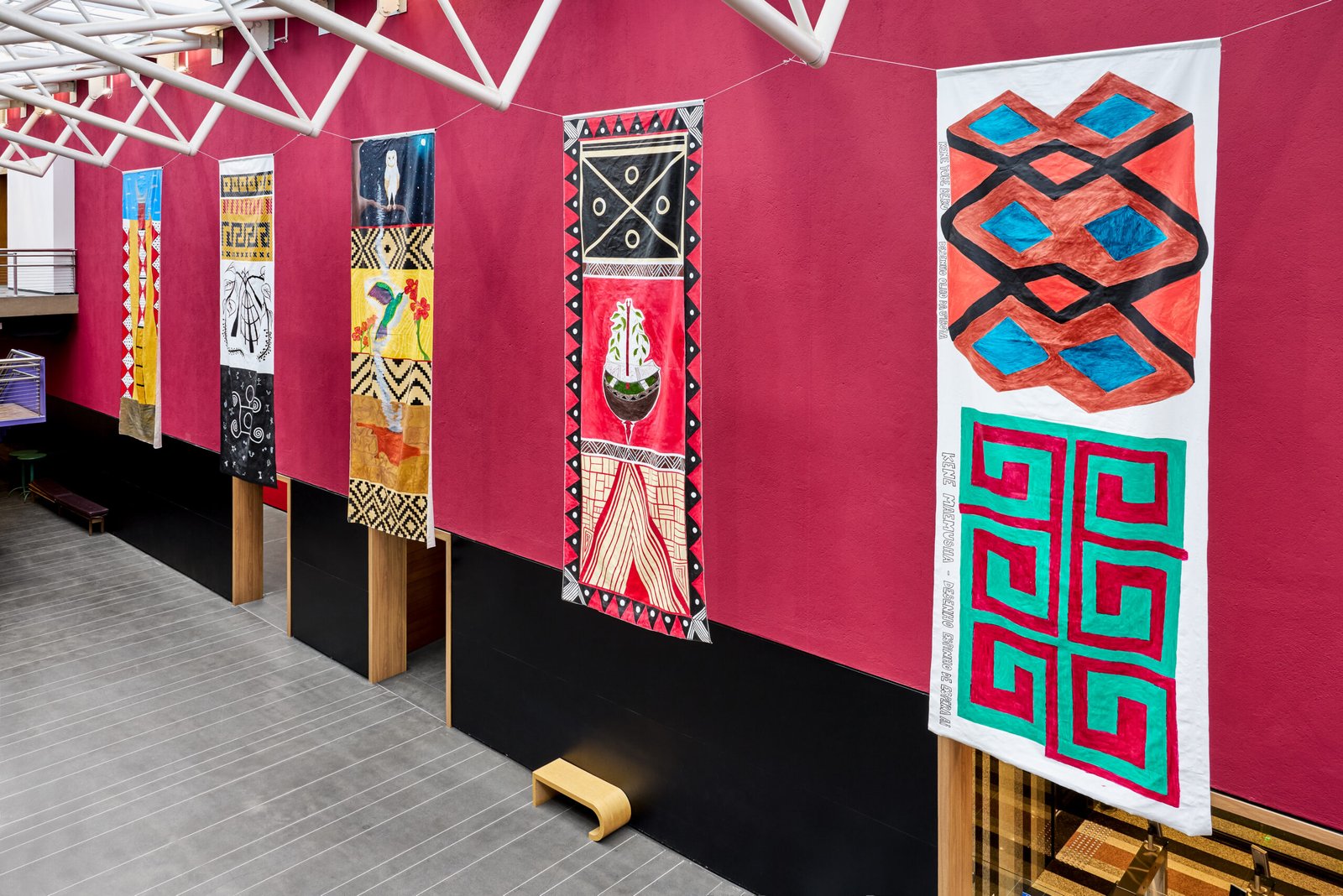
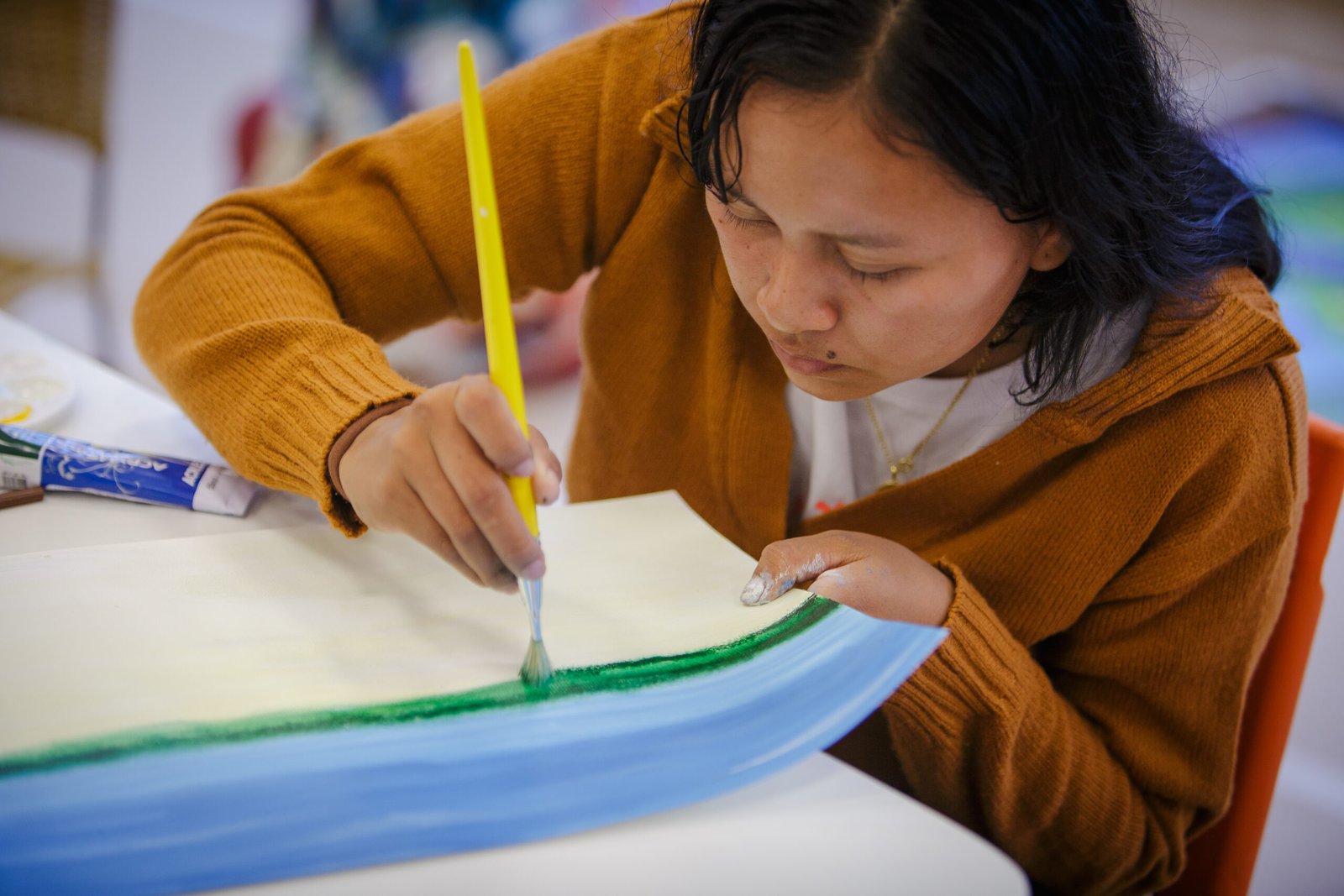
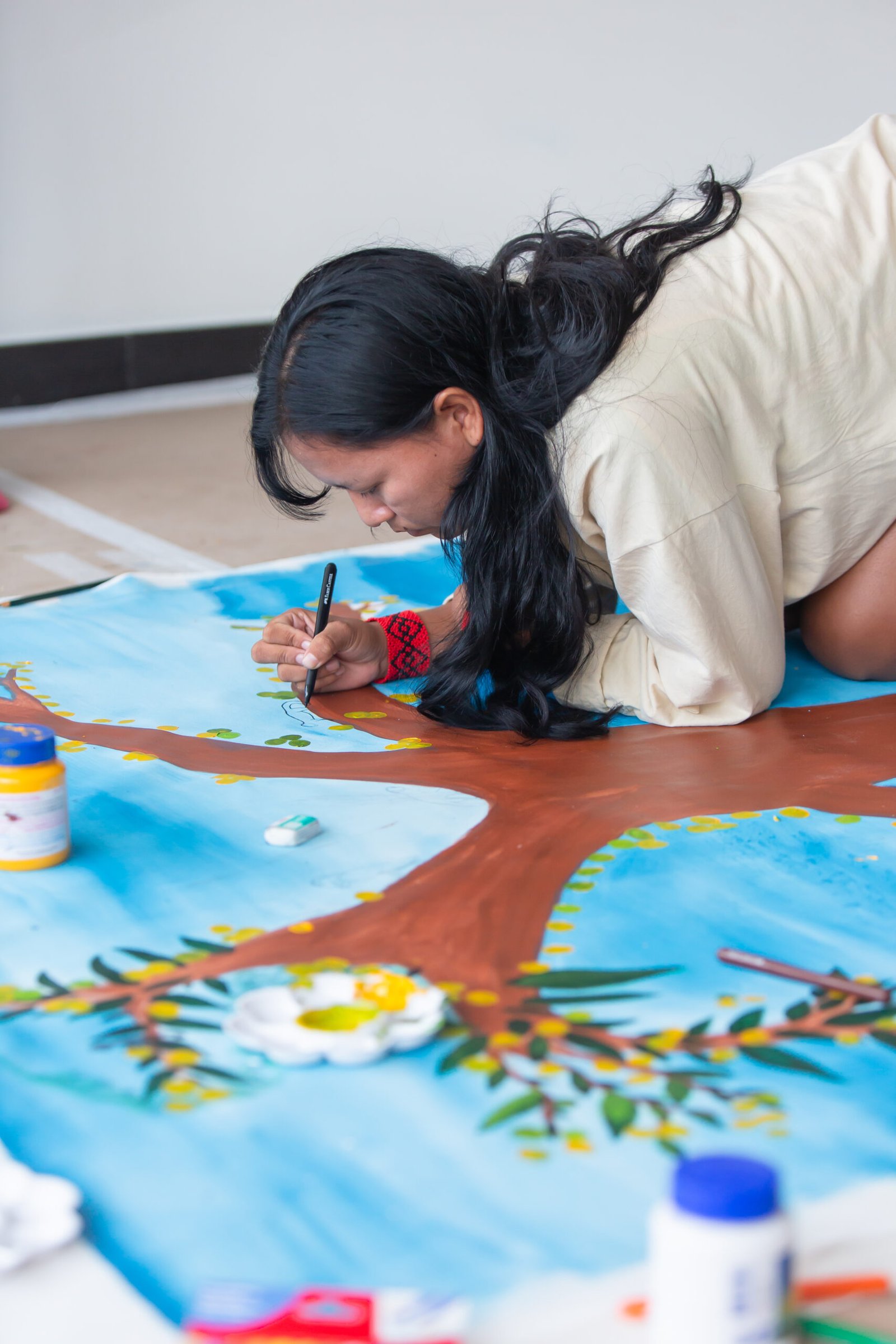
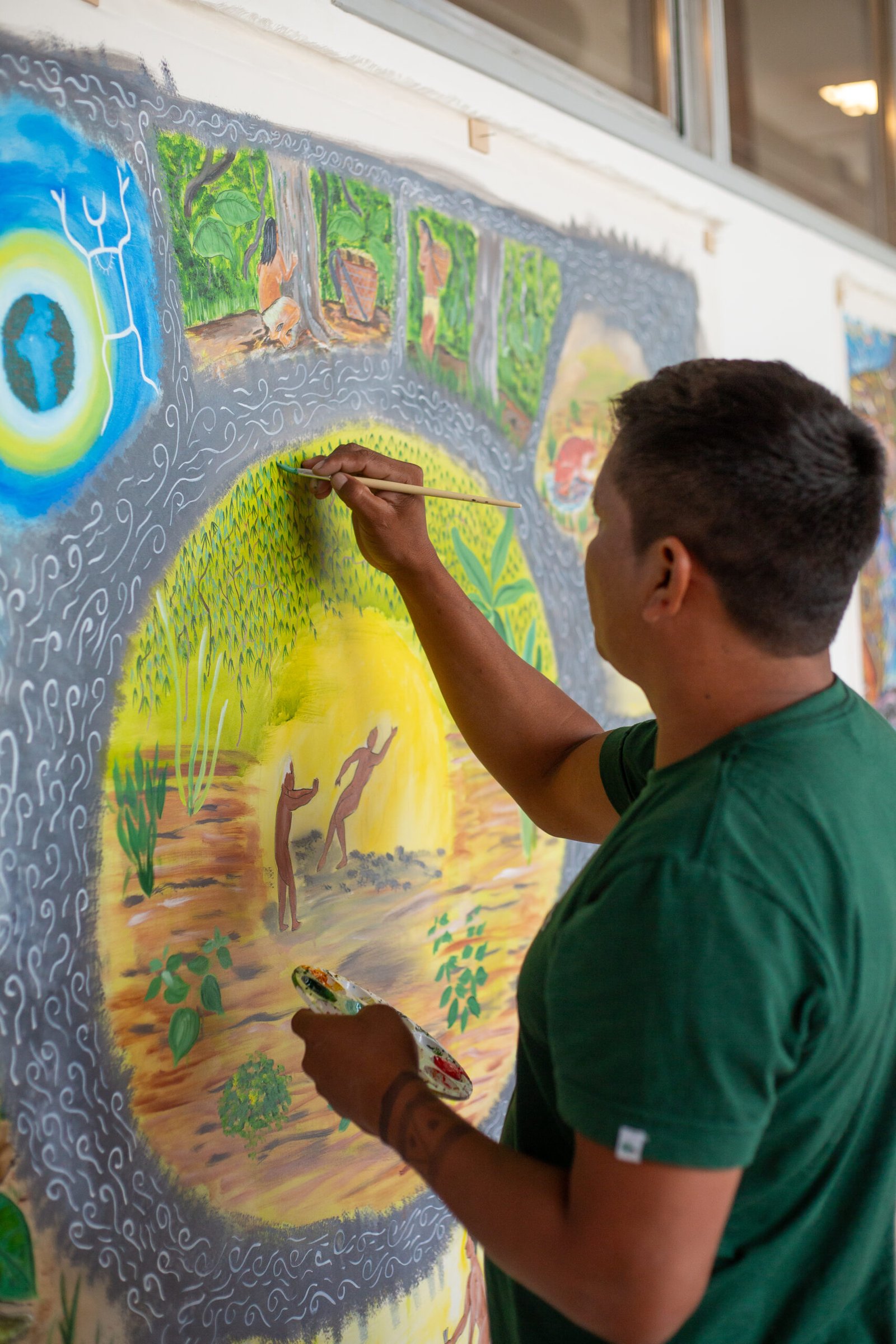
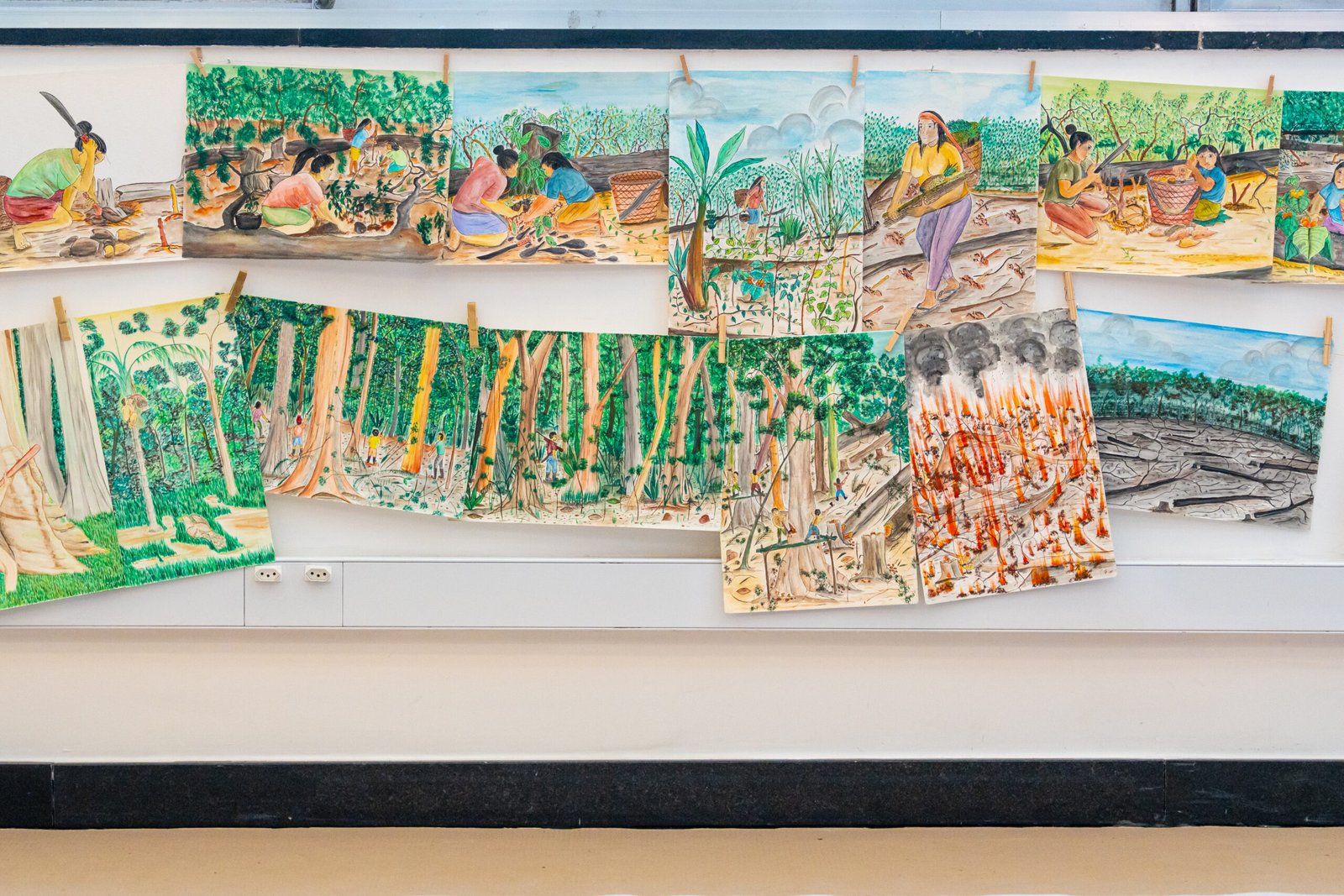
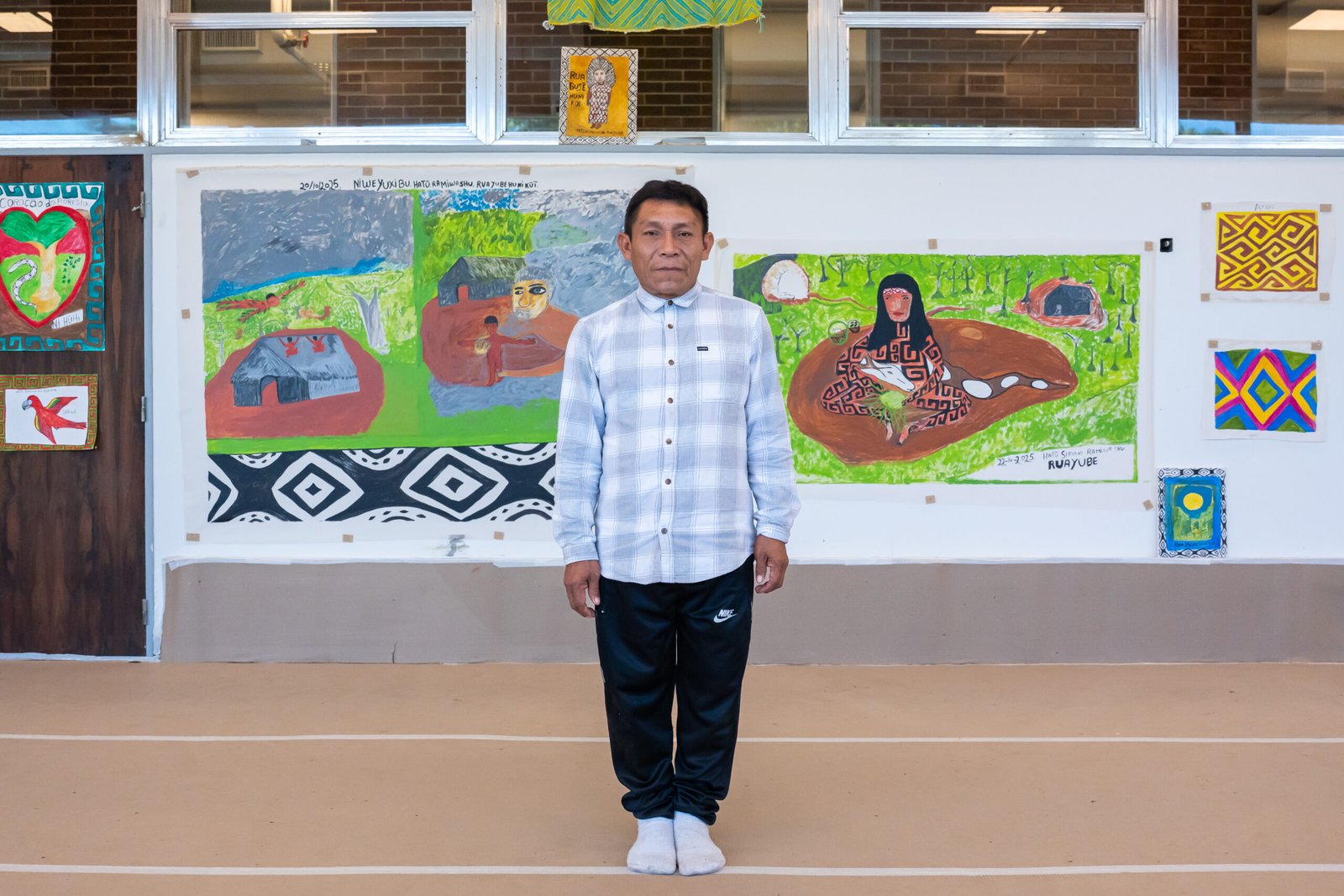
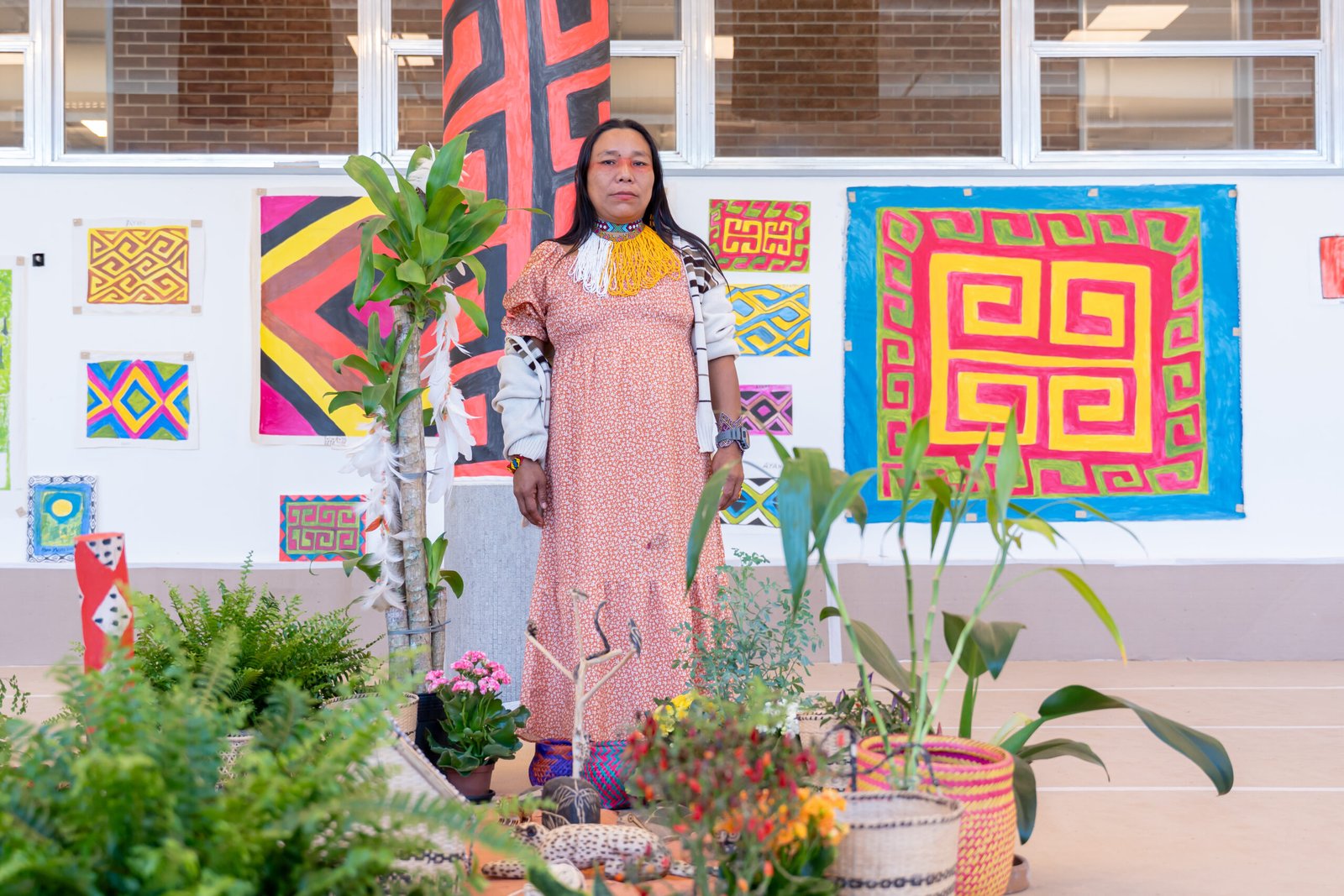
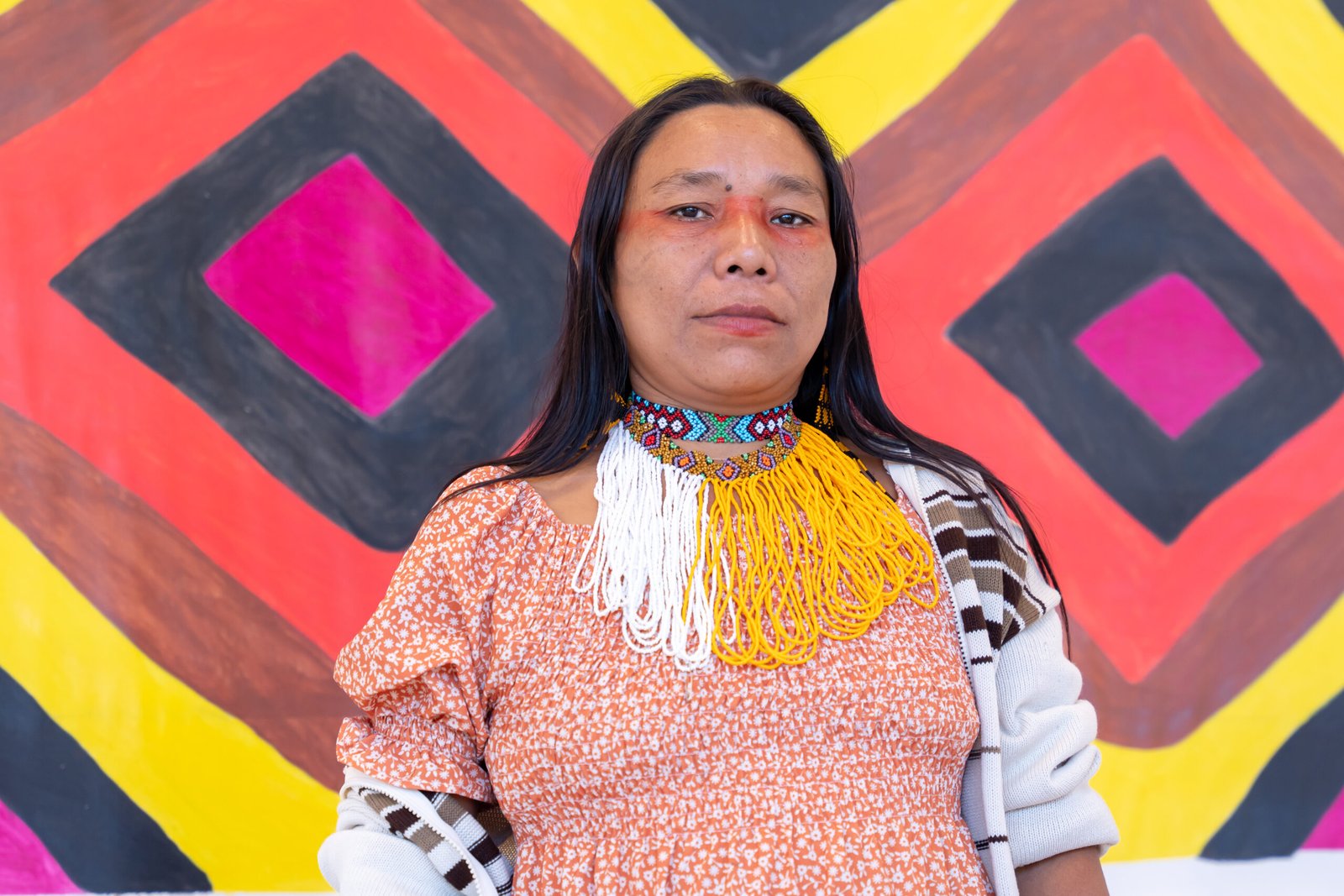
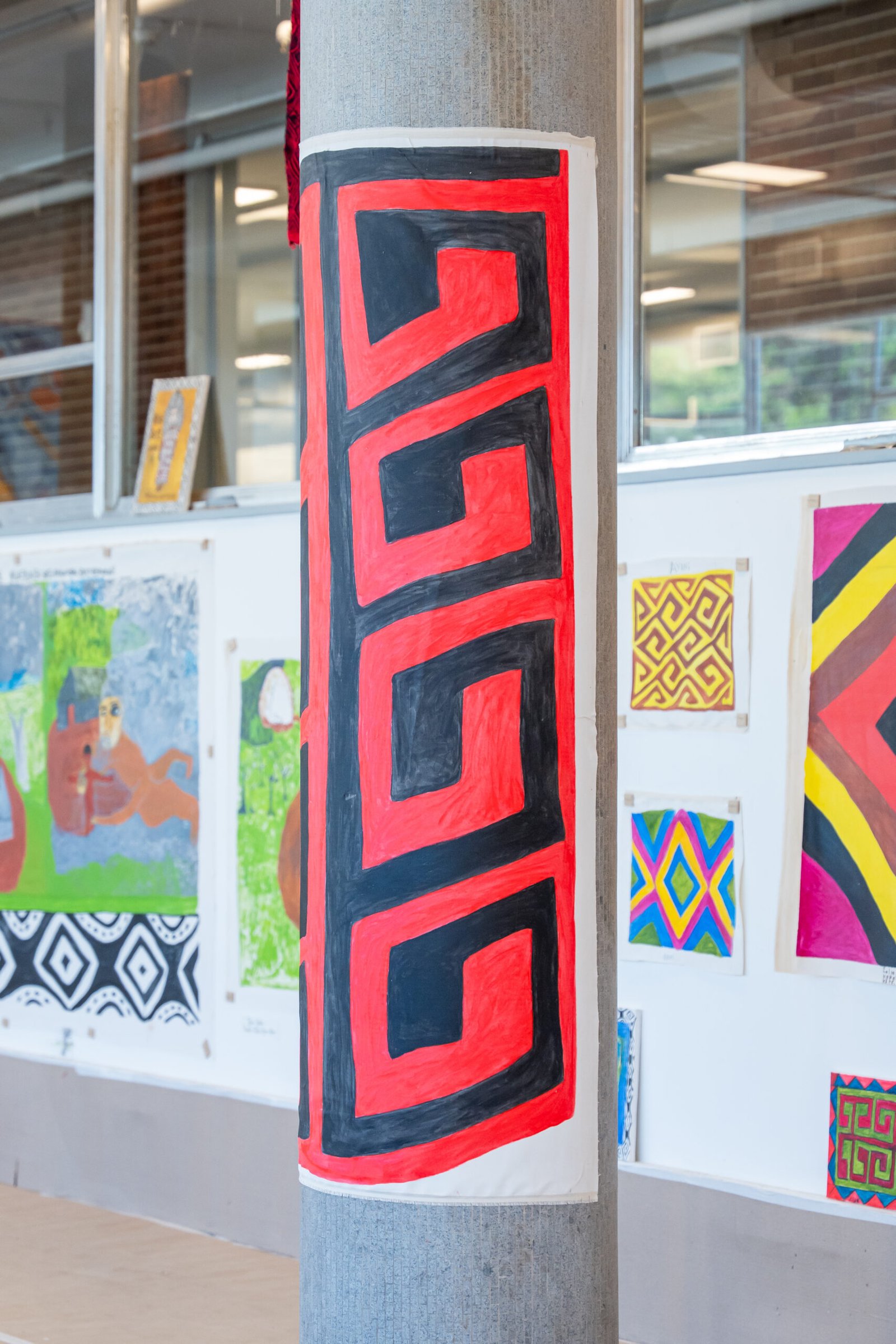
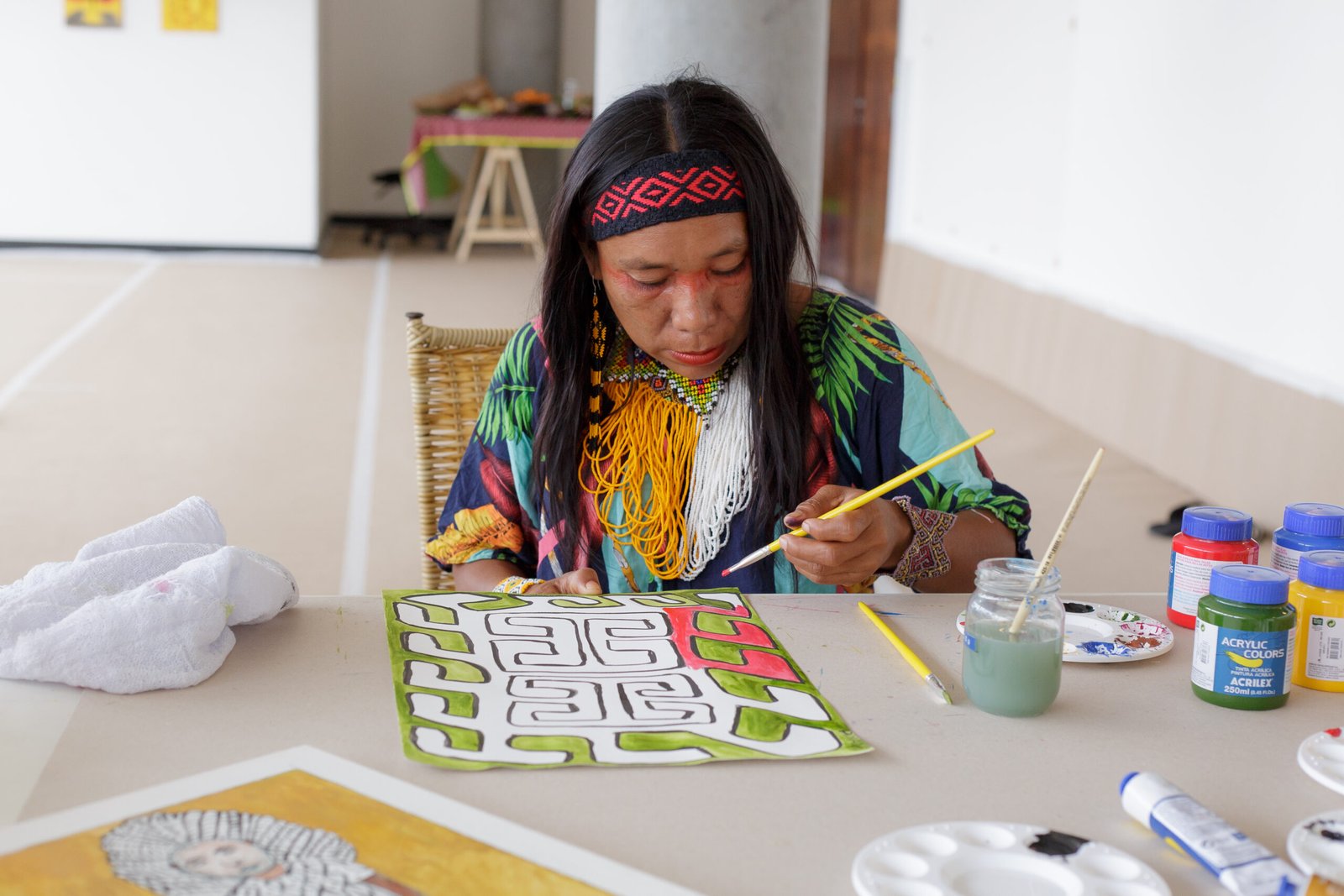
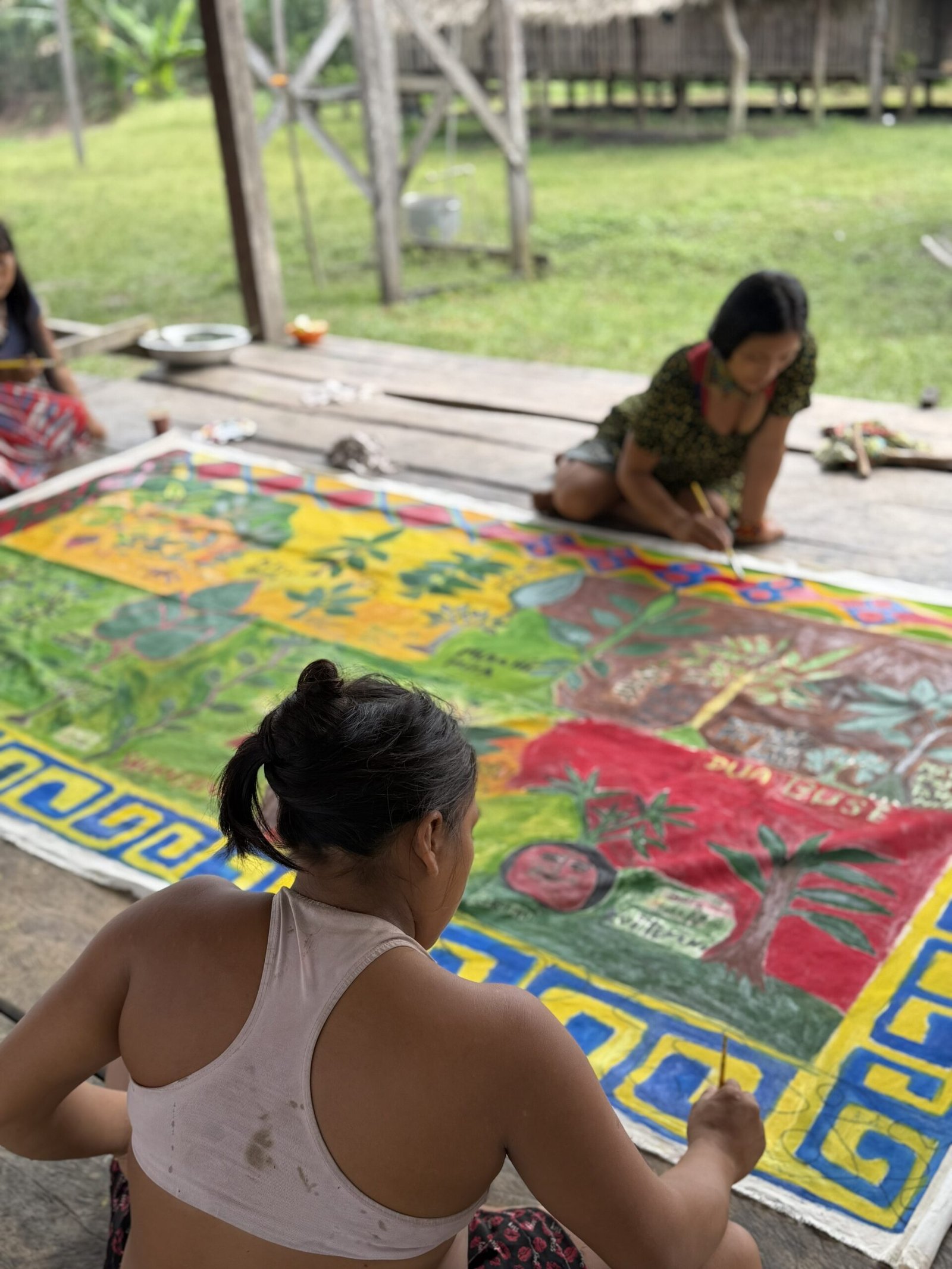
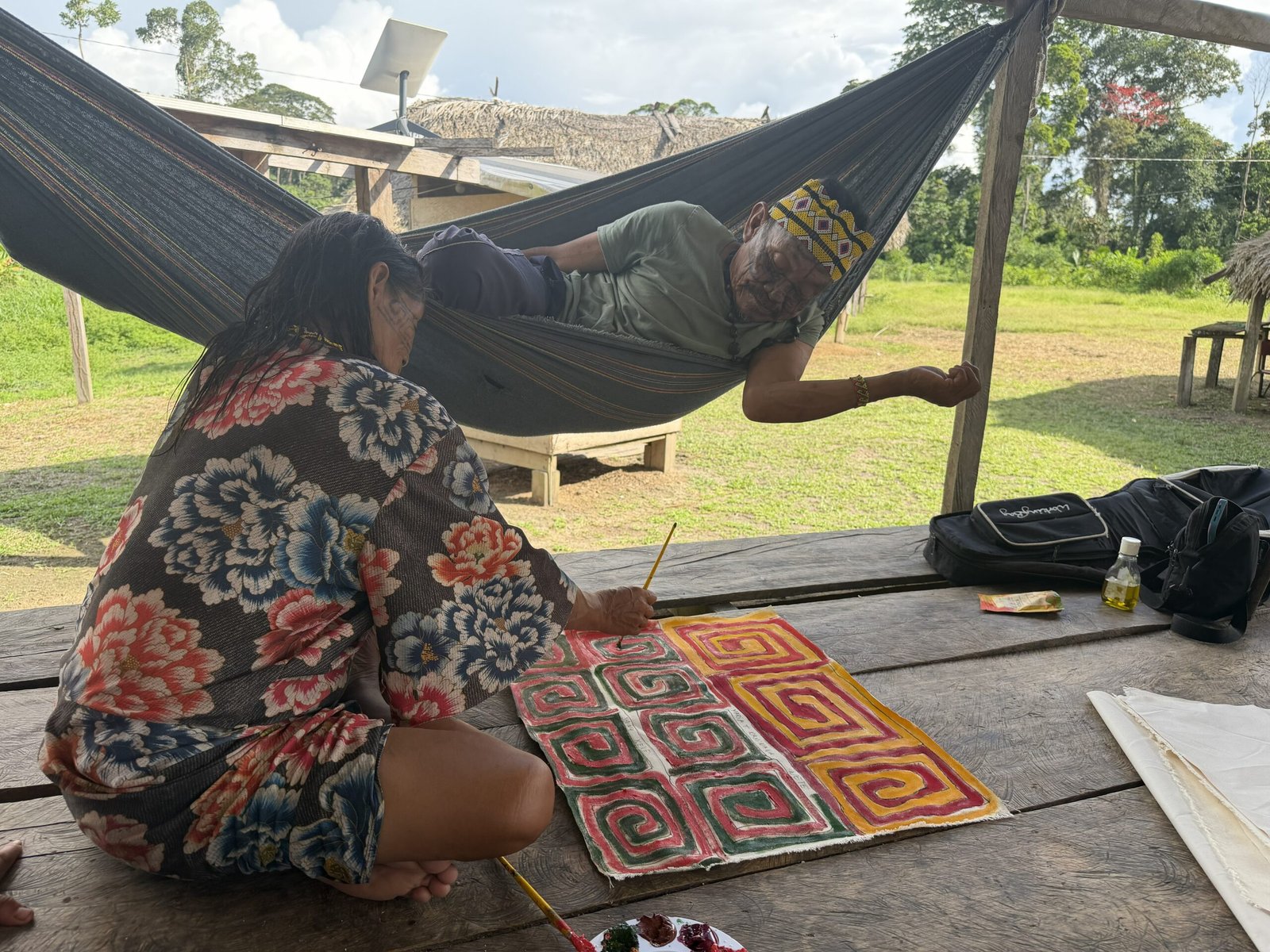
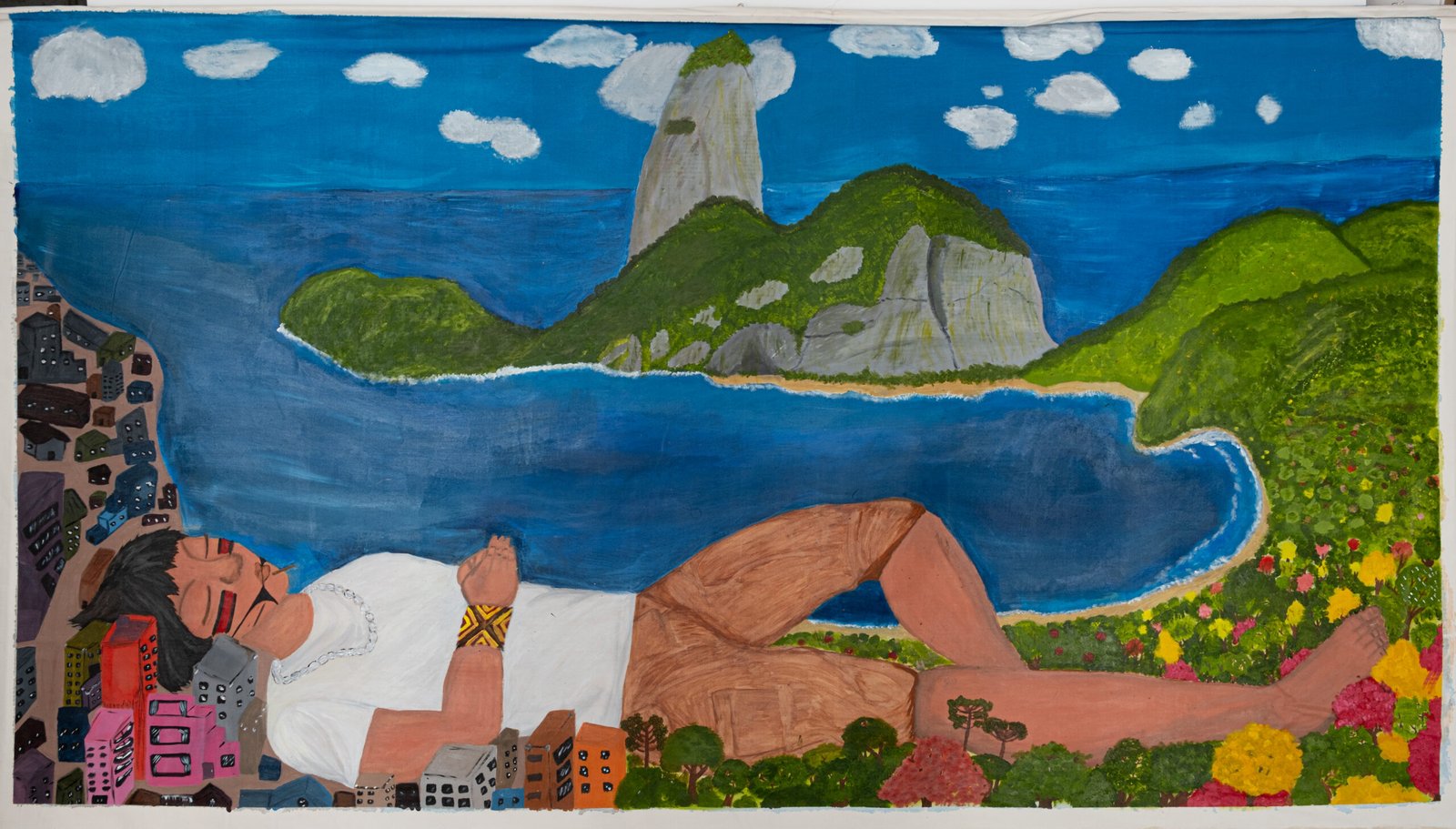
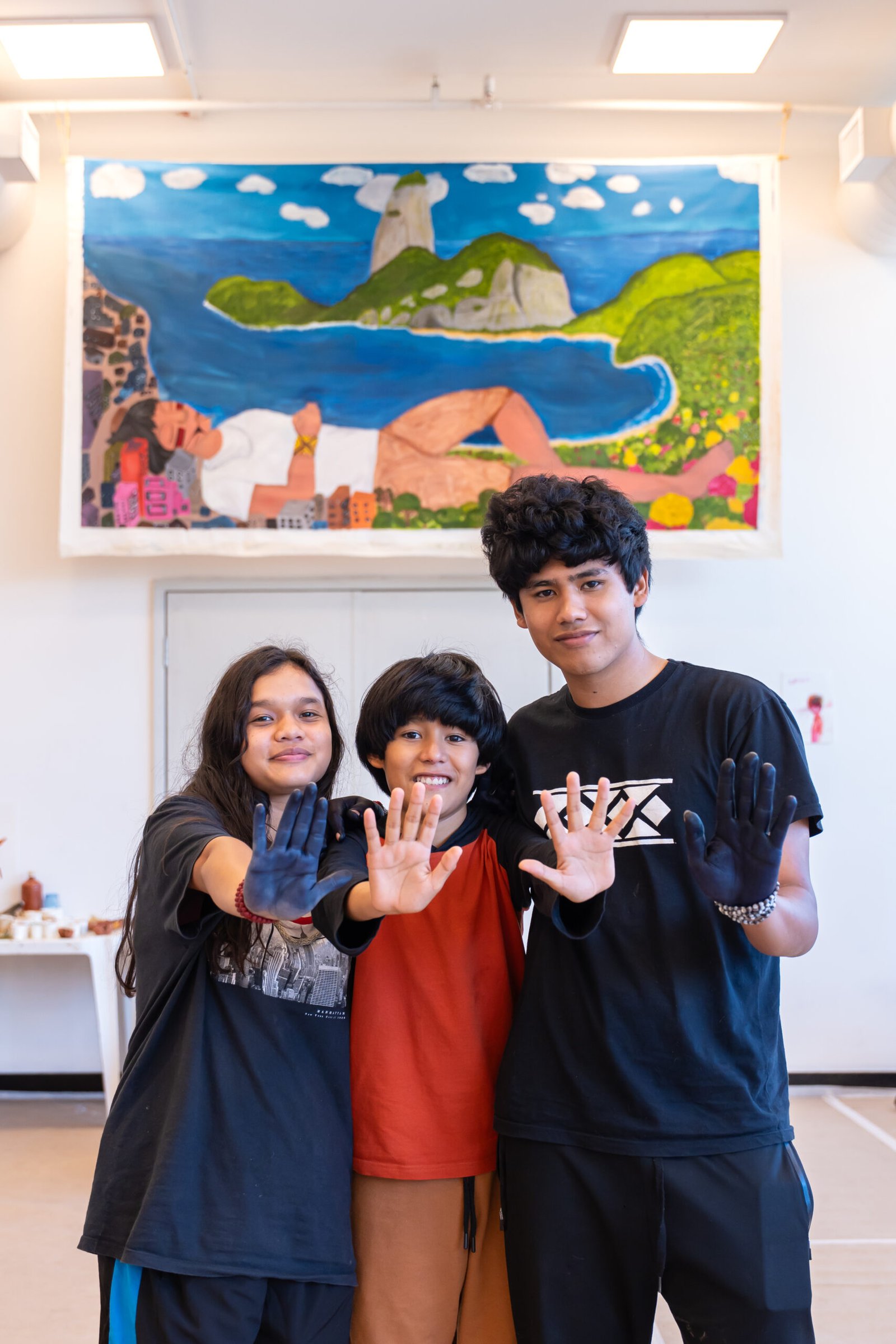
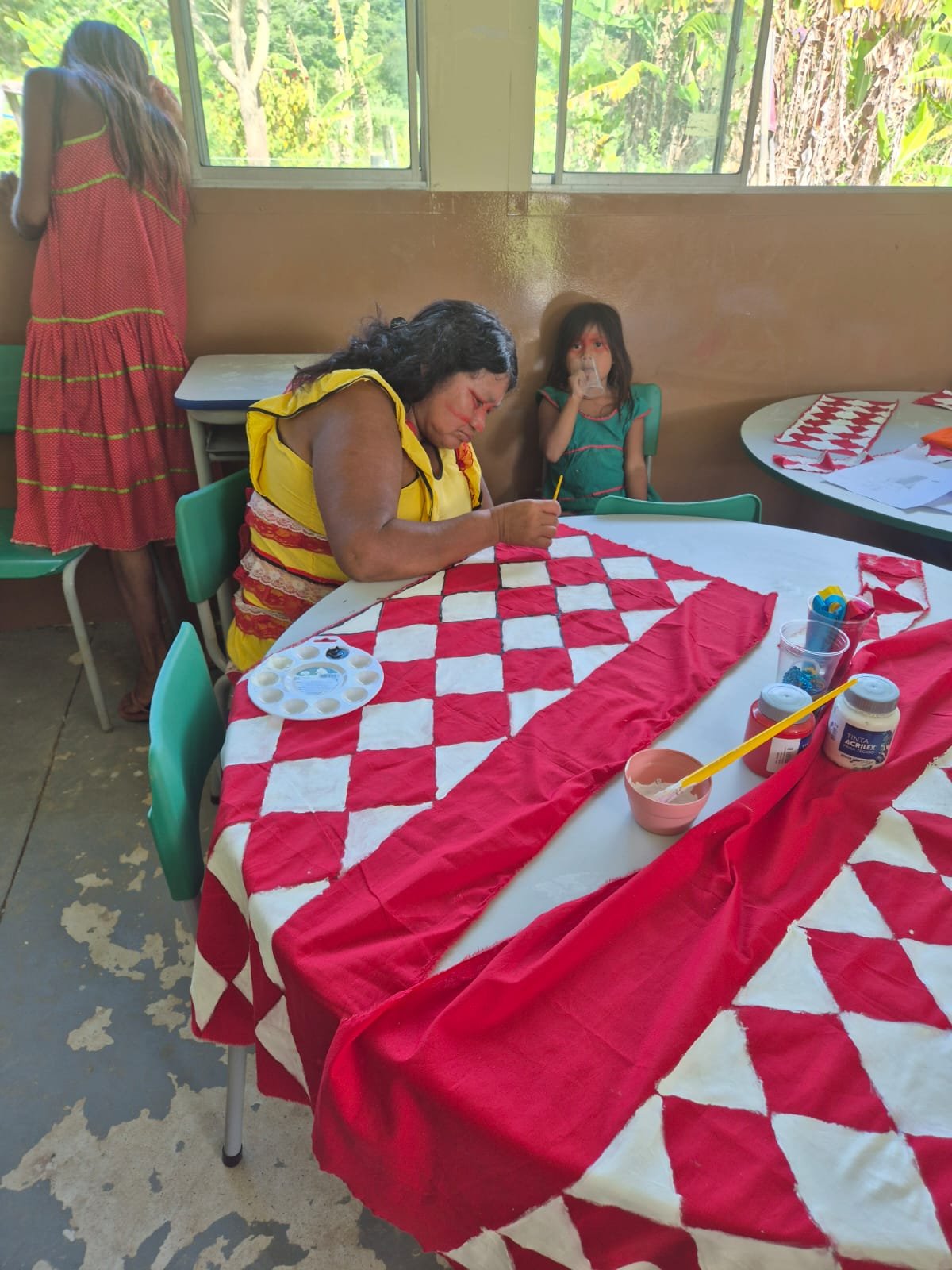
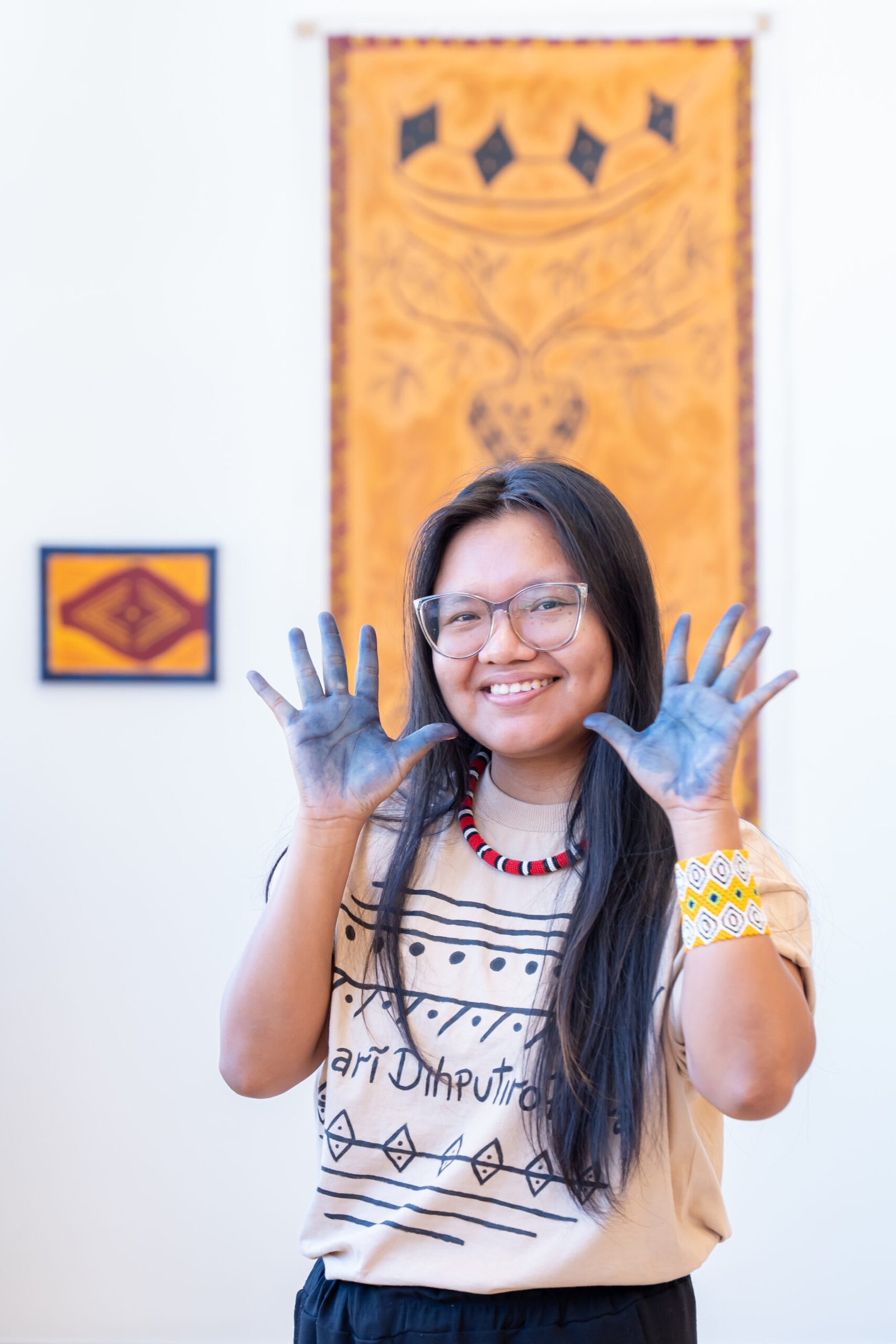
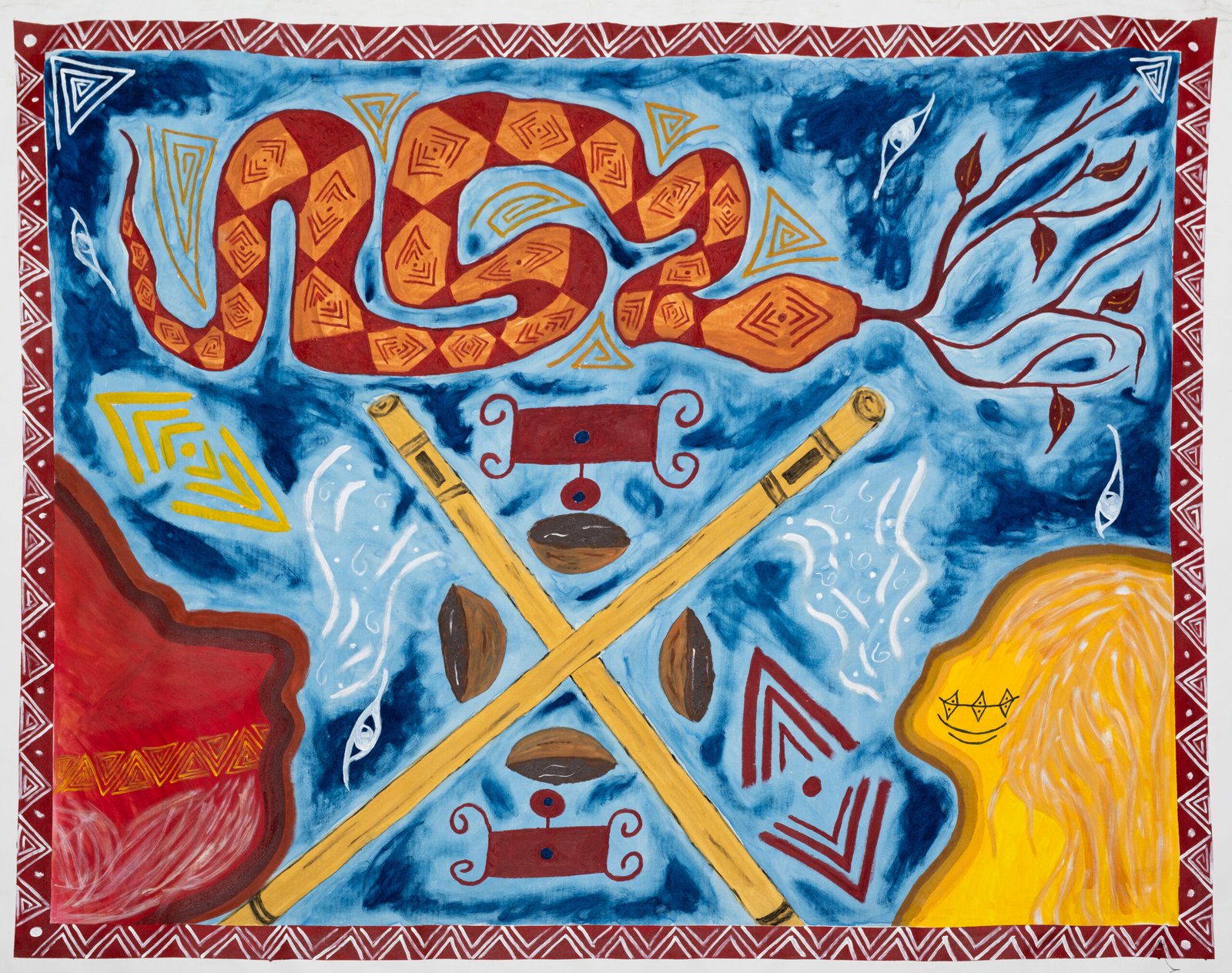
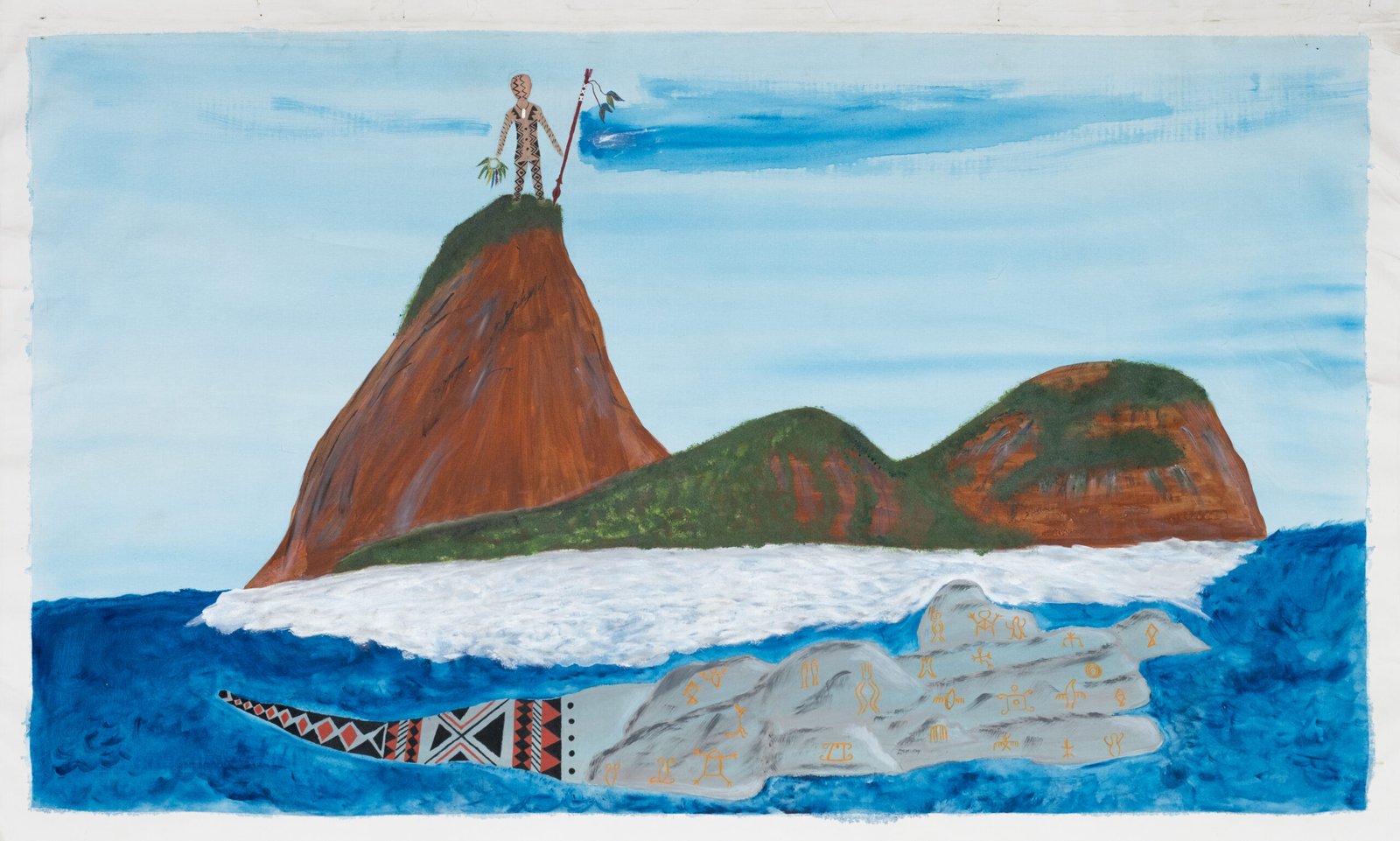
For the opening, 25 Indigenous artists created a large-scale painting within the exhibition space, conceived as a backdrop for much of the show and integrated with other works throughout the exhibition. The exhibition also features five banners with graphic motifs from the peoples that make up the Living Schools. Together, these works amount to nearly 300 square meters of paintings created at the Tomie Ohtake Institute. In addition, each Living School presents a major collective work.
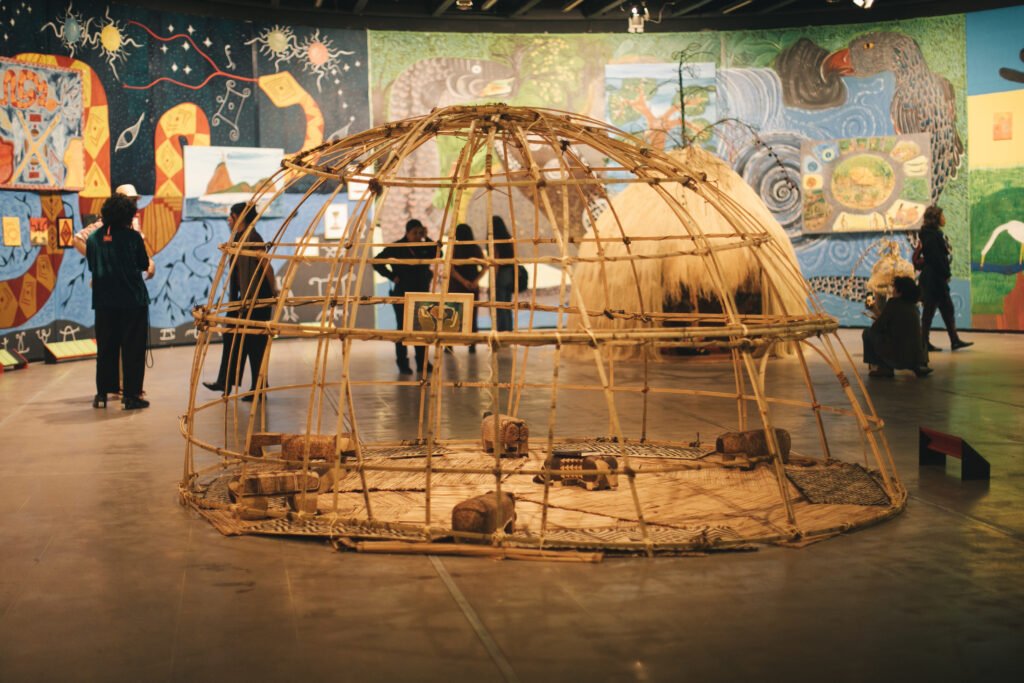
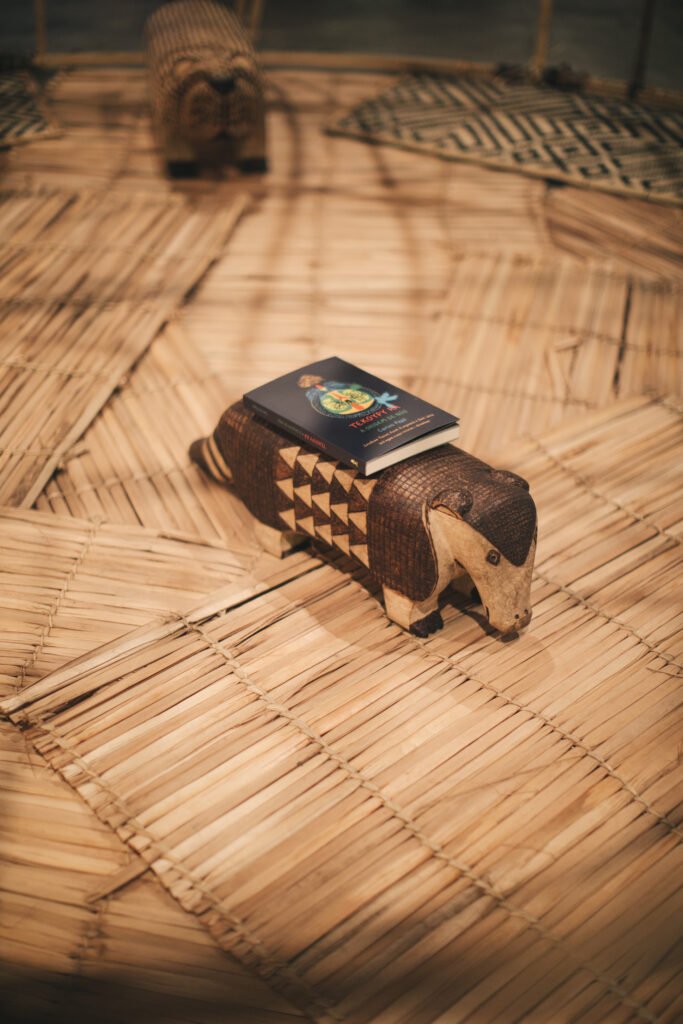
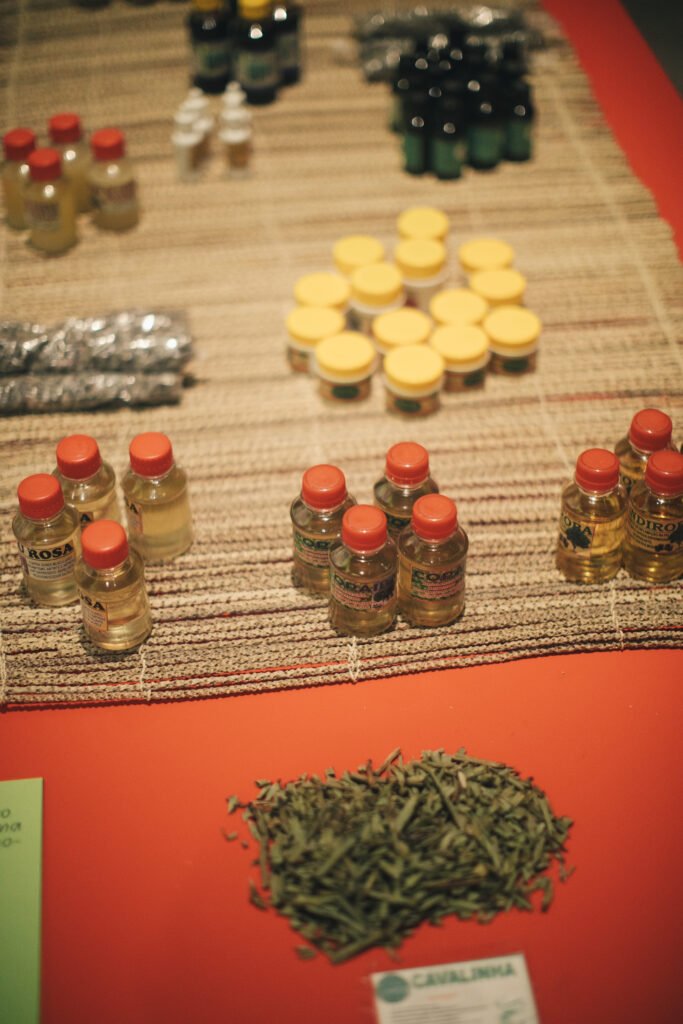
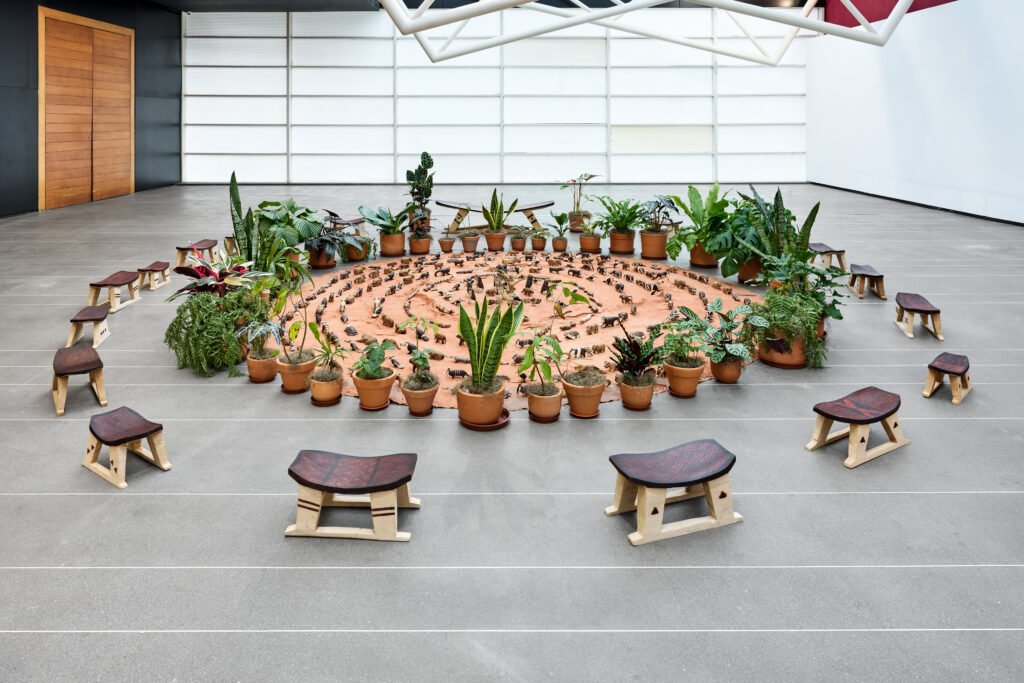
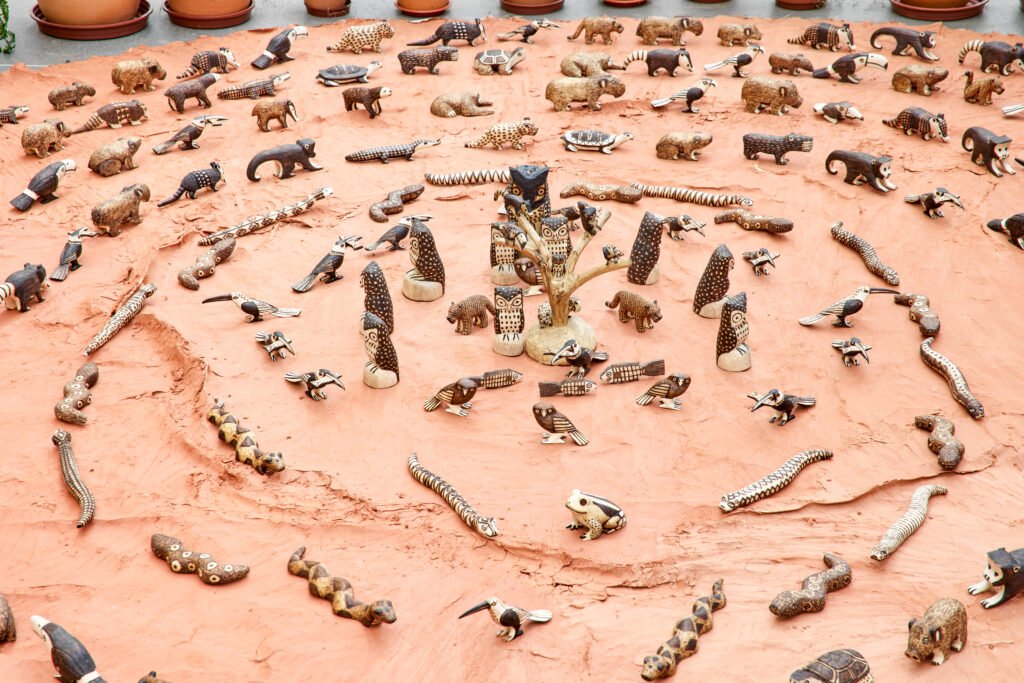
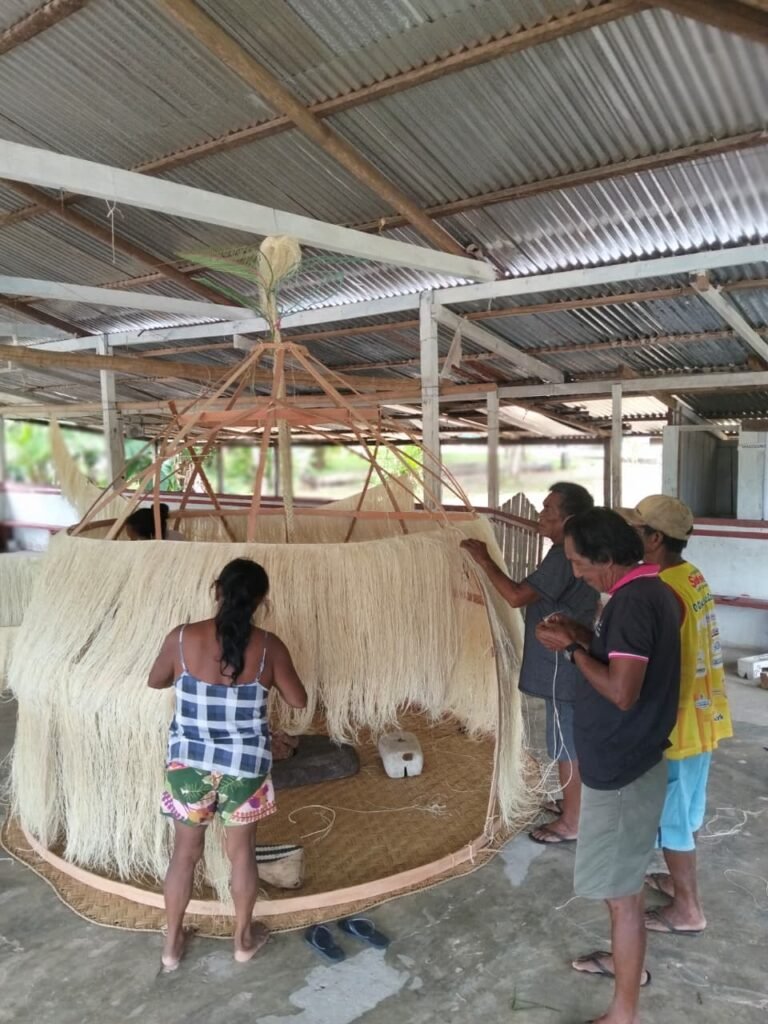
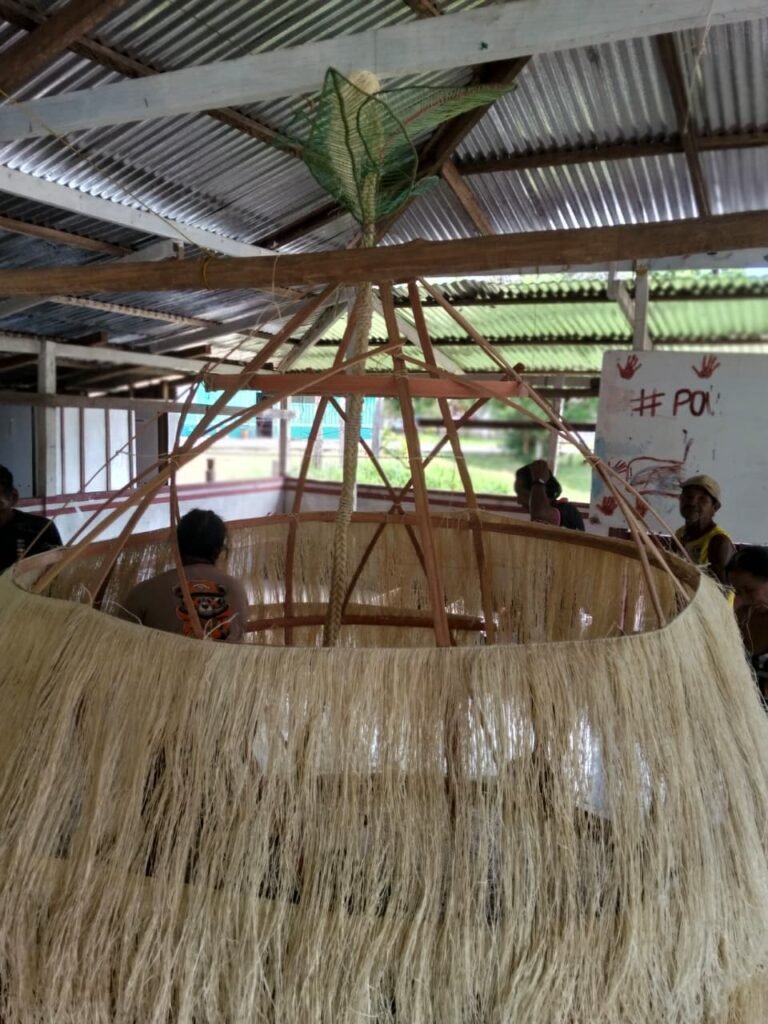
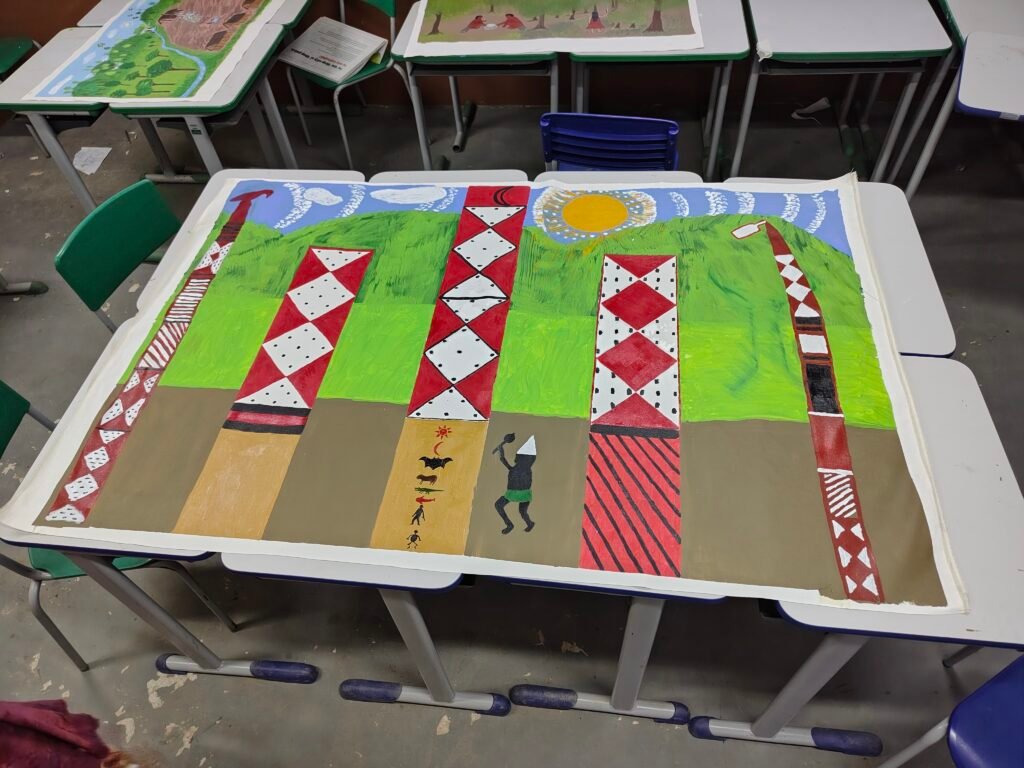
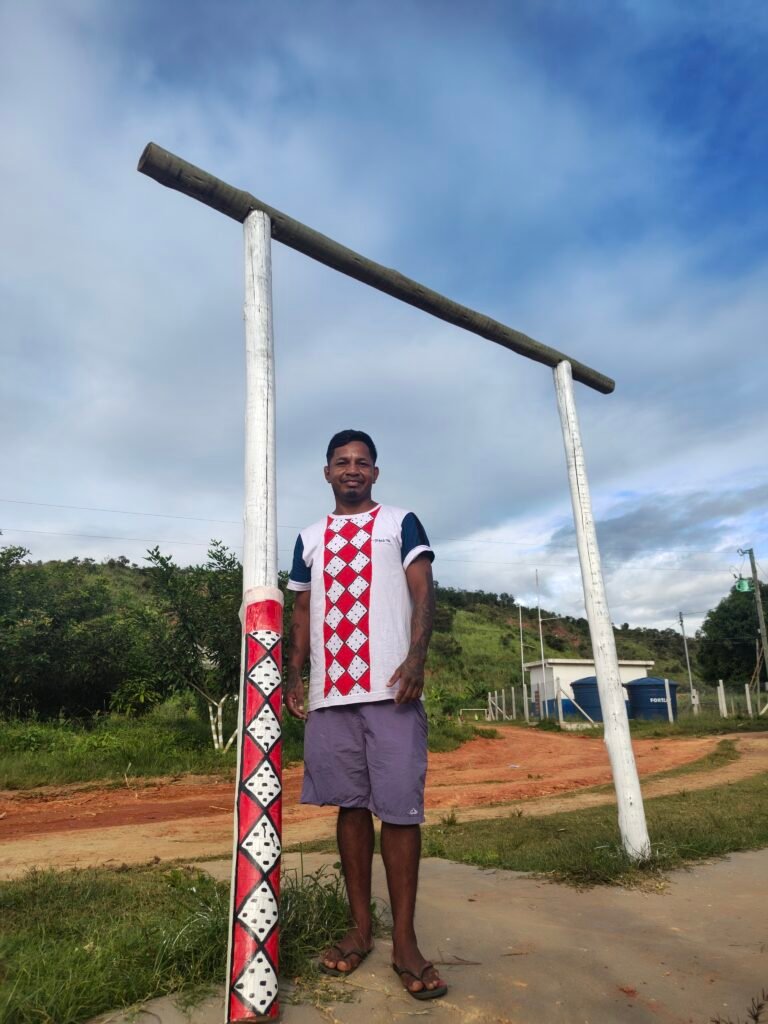
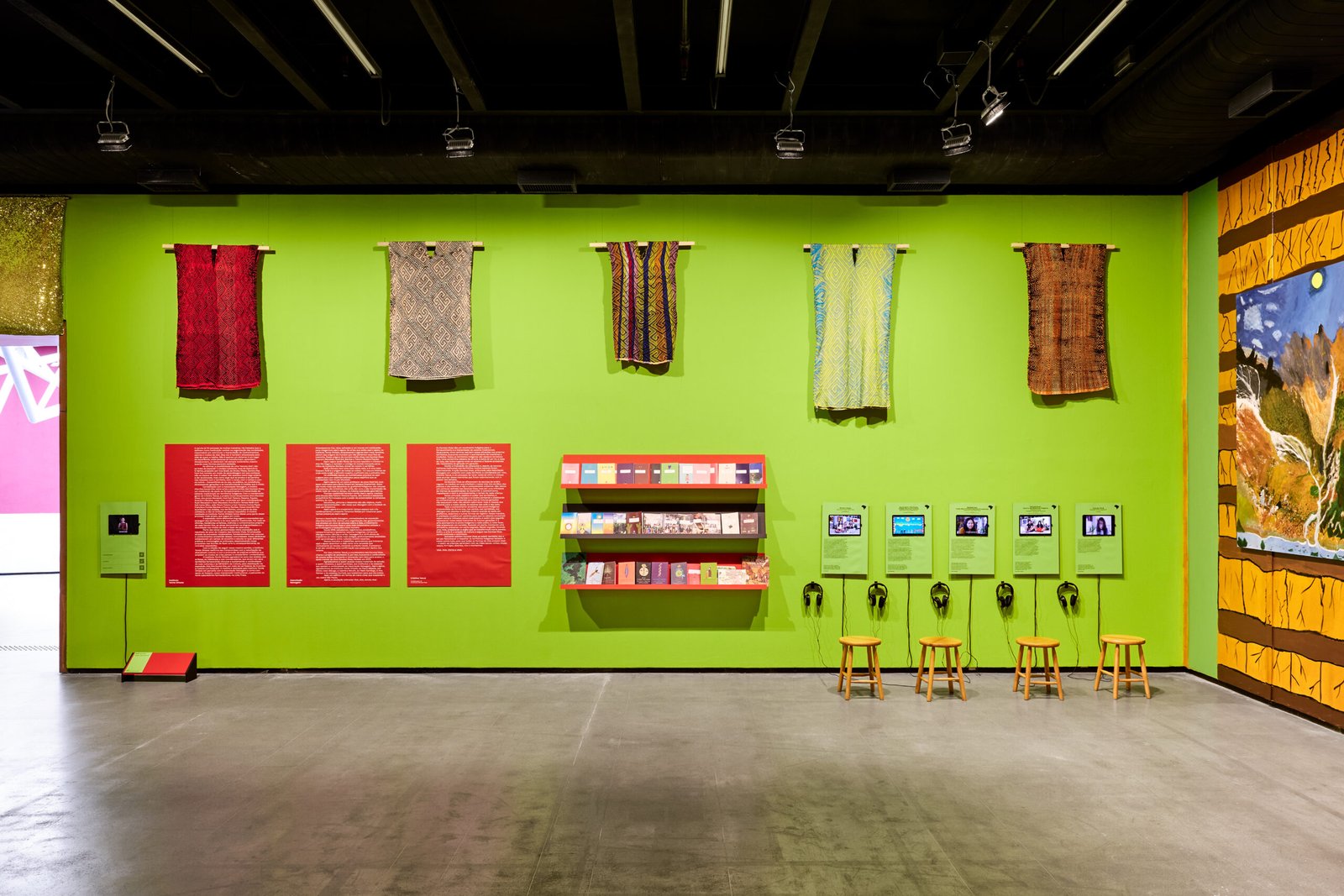
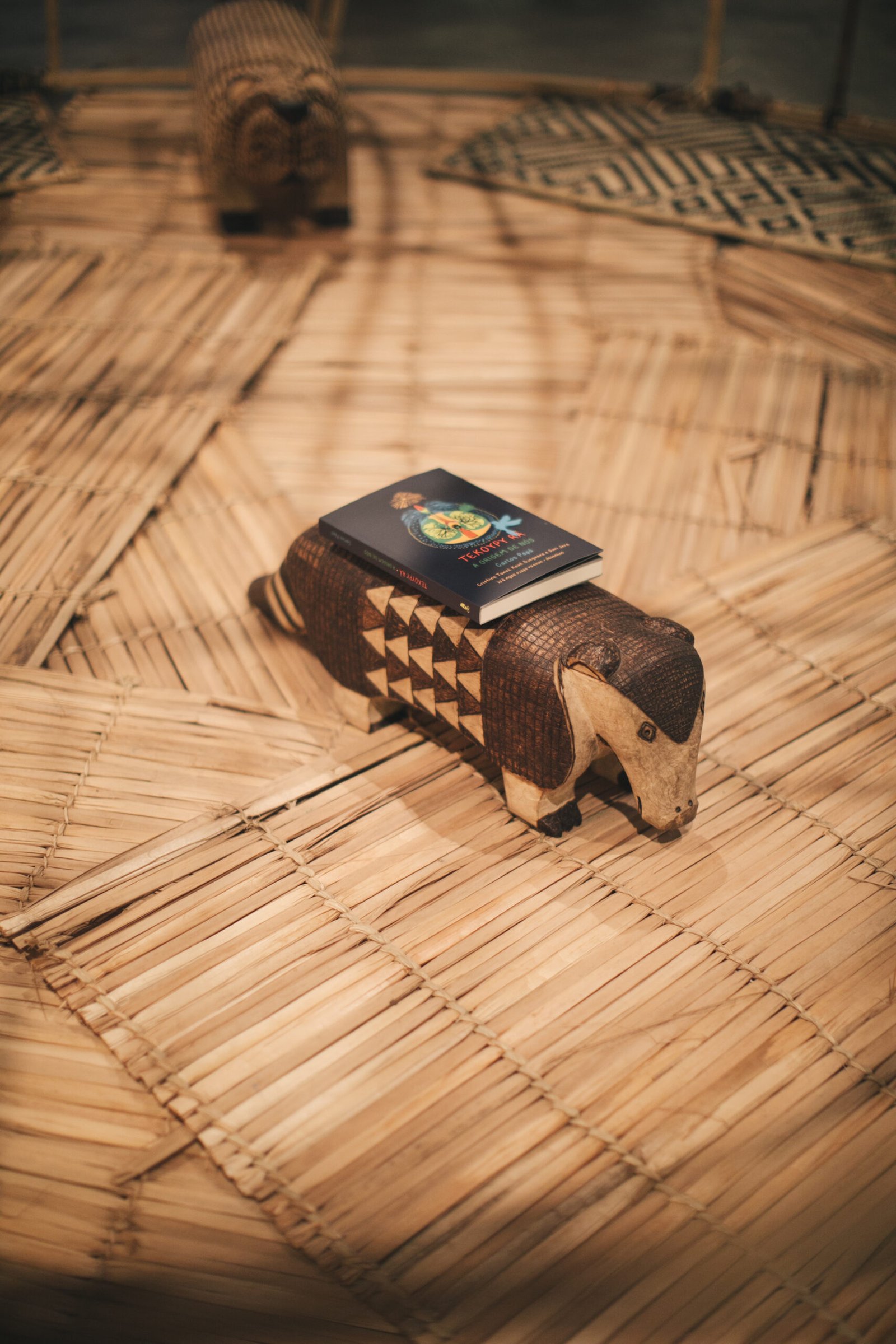
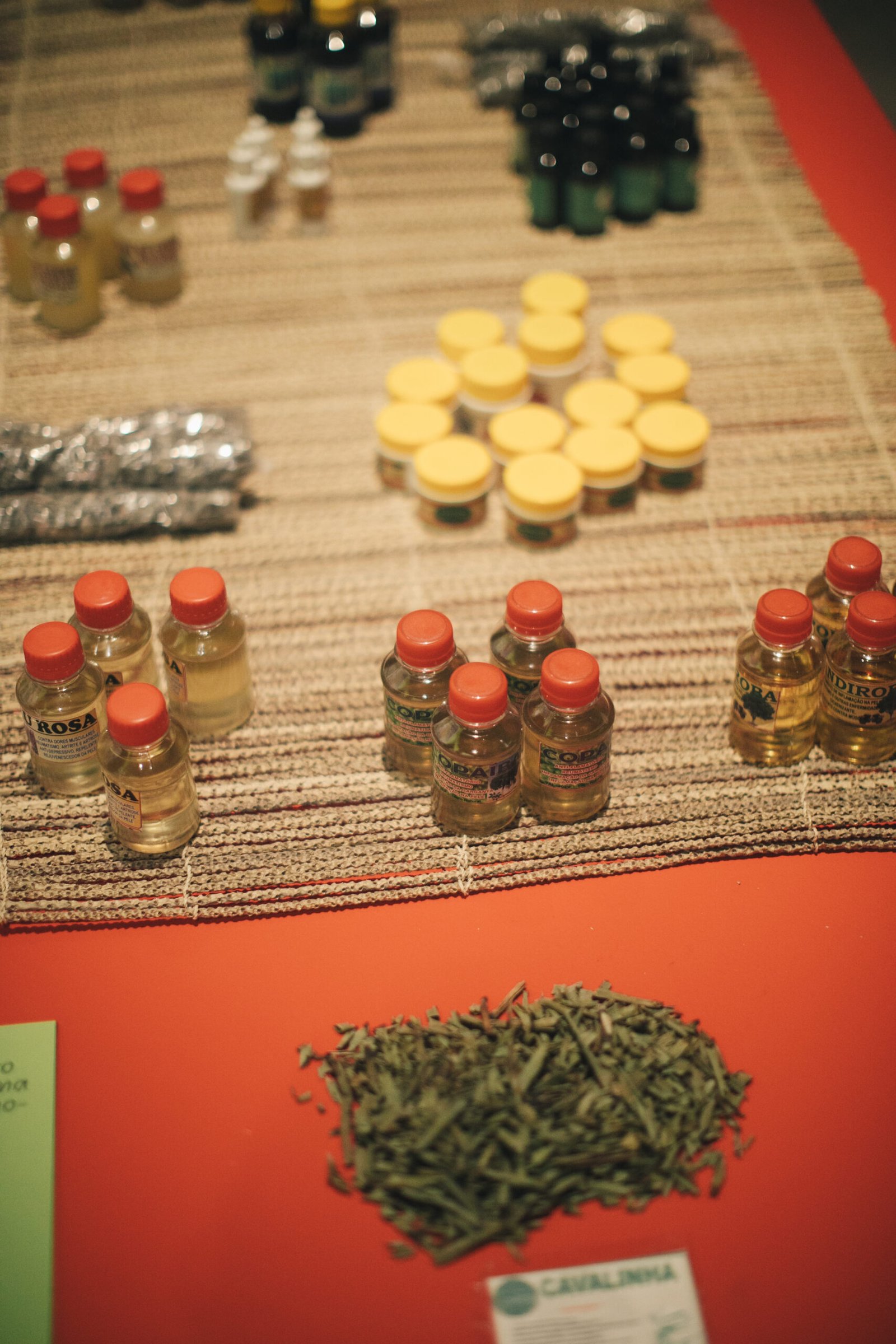
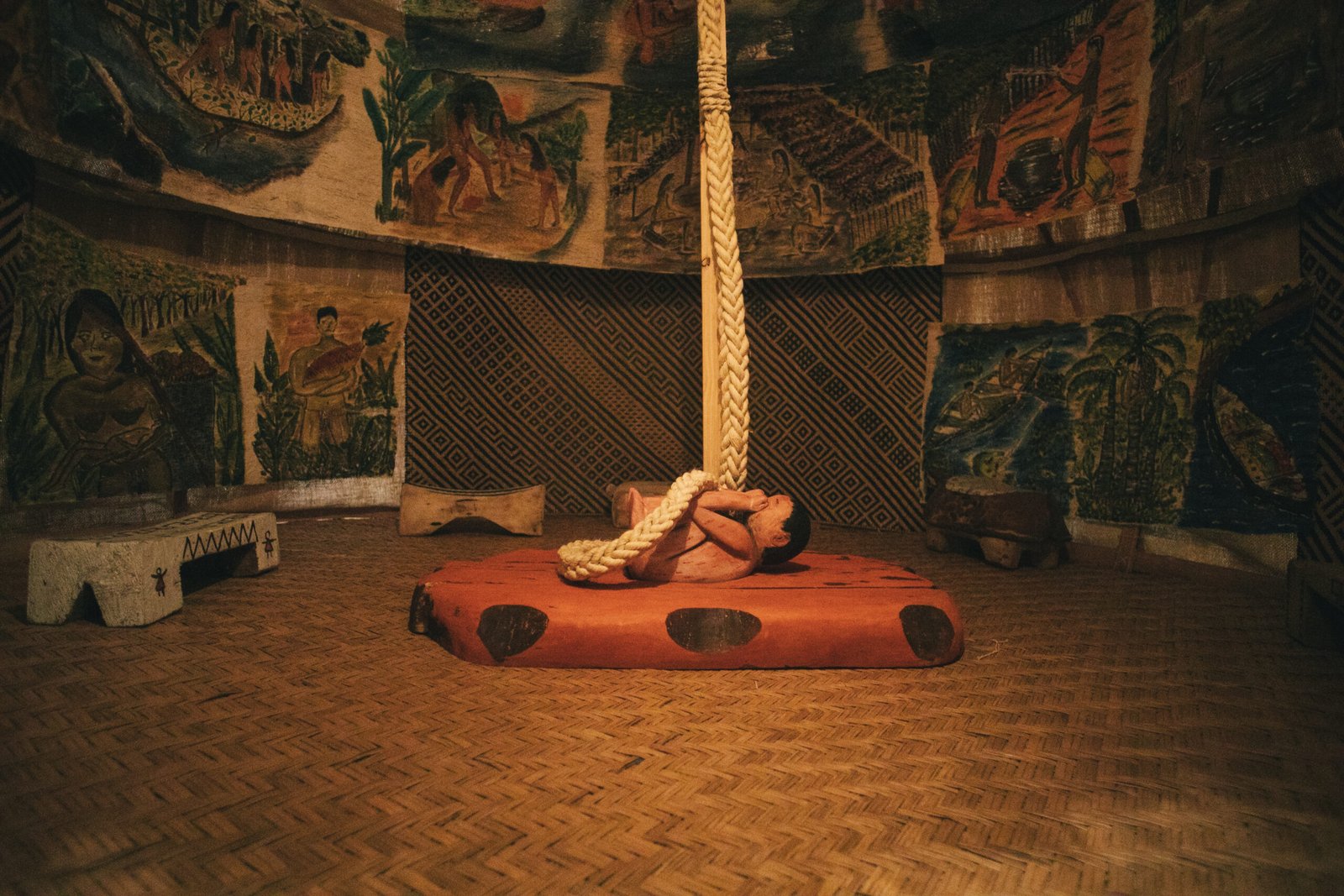
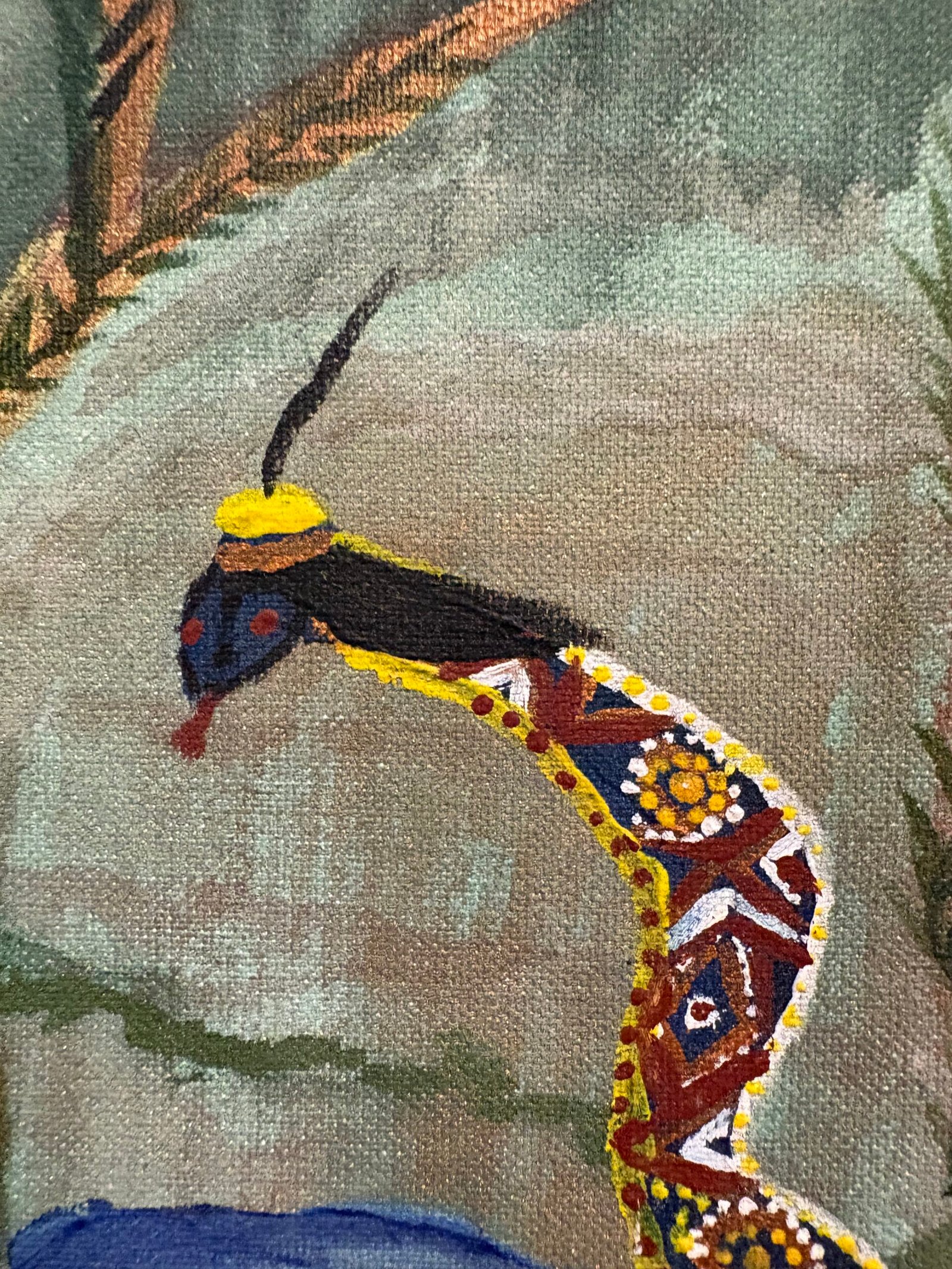
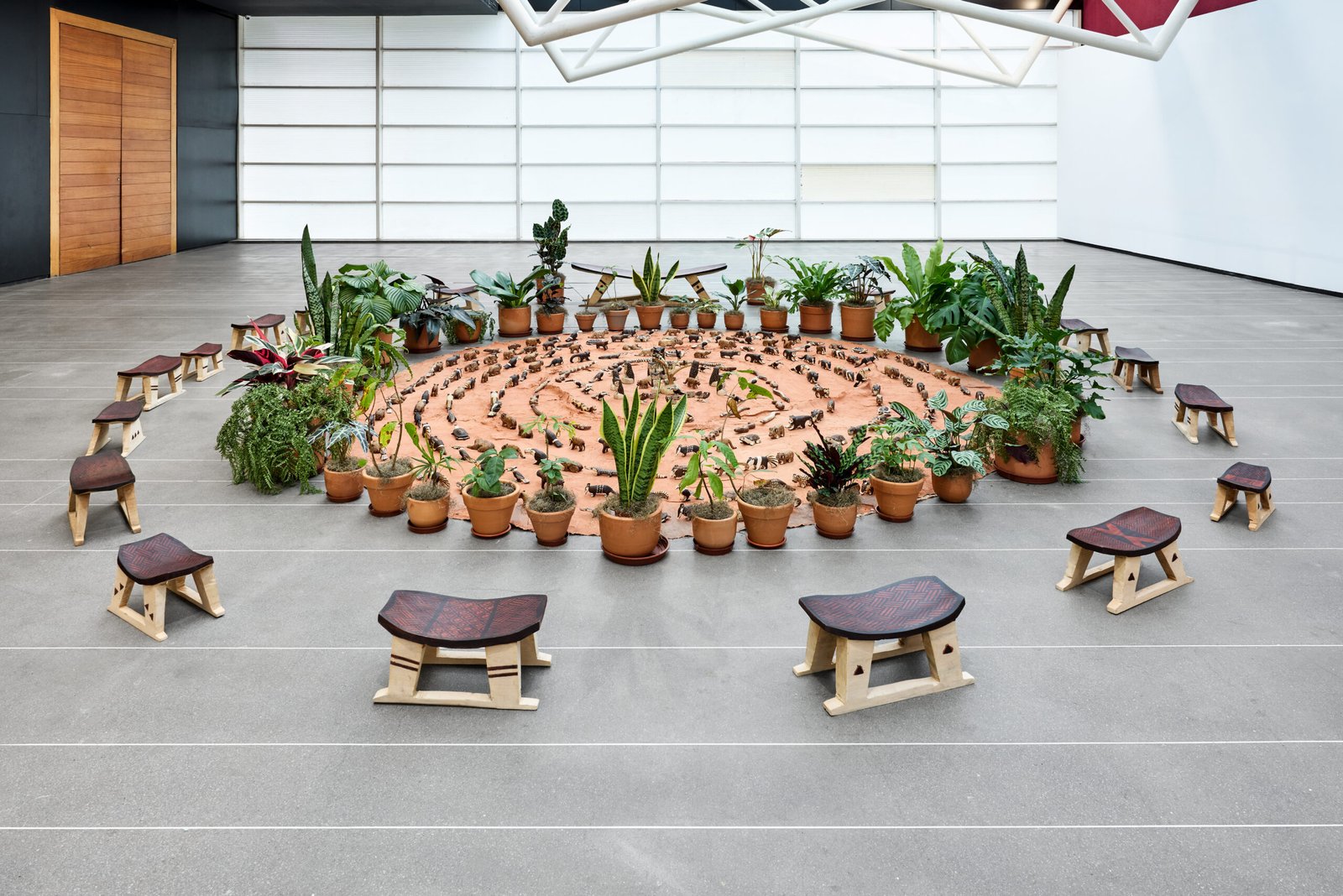
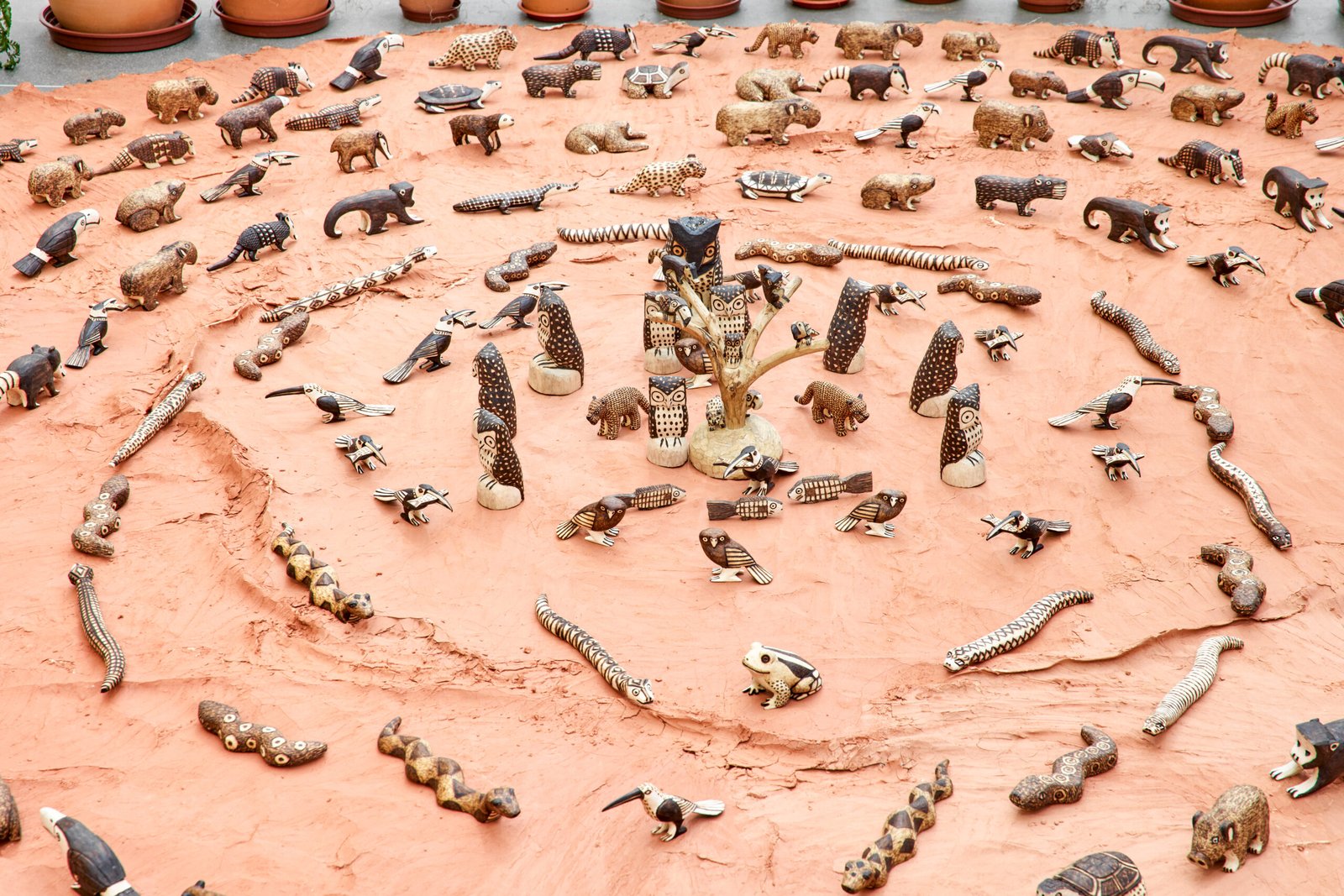
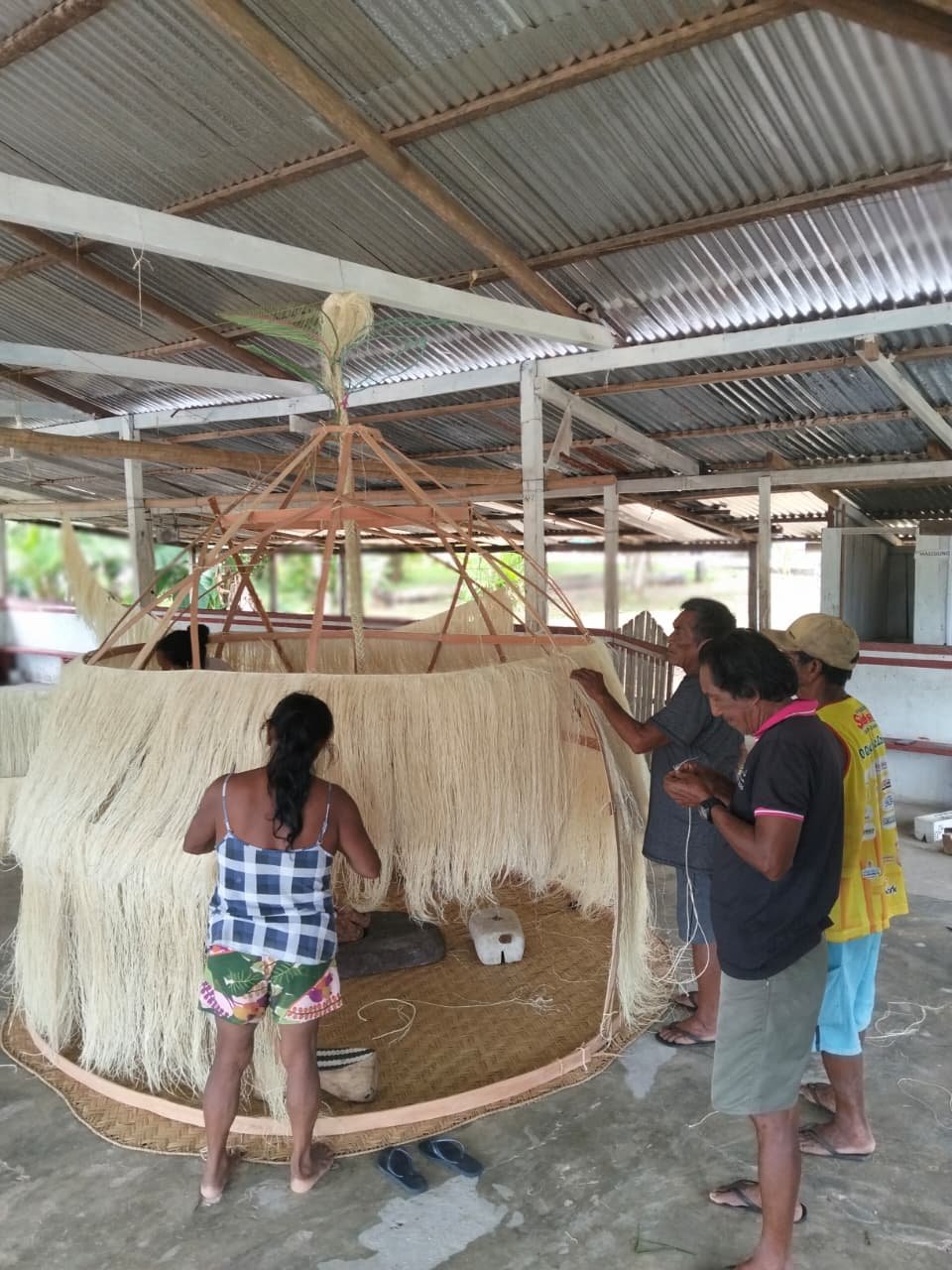
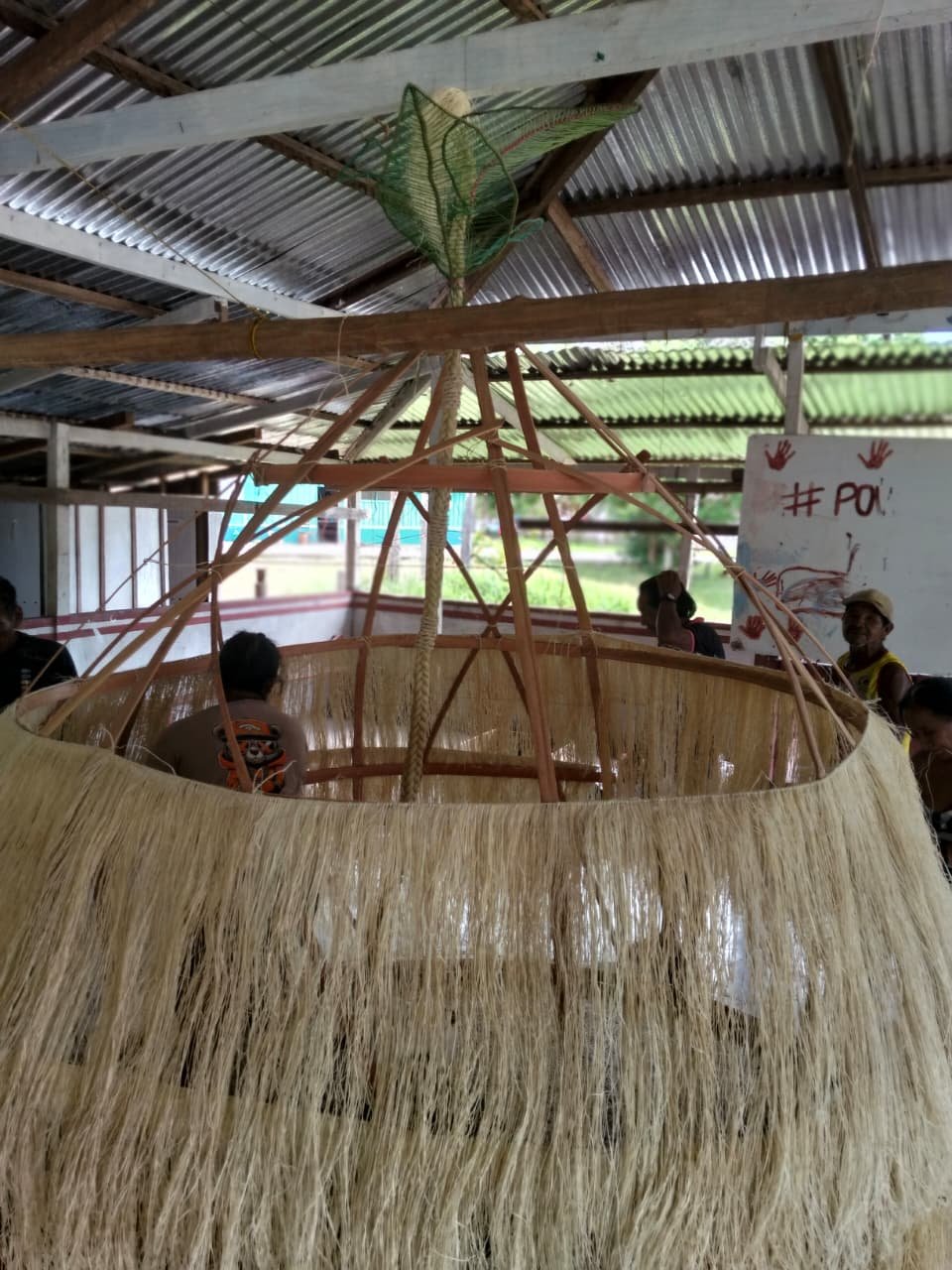
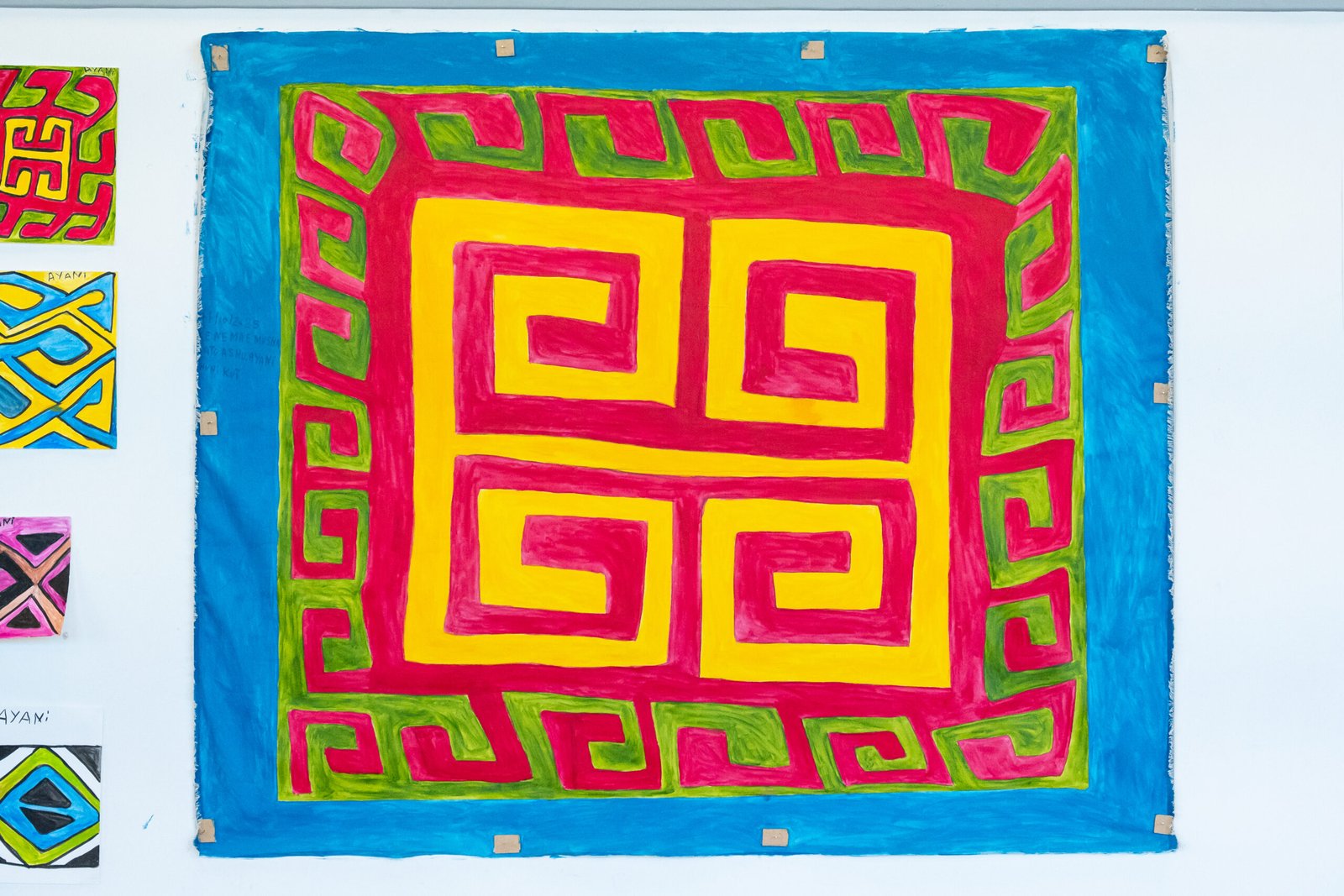
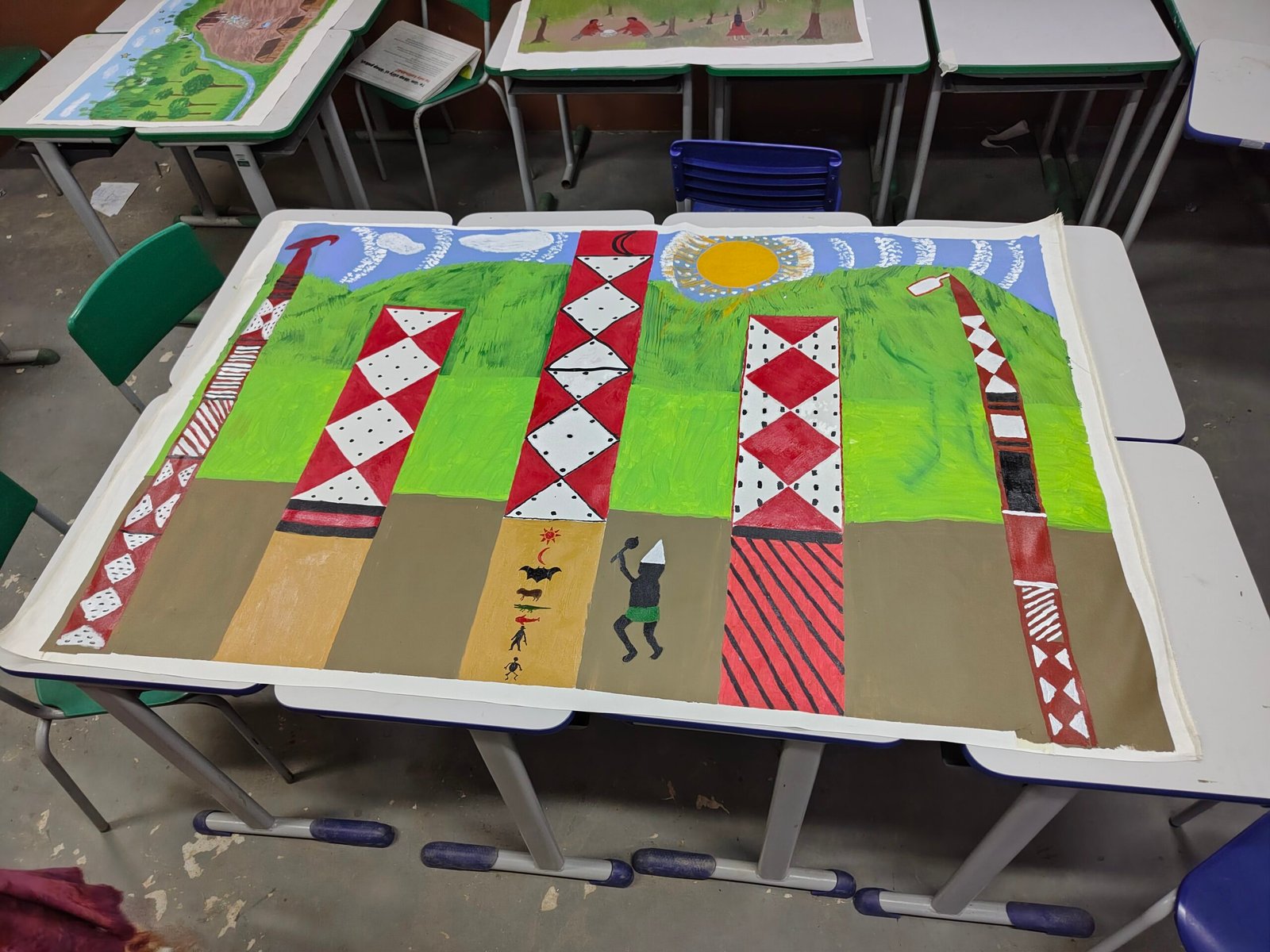
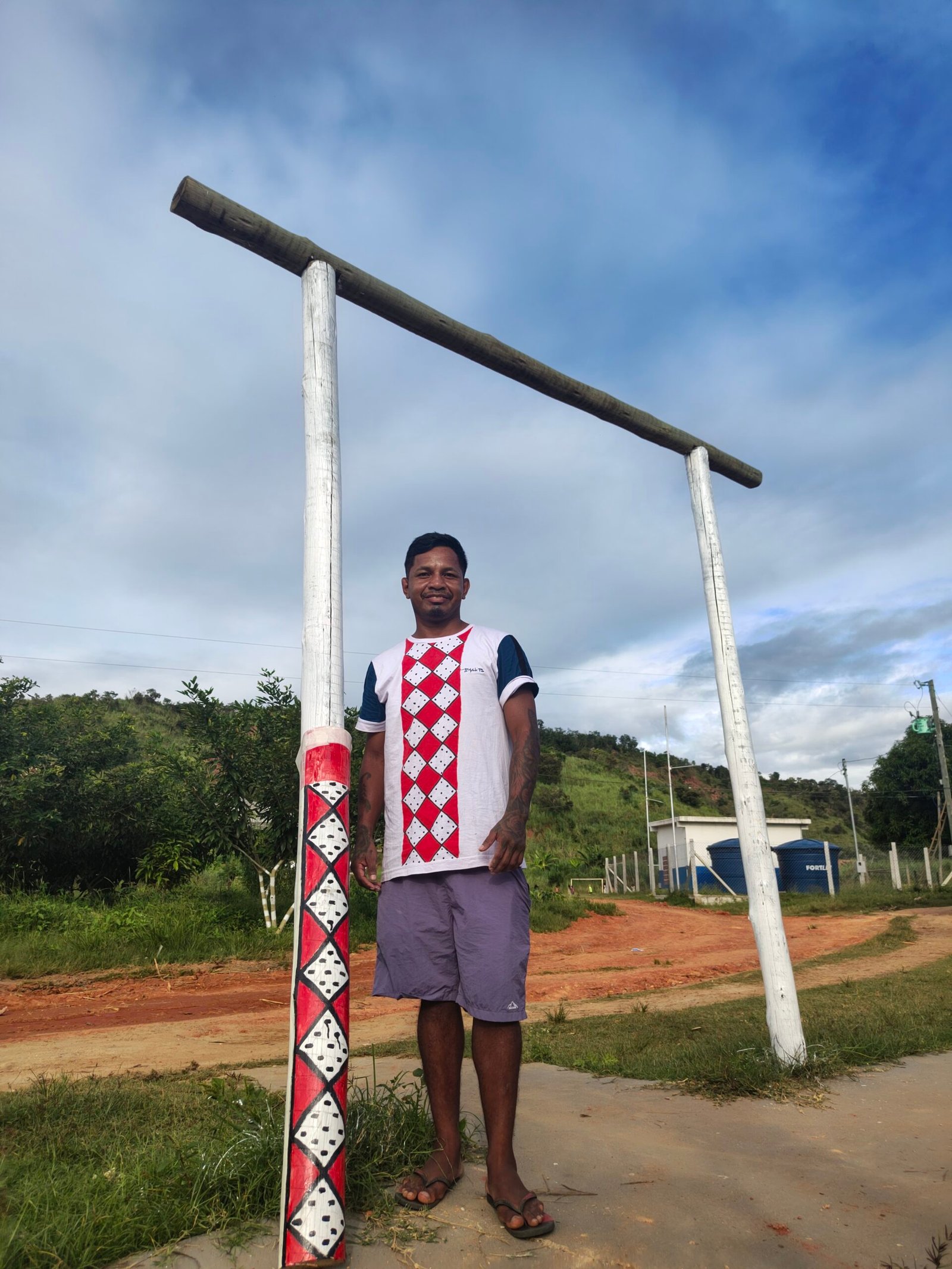
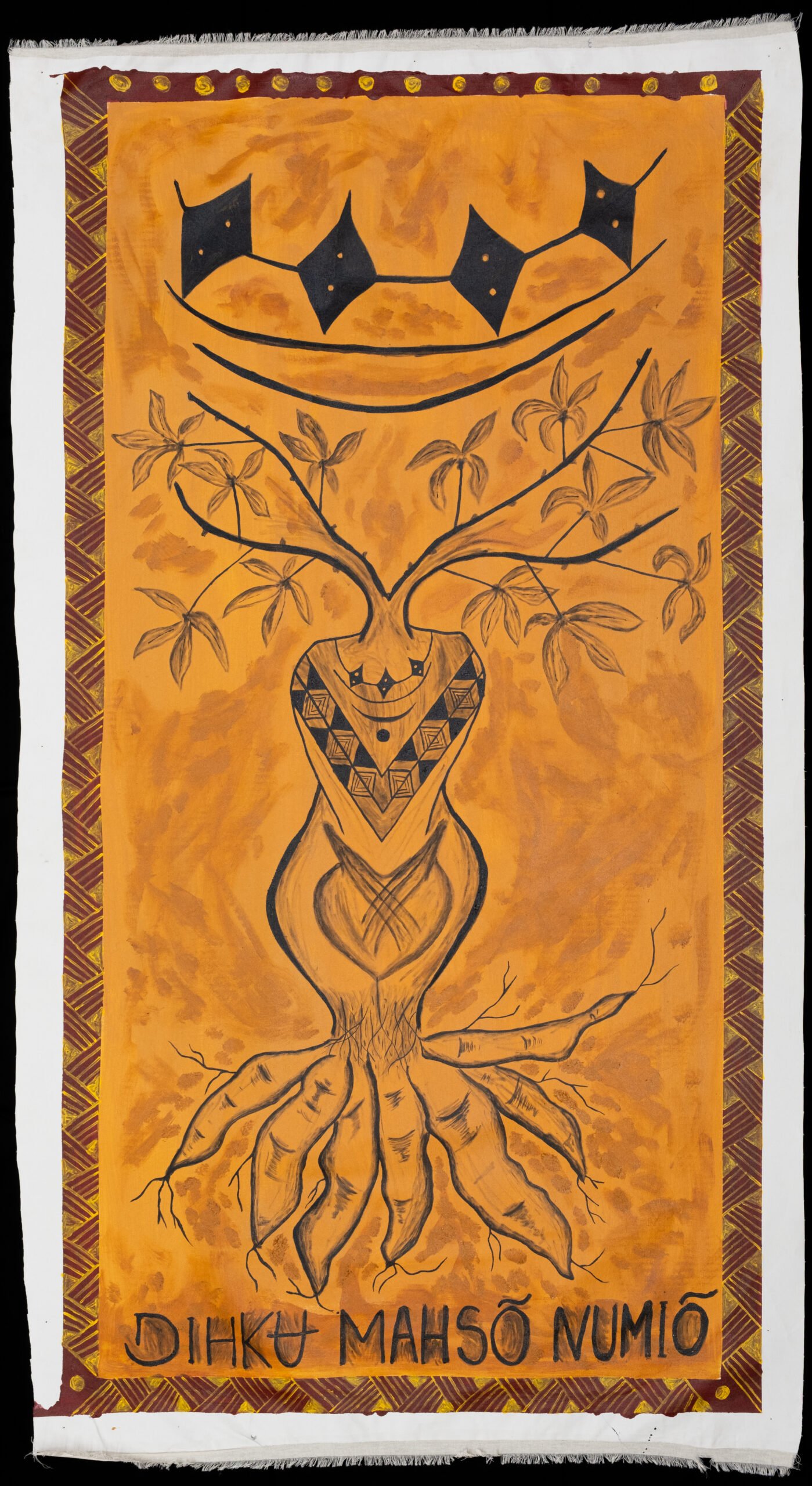
From the Baniwa people comes the installation Navel of the world, composed of tucum-fiber weaving crafted by Baniwa women. The Huni Kuï present a teacher cloth adorned with kenes, traditional graphic patterns that guide learning and the transmission of knowledge connected to their cosmology. Among the Maxakalithe collective installation is organized around poles known as mīmãnãns [ritualistic wooden poles] , which, according to their cosmology, guide and enable the presence of spirits during rituals. A origem de nós [The origin of us], an installation by the Guaranirefers to the creation of the world and of life, in dialogue with Carlos Papá’s new book. Completing the exhibition is an Amazonian pharmacy, with medicinal plants, elixirs, and balms brought by the Tukano, Desana and Tuyuka peoples.
The exhibition also includes a section dedicated to the "grandparents", understood as fundamental figures in the preservation and transmission of Indigenous knowledge. Through stories, songs, and everyday practices, they sustain a memory that spans generations and connects different planes of existence. By bringing these presences into the exhibition space, the show proposes an encounter with ways of knowing grounded in listening, lived experience, and intergenerational continuity. Featured in this section are Ailton Krenak, Ehuana Yanomami, Tõrãmu Kẽhíri (Luis Lana) and Moisés Piyãko.
EDUCATIONAL PROGRAMME AND EVENTS OPEN TO THE PUBLIC
As part of its public programme, the Institute offered four workshops led by Veronica Pinheiro, researcher, street artist, and coordinator of the Selvagem Learning Laboratory (LAS). The workshops invited participants into experiences of listening, memory, and creative practice inspired by the exhibition.
– June 26 – Navel, memories that connect us to the world, a workshop for students from a public school.
– June 27 – Everything in memory workshop for teachers.
– July 11 – Everything in memory workshop open to the general public.
– August 8 – The Warrior’s Dream, a workshop with Guarani Indigenous youth from the Jaraguá Indigenous Land.
– August 8 – Impressionadas [Impressed], a round-table discussion centred on the ‘Jardim Viva Viva’, with Anna Dantes, Emanuele Coccia and Luiz Zerbini. Set amongst the plants and creatures of the Nhe’ery (Atlantic Forest), the event invited reflections on the relationships between art, metamorphosis, nature and contemporary thought, drawing on the intersections between the exhibitions “Long Live the Living School” and “Estrelas Escolhidas” ["Selected stars"] by Luiz Zerbini.
– August 9 – Nosotras [Us], a discussion on intercultural education with Cristine Takuá, coordinator of the Living Schools and curator of the exhibition, and educators from FORMABIAP (Training Programme for Bilingual Teachers in the Peruvian Amazon), moderated by Veronica Pinheiro, coordinator of the Selvagem Ways of Knowing Lab (LAS). Closing of the exhibition.
EXHIBITION CLOSING EVENTS
Roundtable discussions held on 8 and 9 August as part of the exhibition’s closing programme. Watch the full discussions via the links below.
Impressionadas [Impressed], a round-table discussion centred on the ‘Jardim Viva Viva’, with Anna Dantes, Emanuele Coccia and Luiz Zerbini. Set amongst the plants and creatures of the Nhe’ery (Atlantic Forest), the event invited reflections on art, metamorphosis, nature and contemporary thought, drawing on the intersections between exhibitions “Long Live the Living School” and “Estrelas Escolhidas” ["Selected stars"] by Luiz Zerbini.

Nosotras [Us], a discussion on intercultural education with the presence of Cristine Takuá, coordinator of the Living Schools and curator of the exhibition, and educators from FORMABIAP (Training Programme for Bilingual Teachers in the Peruvian Amazon), moderated by Veronica Pinheiro, coordinator of the Selvagem Ways of Knowing Lab (LAS). Closing of the exhibition.

NOTEBOOK "STORIES FOR WAKING CHILDREN UP"

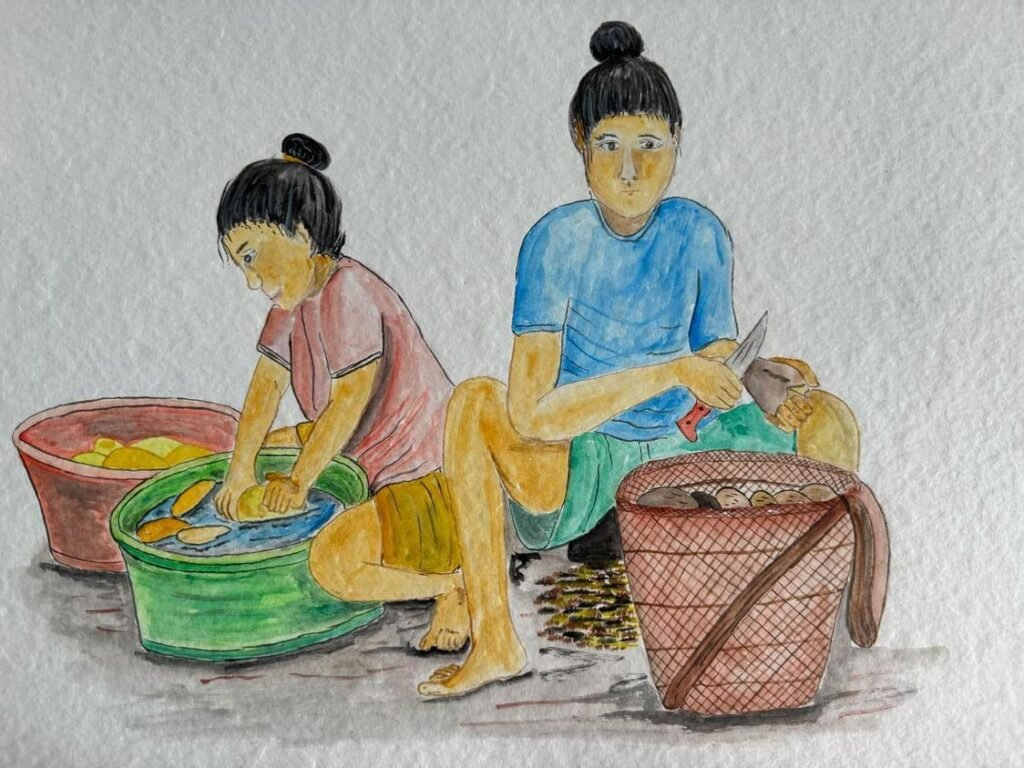
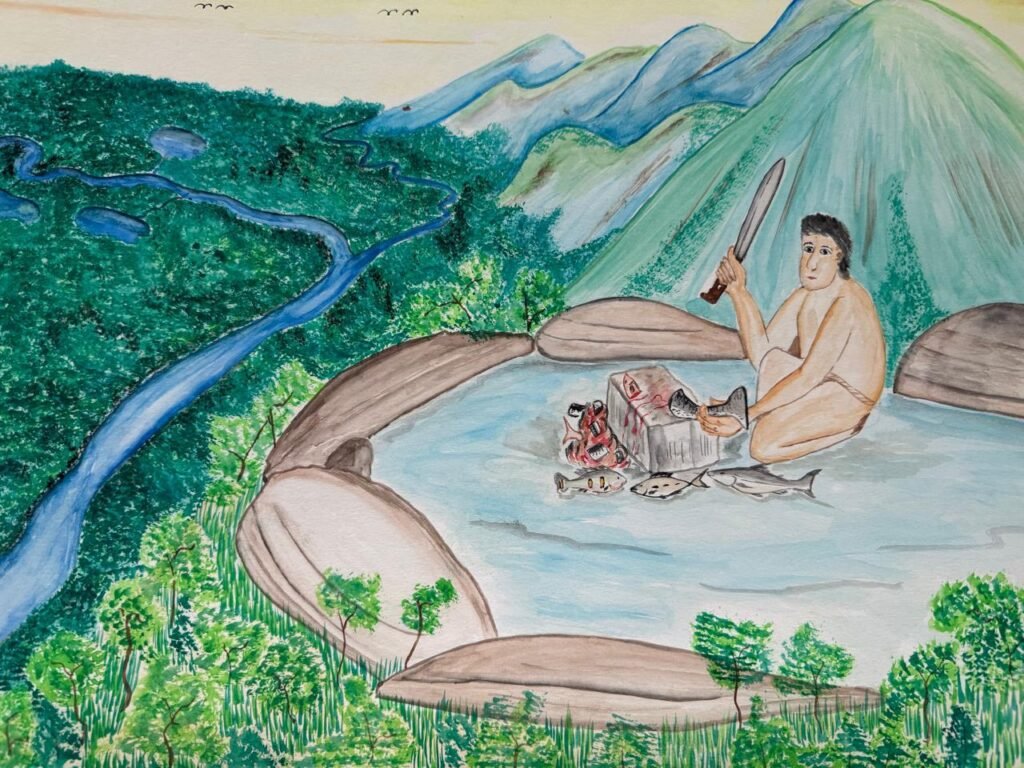
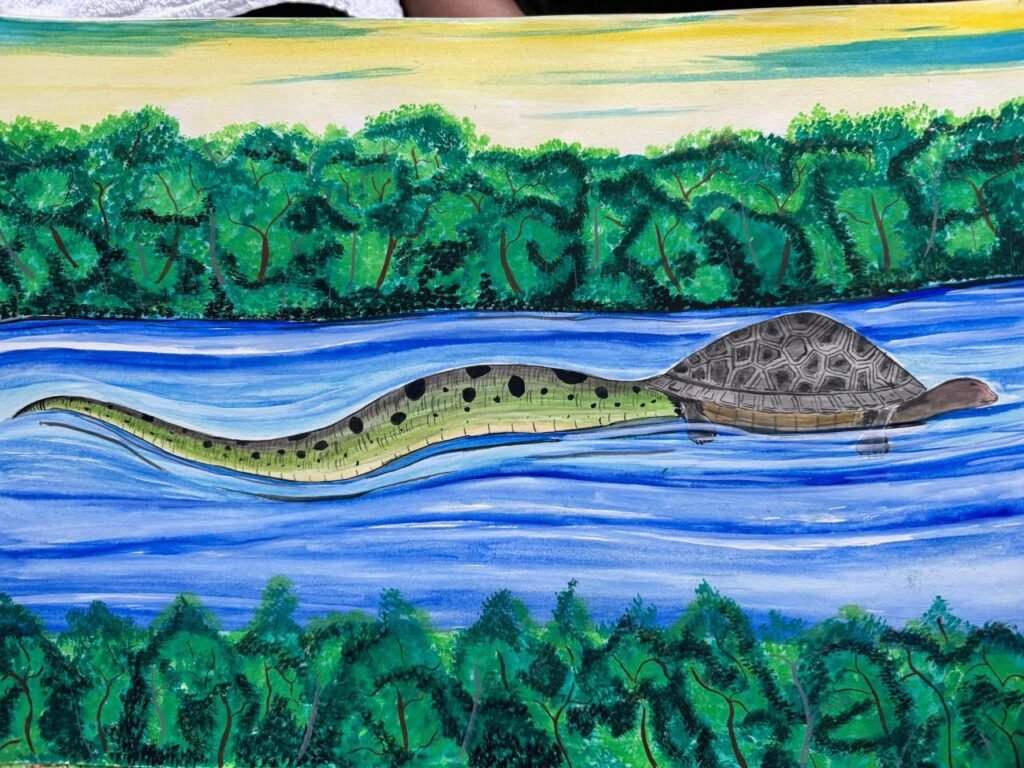
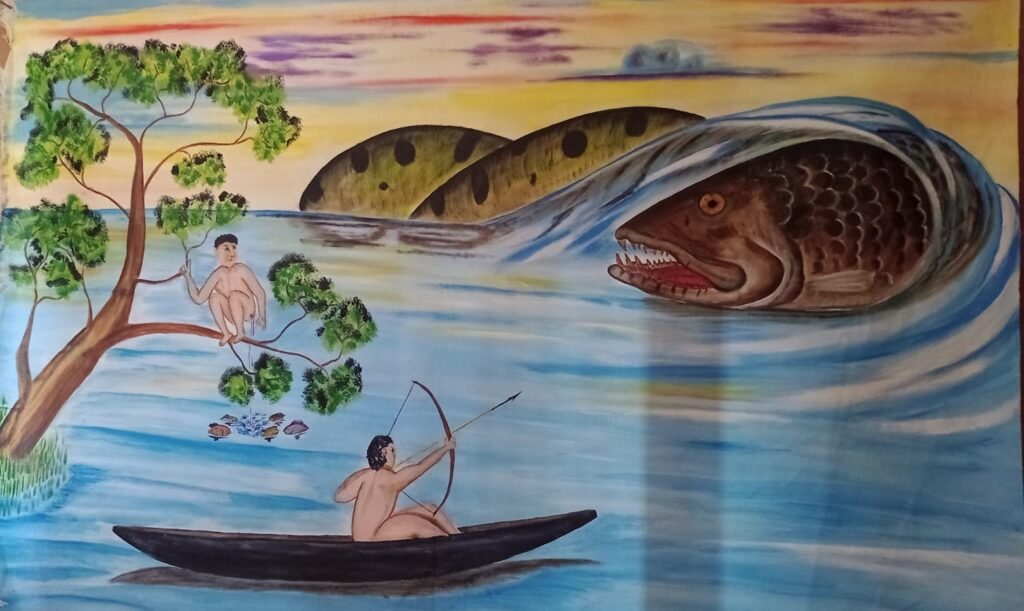
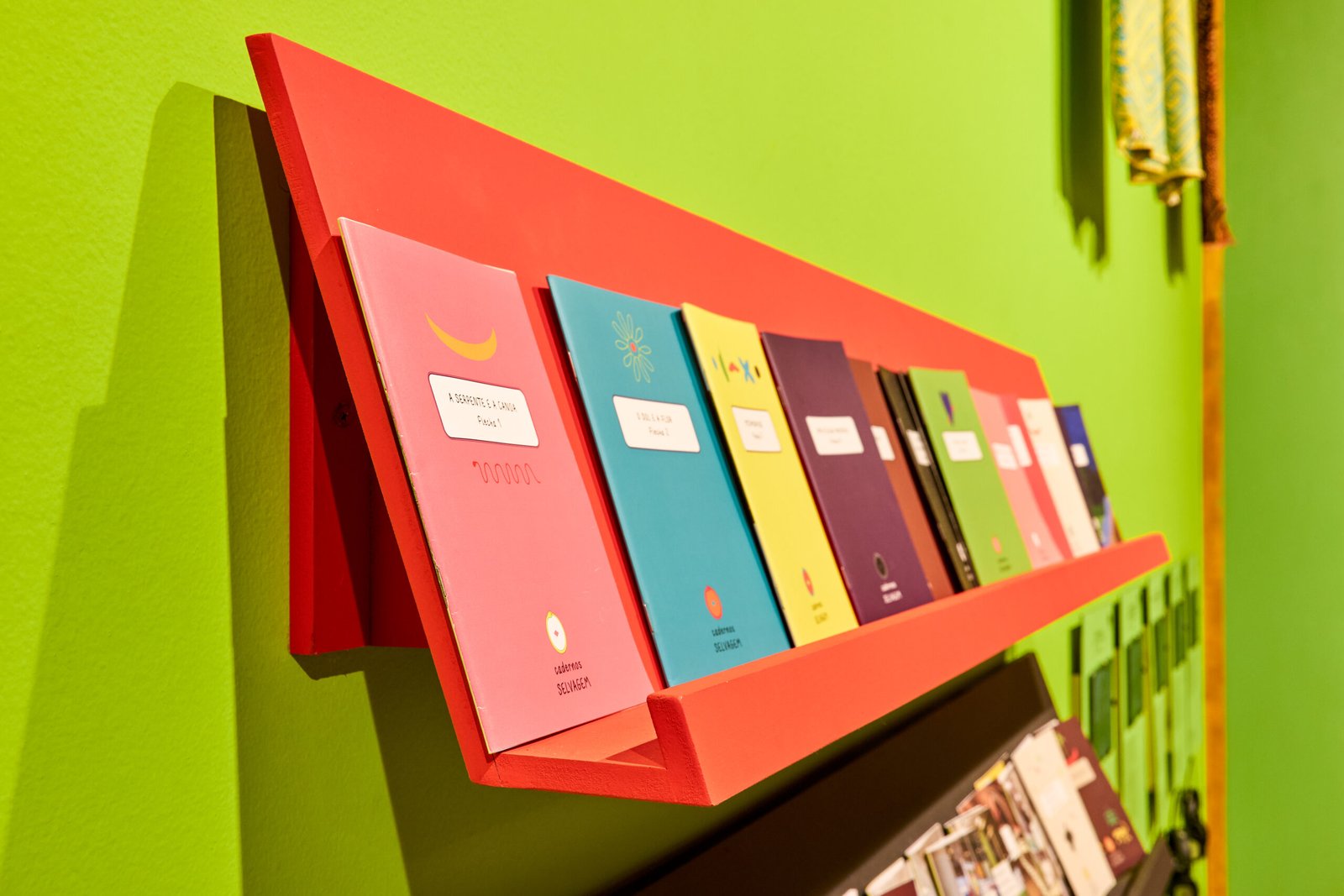
As part of the exhibition "Long Live the Living School", we have published the notebook Stories for waking children up, which features 35 short, previously unpublished stories written and illustrated by Tõrãmü Këhírí (Luiz Gomes Lana), who is also featured in the exhibition with some of the paintings from this series, as part of the section dedicated to the ‘Grandparents’.
The manuscript arrived at Selvagem in the form of a small spiral-bound notebook accompanied by loose original paintings, each bearing the same number as the corresponding text.
The author envisaged a continuation of the editorial partnership that began in 2019, when the book "Before, the world did not exist" [Antes o mundo não existia] was published by Dantes Editora – one of the first titles in the Selvagem book series – following dedicated research, new illustrations and a retranslation of the first edition from 1980. These originals travelled back and forth between the River Tiquié, São Gabriel da Cachoeira and Rio de Janeiro.
The book "Before, the world did not exist" is currently available in full (in Portuguese) as a PDF on the Selvagem website, as is the new notebook by Tõrãmü Këhírí.
NOTEBOOK "IS ART A COMMODITY?"

On 23 October, at the end of the Living School House residency, there was a round-table discussion entitled "Is art a commodity?", which invited reflection on the relationships between indigenous art, the art market, and cultural institutions and museums.
The discussion invited participants to consider alternative ways of integrating Indigenous art into art spaces, moving beyond traditional gallery models, which often focus on the commercialisation of works and the individualisation of artists. This booklet brings together the contributions of the artists, curators and representatives of cultural institutions and museums who were present on the day.
This publication features a selection of statements that help to answer the questions that guided the roundtable discussion: Where does indigenous art come from? Can there be a dialogue between the art world and indigenous art? Is art a commodity?
A NEW BOOK BY CARLOS PAPÁ

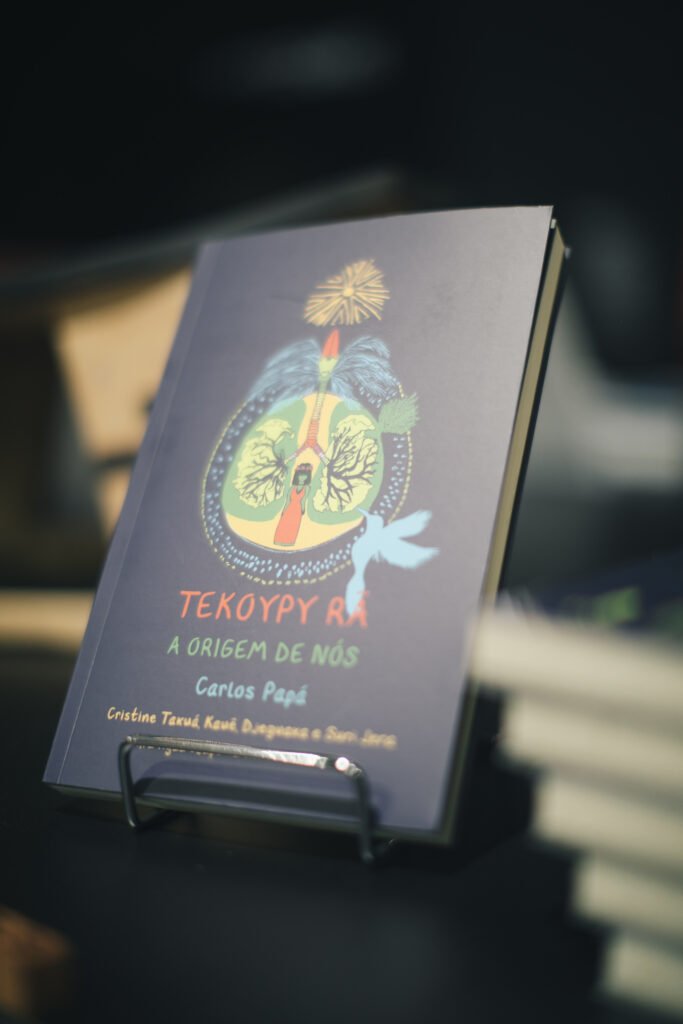
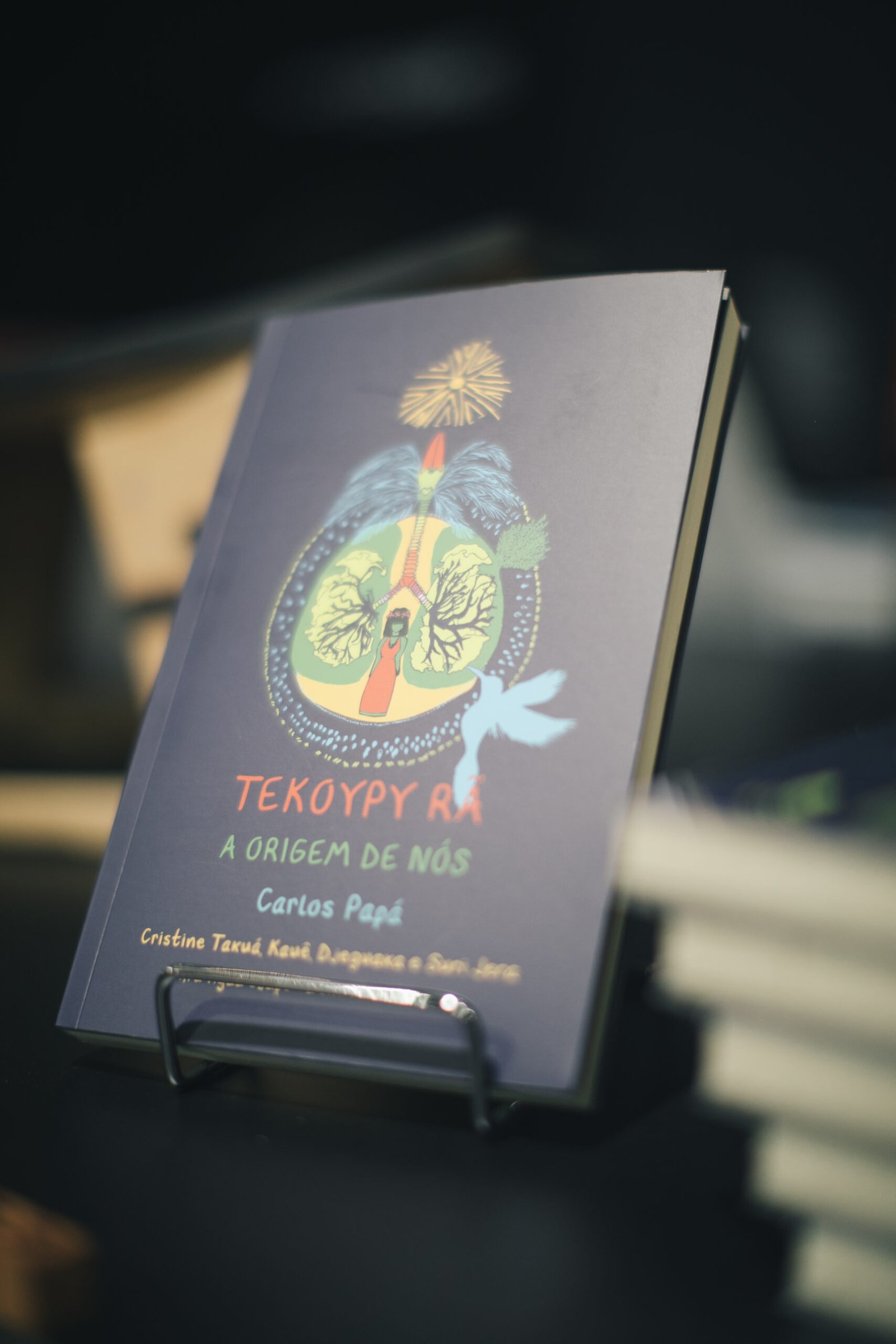
On June 9, the date of the exhibition’s preview opening, the Tomie Ohtake Institute also hosted the launch of the book “Tekoypy rã – A origem de nós” [The origin of us], by Carlos Papá, coordinator of the Guarani Living School and a master of his people’s traditional knowledge, published by Dantes Editora.
This is a book that has been envisioned since Carlos Papá began collaborating with Selvagem in 2018. It brings together and deepens ideas that he has generously shared over the years, drawing from his understanding of the Guarani conception of the world.
The book is rooted in orality and was created with the participation of Papá’s family and other members of the Guarani Living School, which he coordinates. Papá conceived the book as a journey. Through a series of talks recorded especially for this publication, he narrates the unfolding of life itself. Cristine Takuá, Kauê, Djeguaká and Suri Jerá accompanied this journey through their drawings. Léo Werá carried out the translation from Guarani into Portuguese and from Portuguese into Guarani, working closely with Papá so that the book could become both a kind of Guarani language lesson and a profound dialogue on the interpretation of words and names.
EXHIBITION BOOKLET

"The Long Live the Living School exhibition, now in its second edition, conveys to the world the existence of resistance and the power of culture, in the form of the transmission of knowledge between generations and communities. Through the meeting of the coordinators of the five Living Schools, each space-territory shares its experiences and challenges and, in this way, they grow stronger together.”
– Cristine Takuá, coordinator of the Living Schools
movement
Here we provide a digital version of the booklet distributed to visitors to the exhibition, featuring photographs of the works on display, curatorial texts and further information about the artists and Living Schools present in the exhibition.

MADZEROKAI
Baniwa Living School
The Medzeniakonai are inhabitants of the cultural and multilingual system of the Upper Rio Negro, an area of approximately 250,000 km² that covers the north-west of the Amazon basin. It is in this territory that is located Madzerokai, the House of Ancestral Knowledge, the Baniwa Living School.
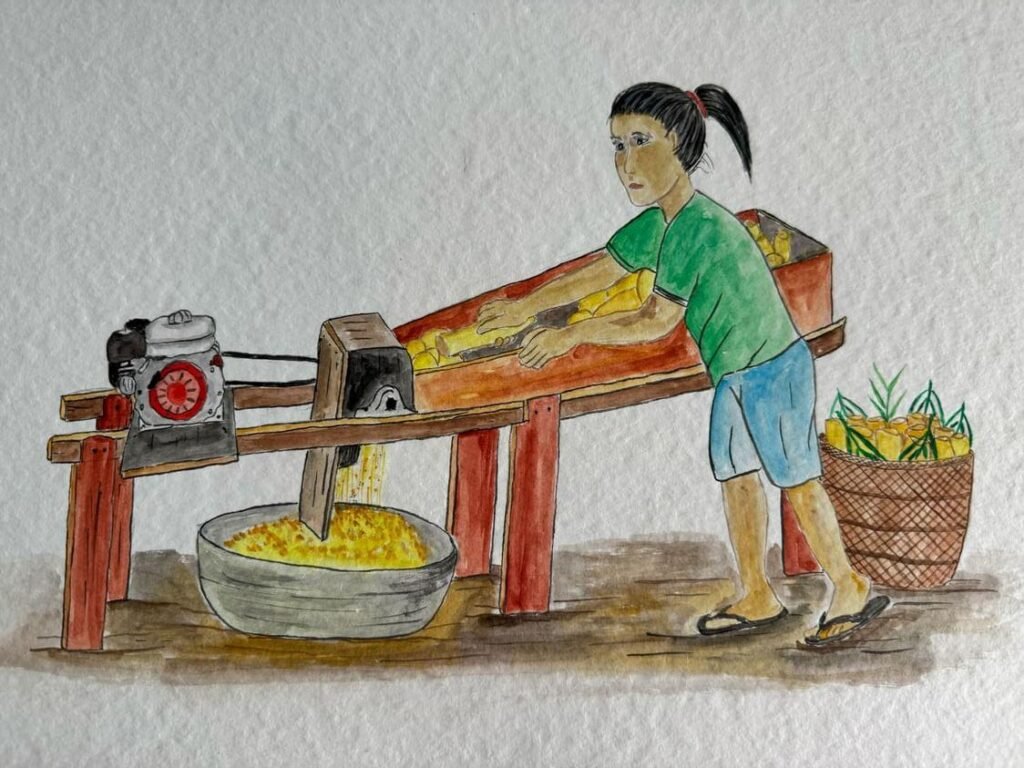
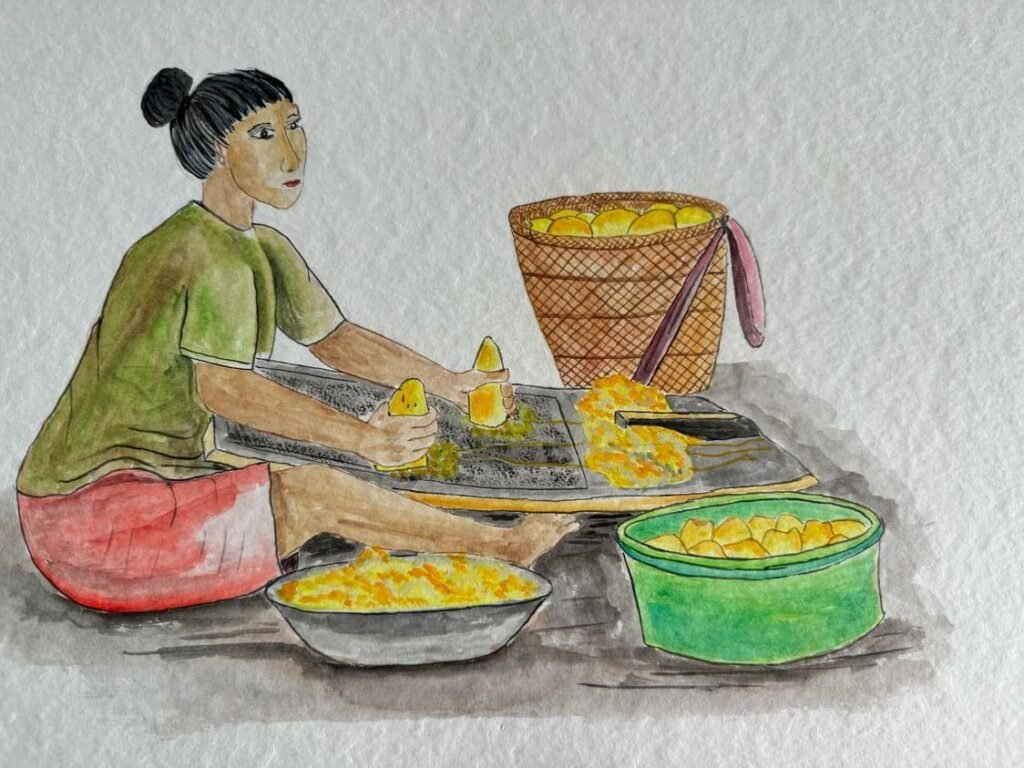
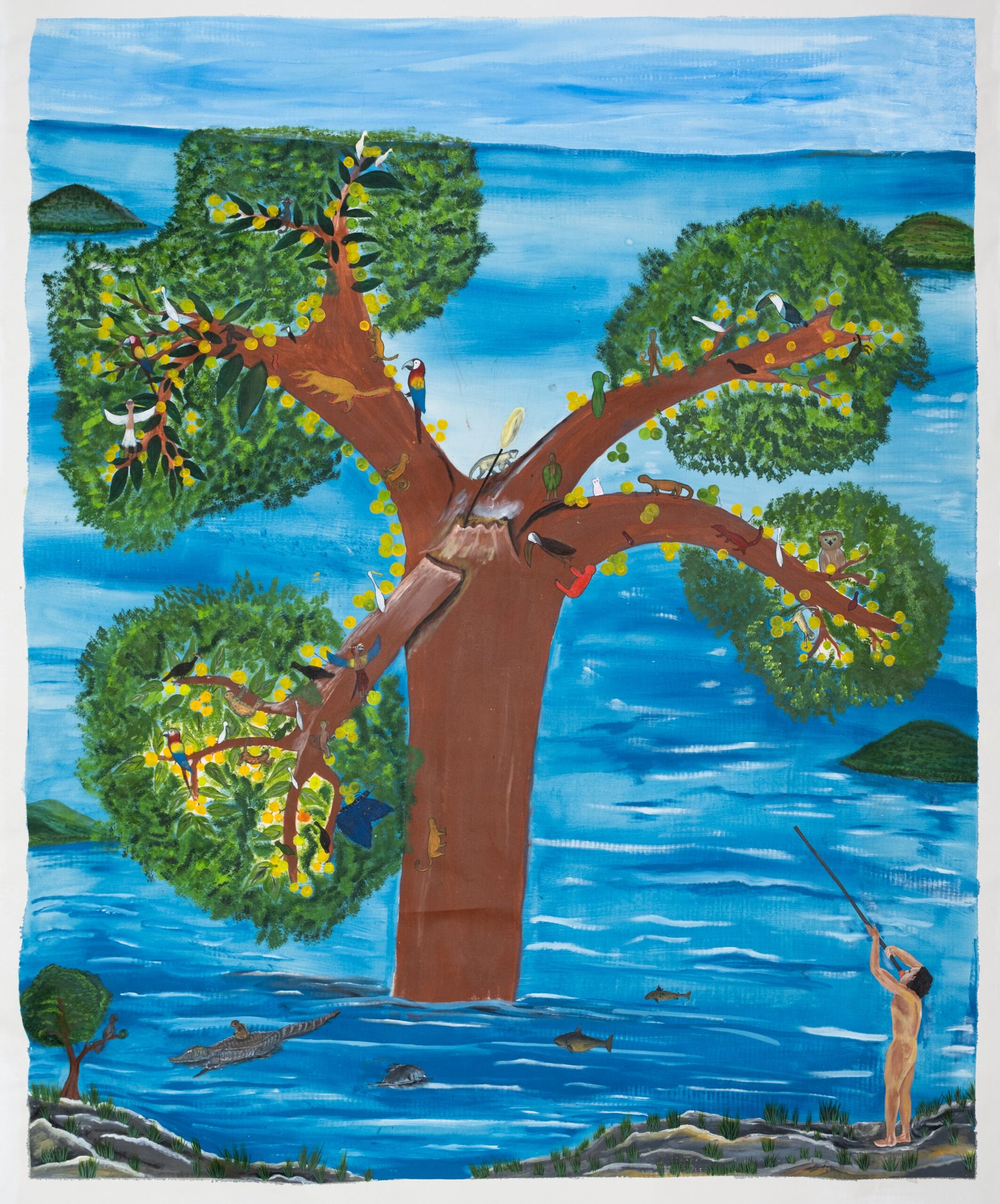
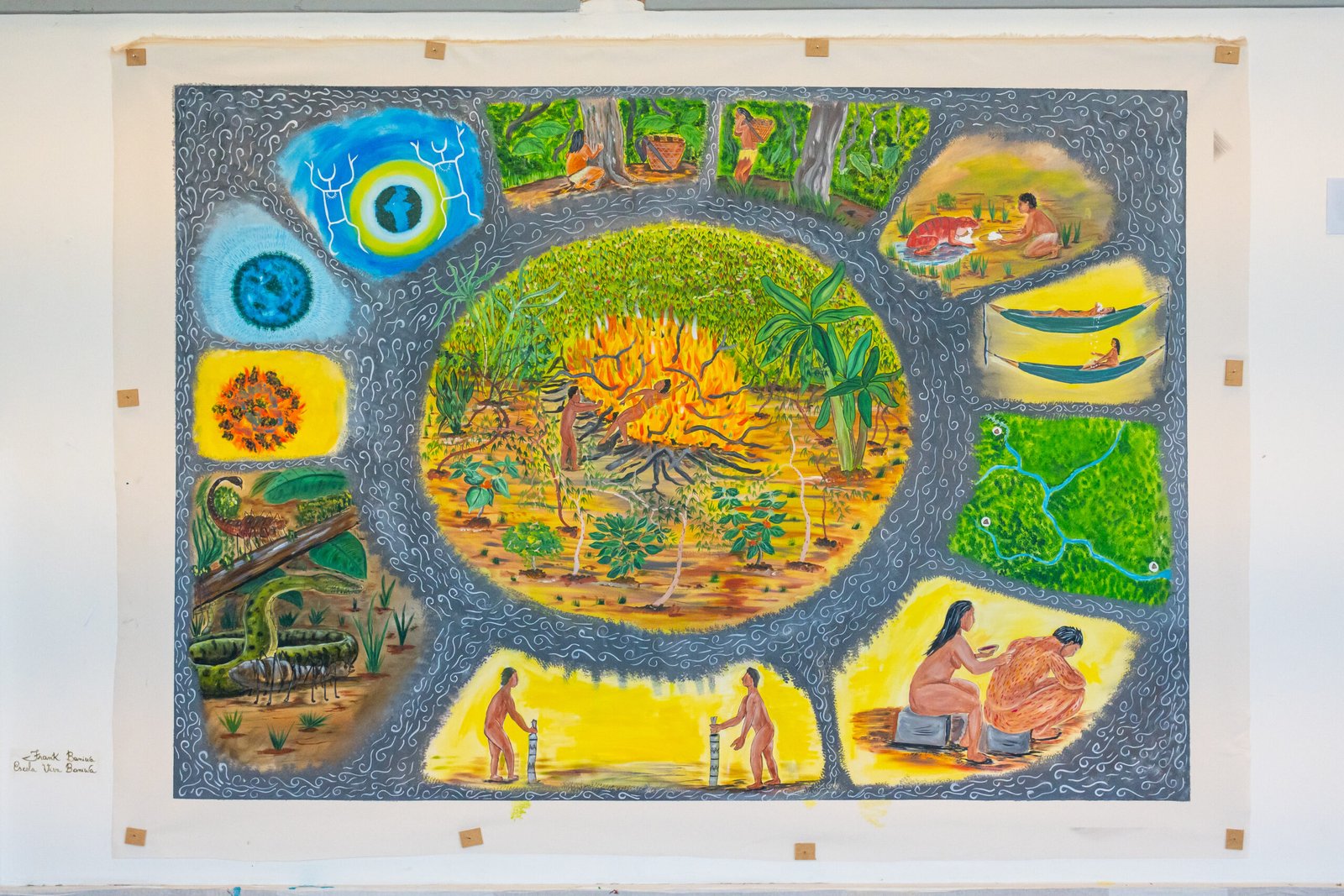
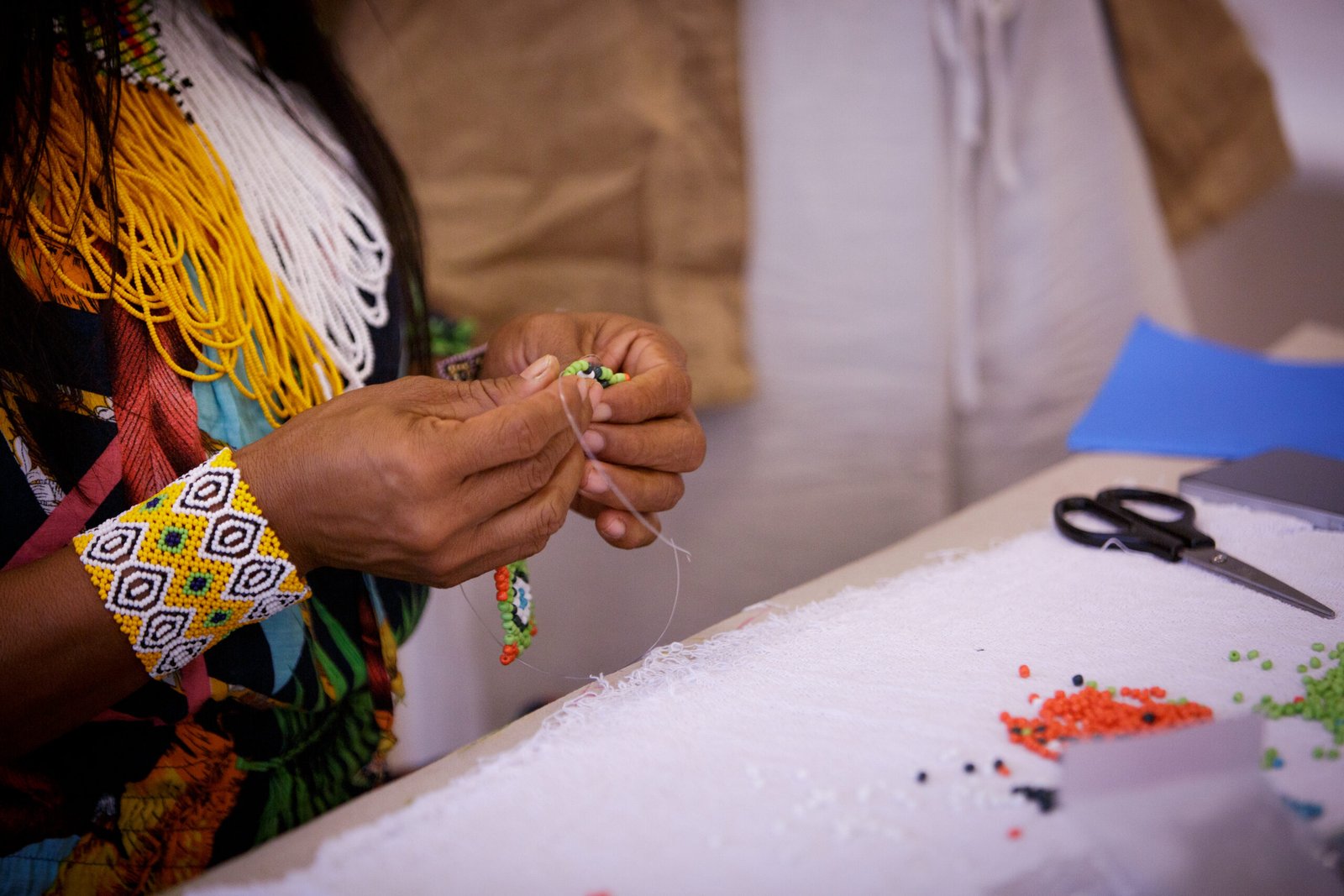
The exhibition features paintings by Frank Baniwa, Larissa Baniwa and Francy Baniwa, as well as the installation "Navel of the world", created by the community of the Escola Viva Baniwa in the village of Assunção do Içana: Maria Cleocimar, Viviane Almeida, Gelma, Laura Almeida, Eliane Fontes, Virgília Almeida, Bidoca Castro, Maristela, Íris, Elisangela, Lilian Livino, Vera Teixeira, Josiane Mandu, Maria Aparecida, Fátima Castro, Isabel Castro, Francisco, Frank, Estevão, Hermes, Miguel, Robertinho, Cláudio, Jorge, Jonilton, Antônio and Genival.

SHUBU HIWEA
Huni Kuï Living School
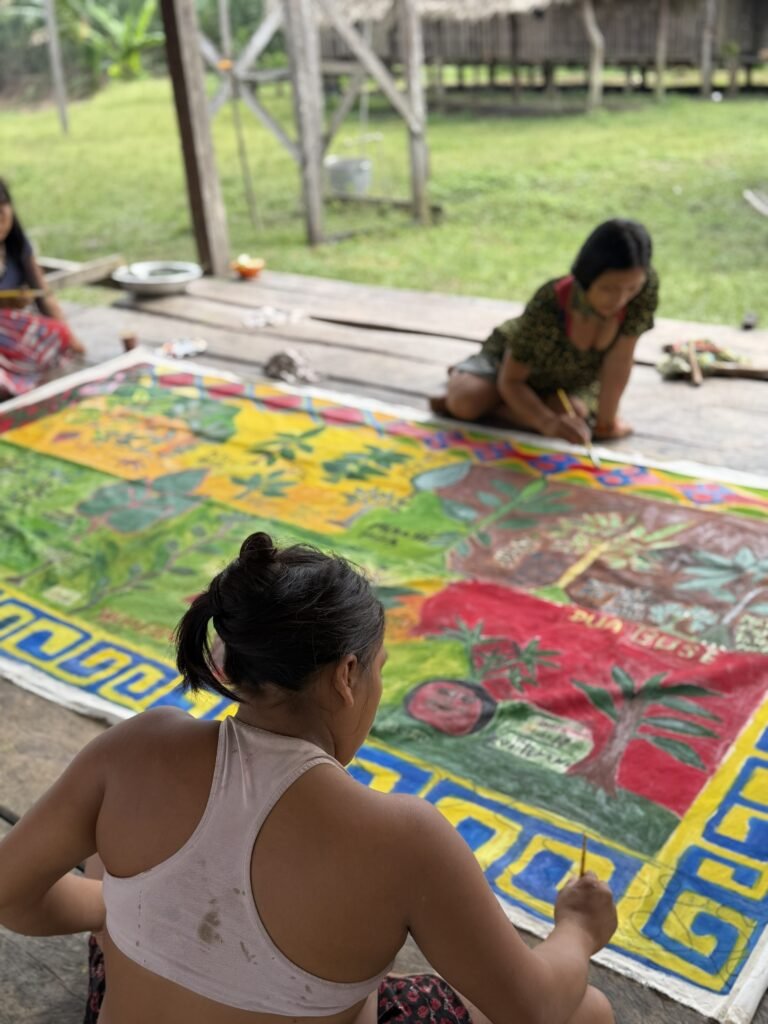
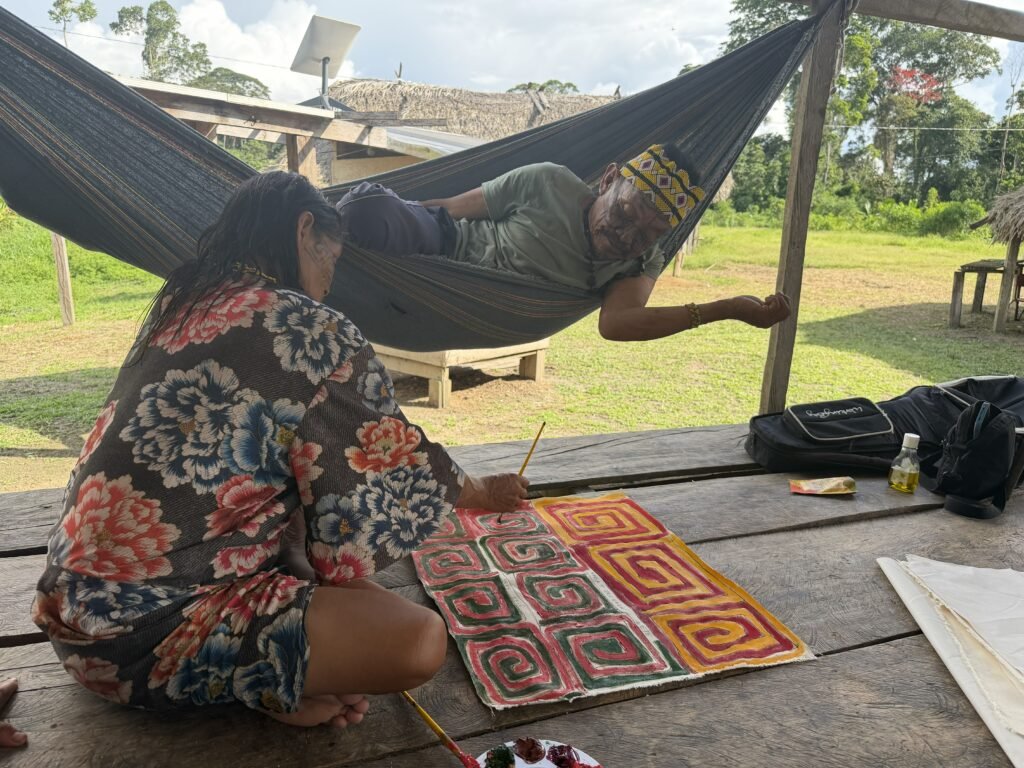
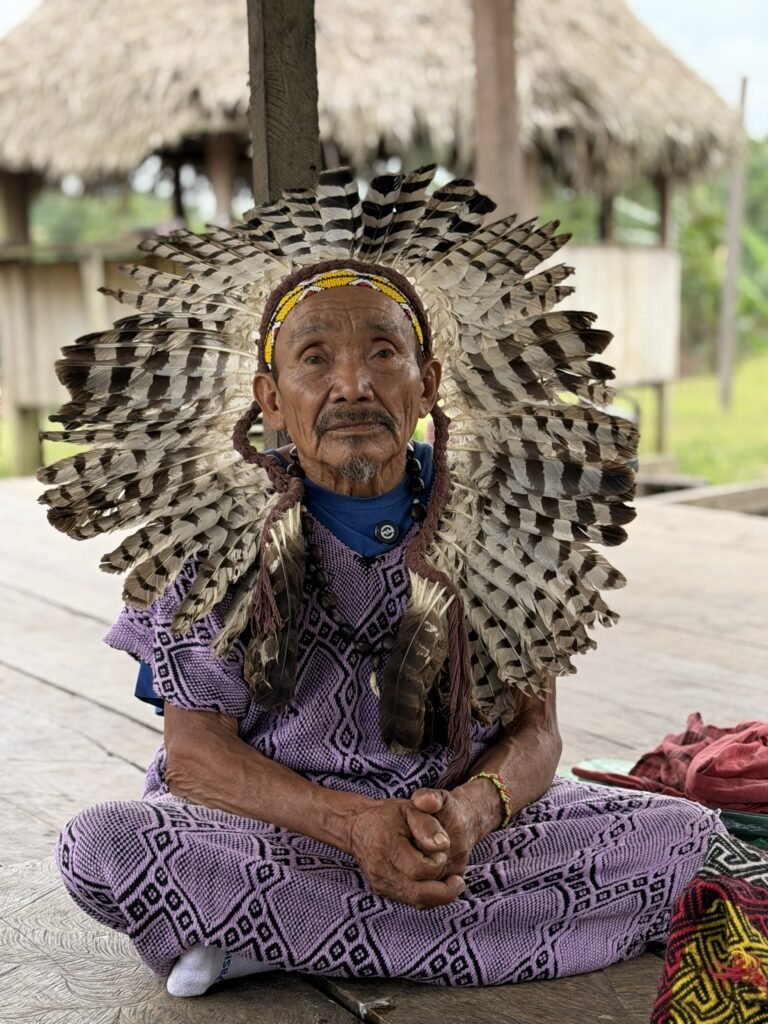
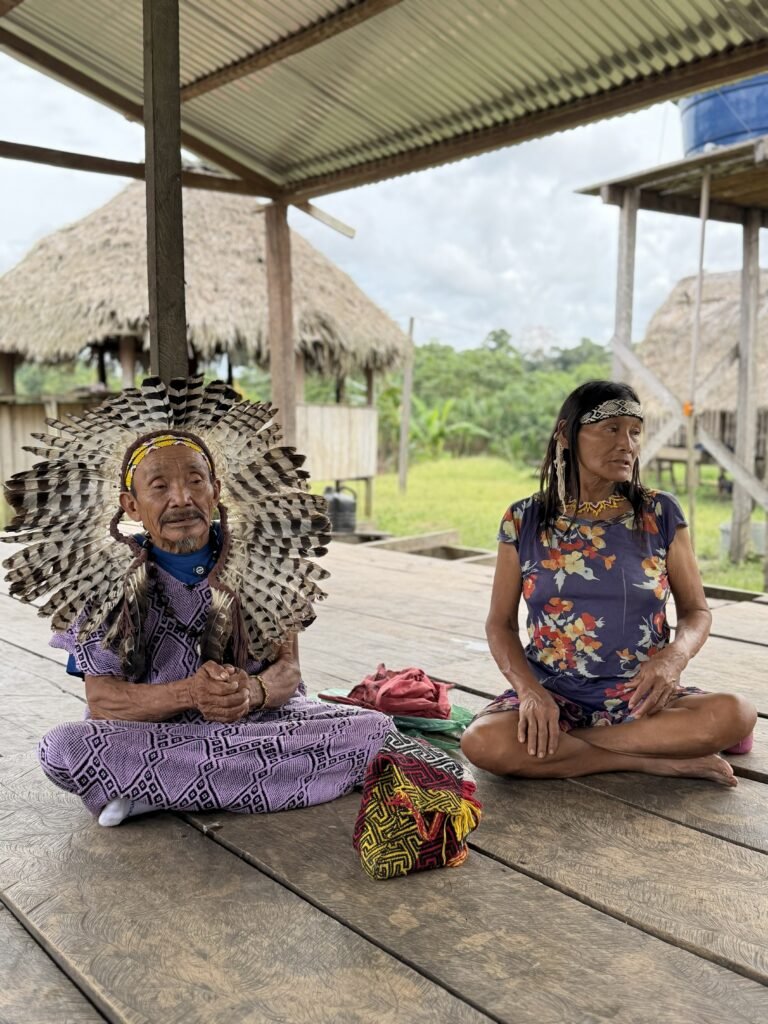
The Shubu Hiwea Living School is a dream of the pajé DUA BUSË. He lives with his family in the Indigenous village Coração da Floresta [Heart of the Forest], on the Upper Jordan River. Dua Busë has deep knowledge of the Huni Kuï culture – of stories, medicine, music and spirituality - and over the years he has passed on his knowledge to other pajés and apprentices. In his village, he has created a large garden, which he has named Parque União da Medicina [Medicine Union Park], where the traditional medicine of his people is cultivated, studied and practiced.
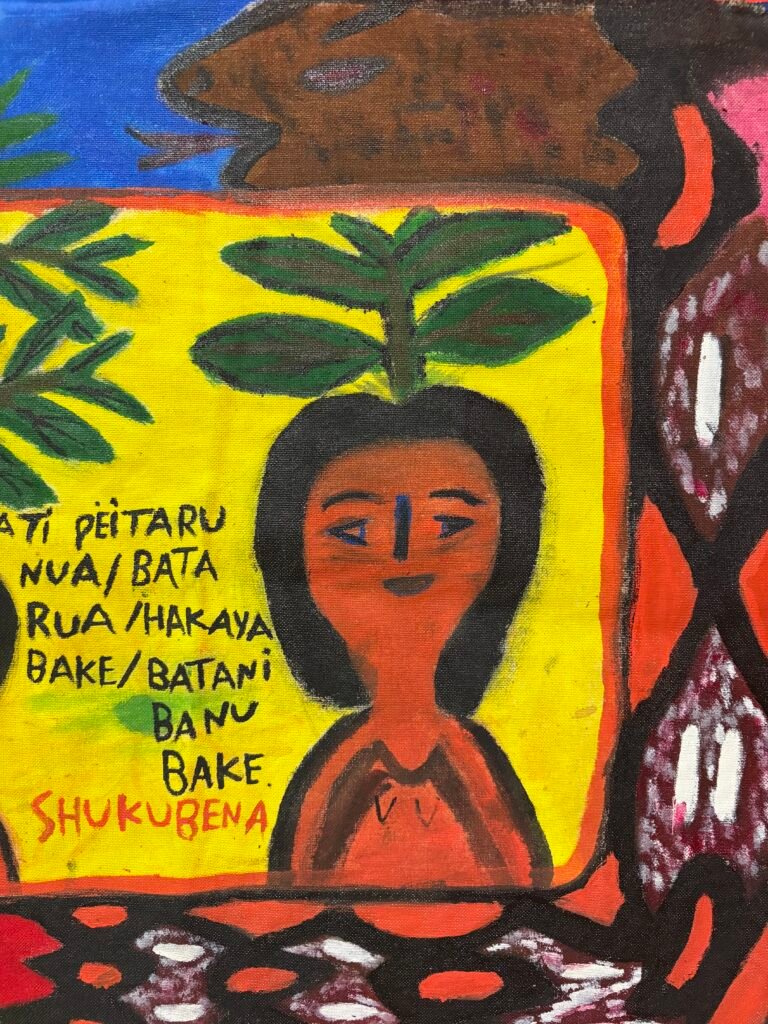
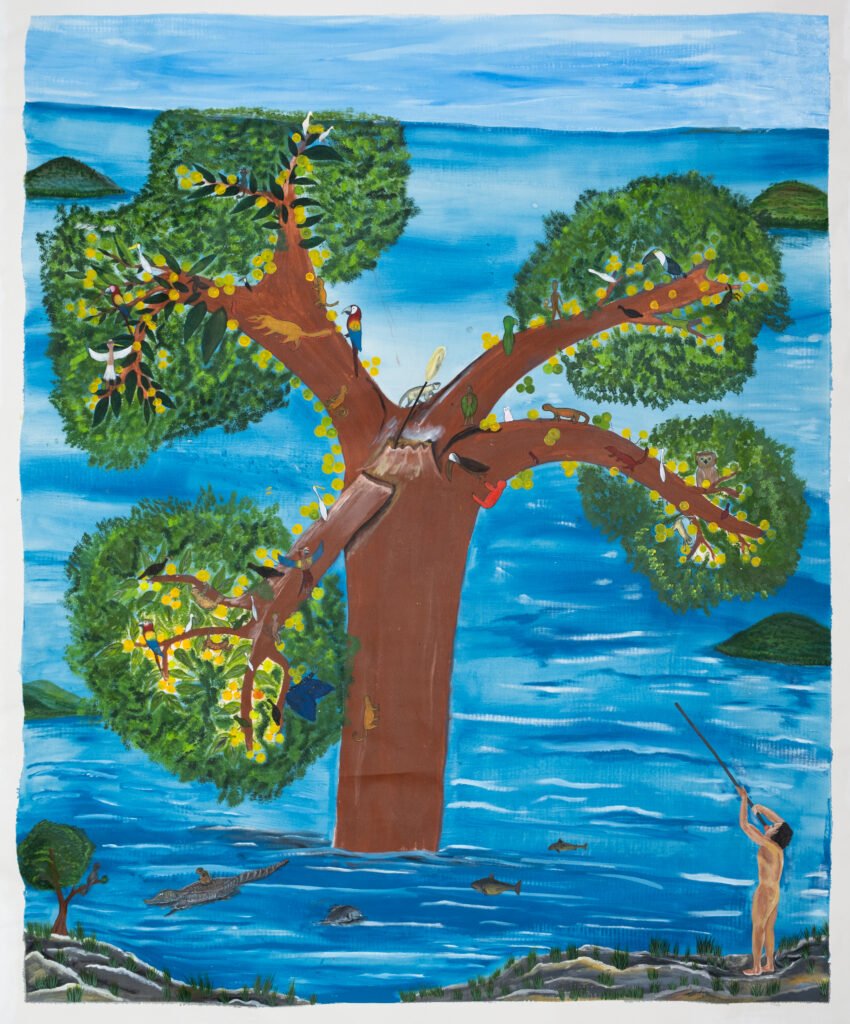
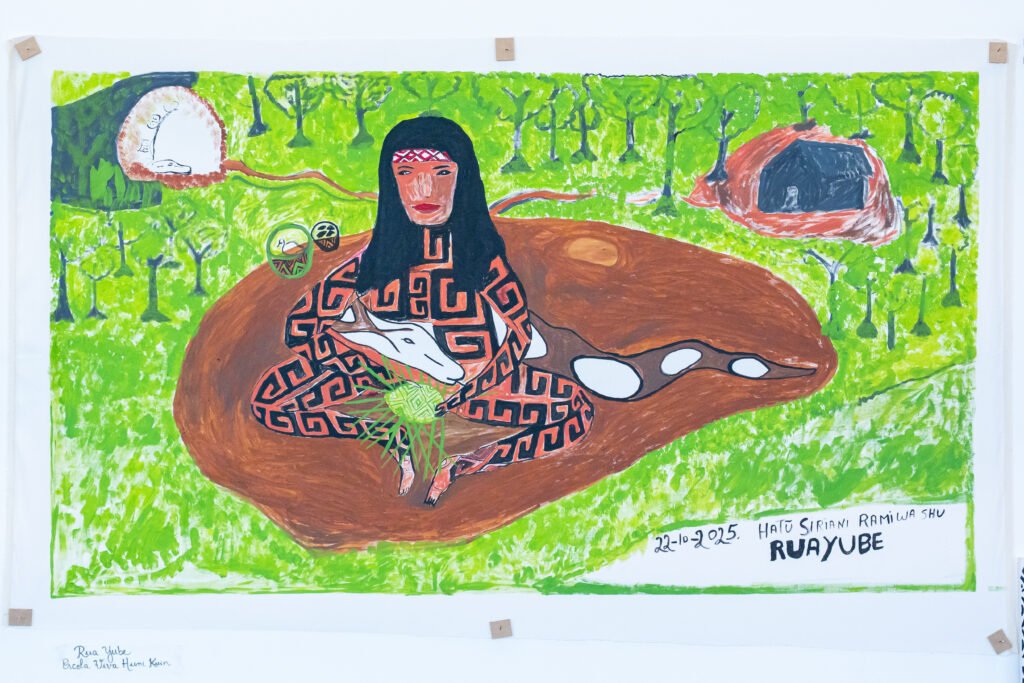
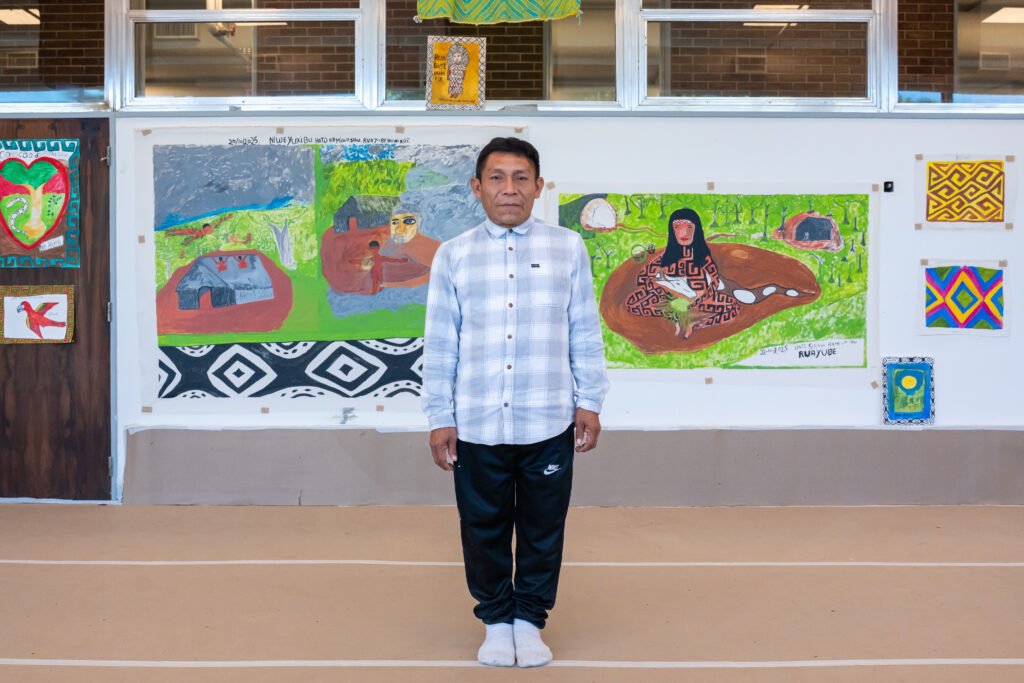
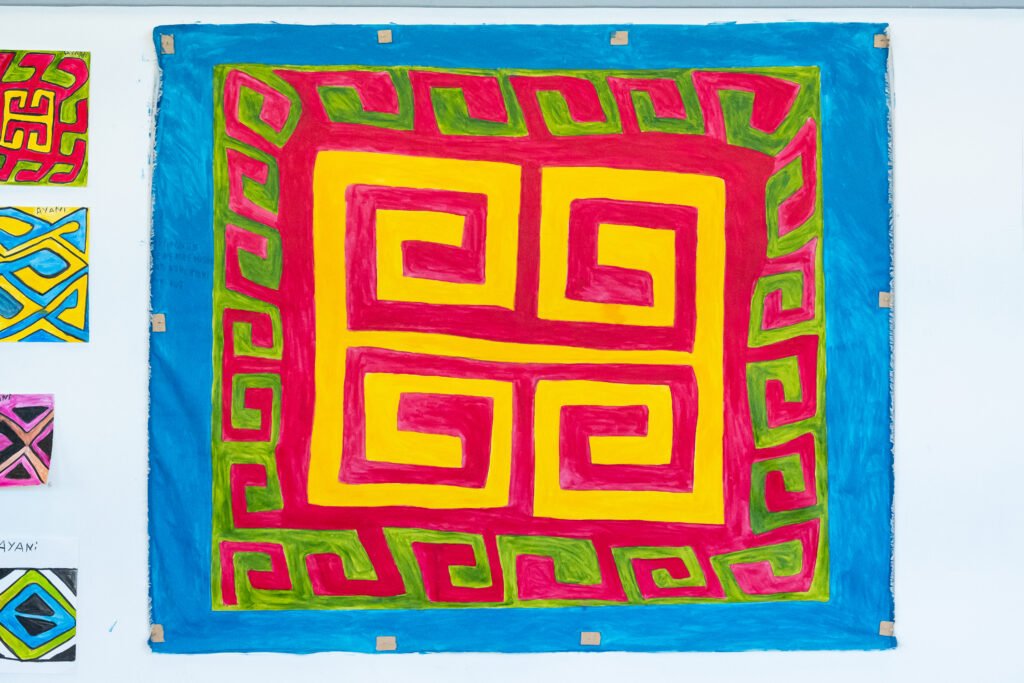
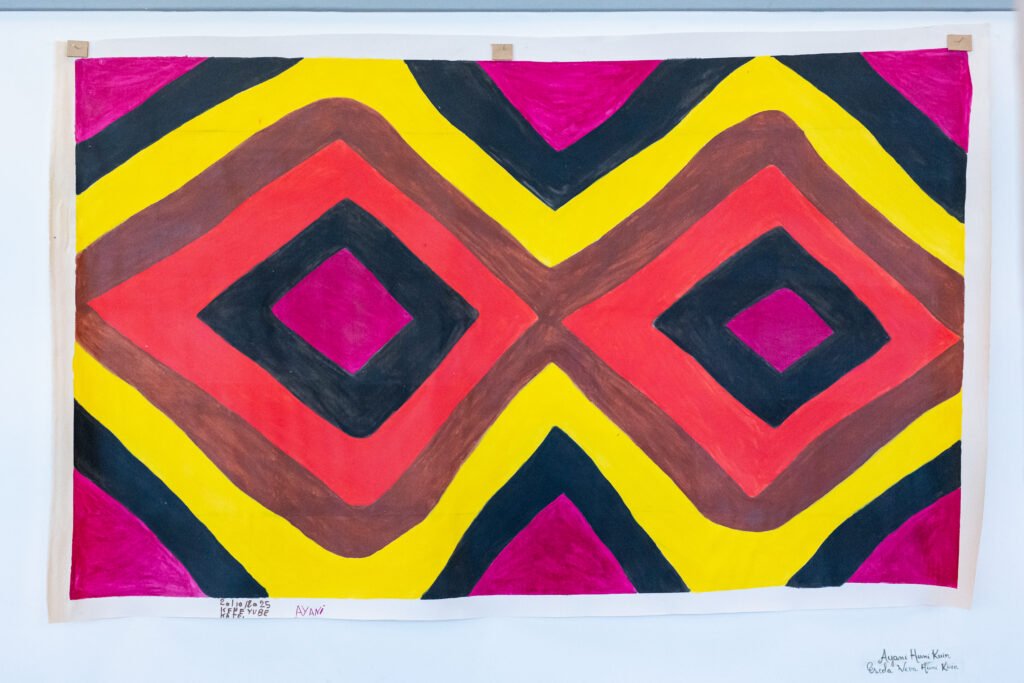
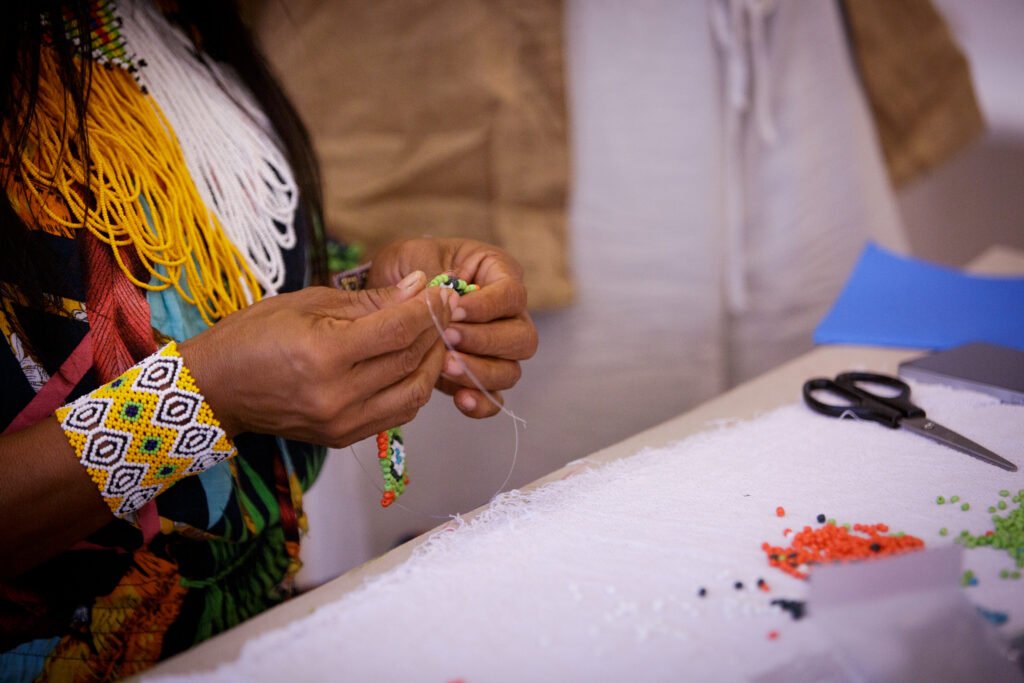
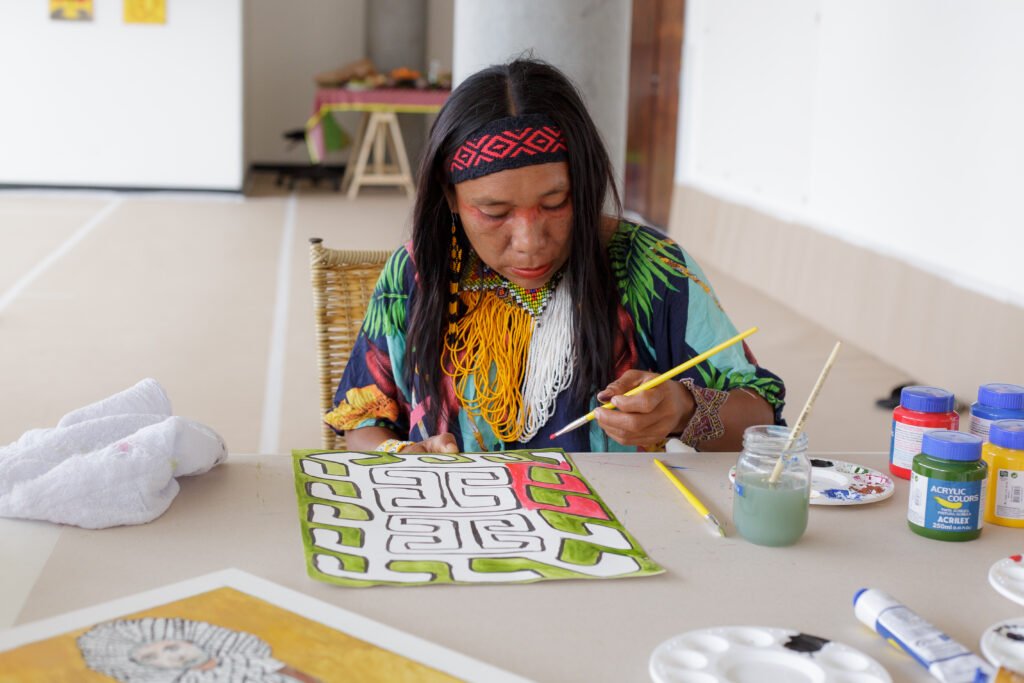
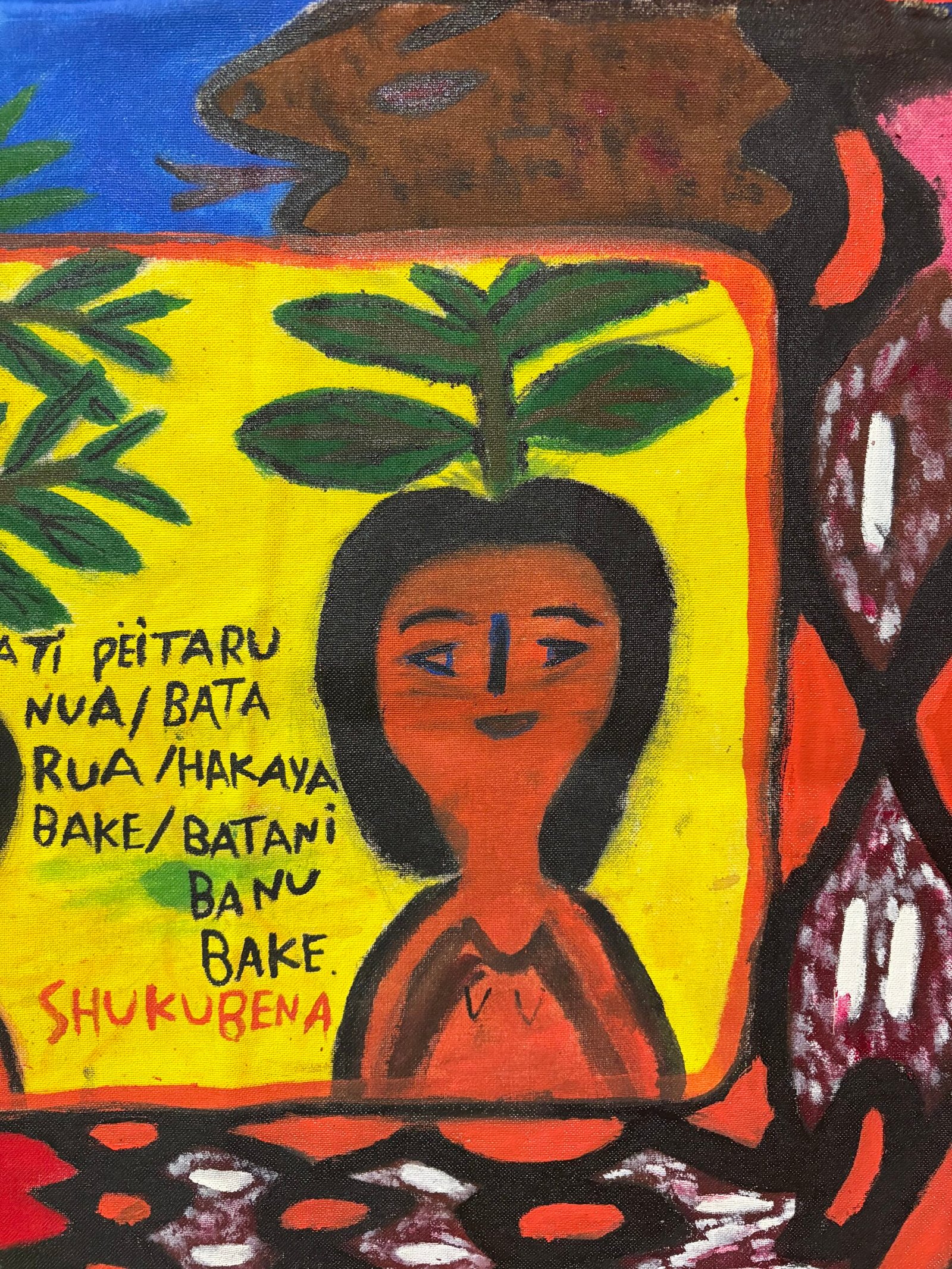
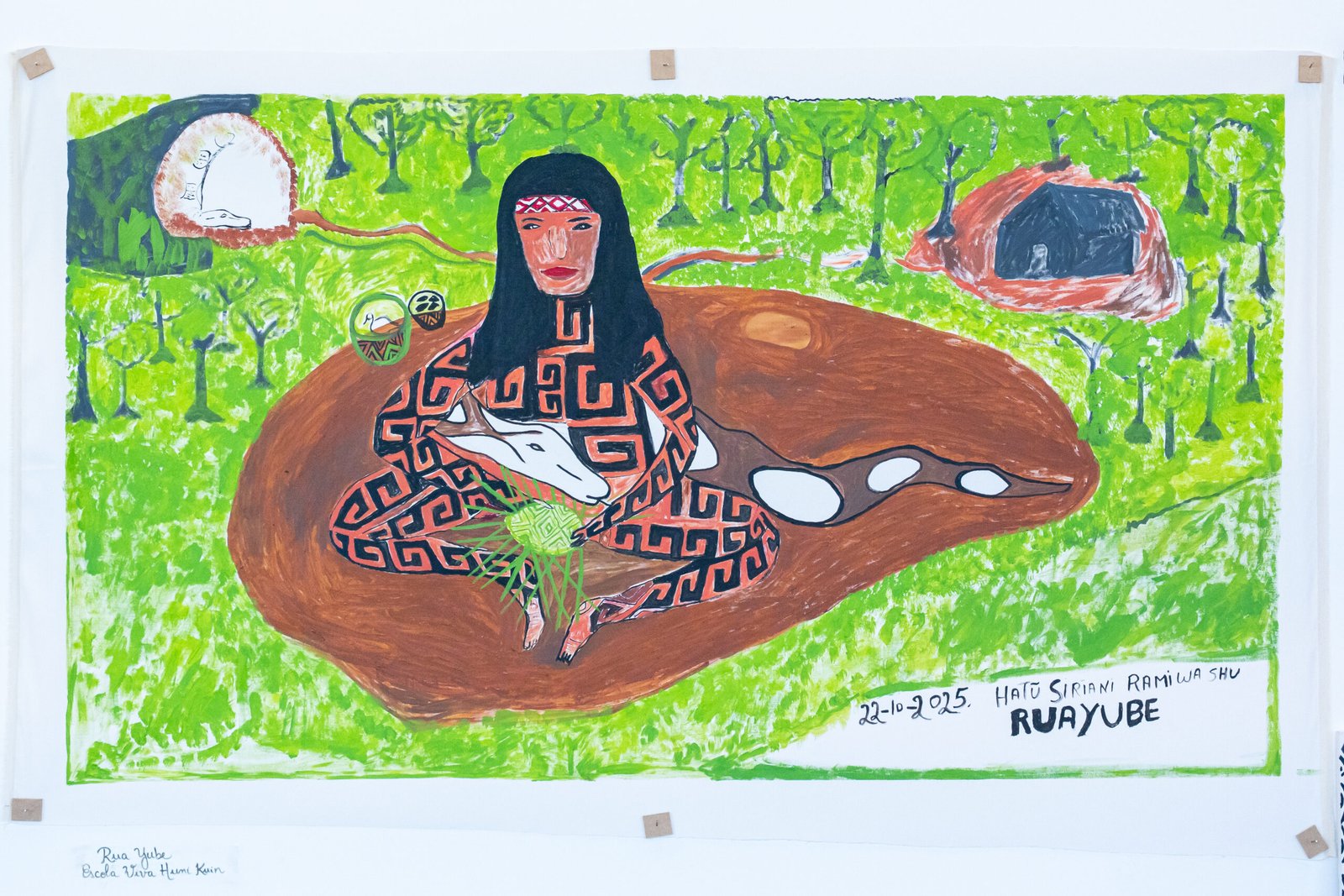
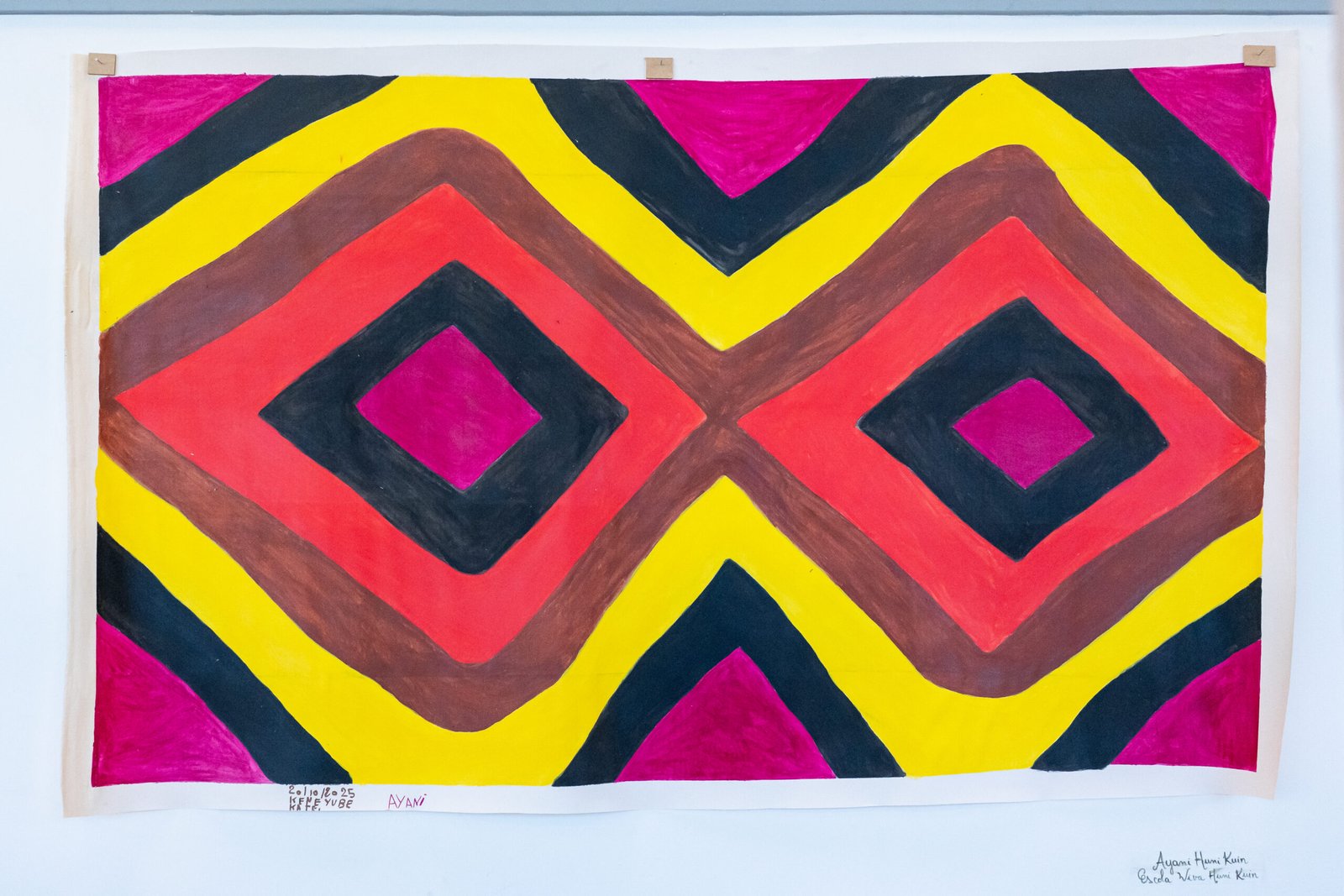
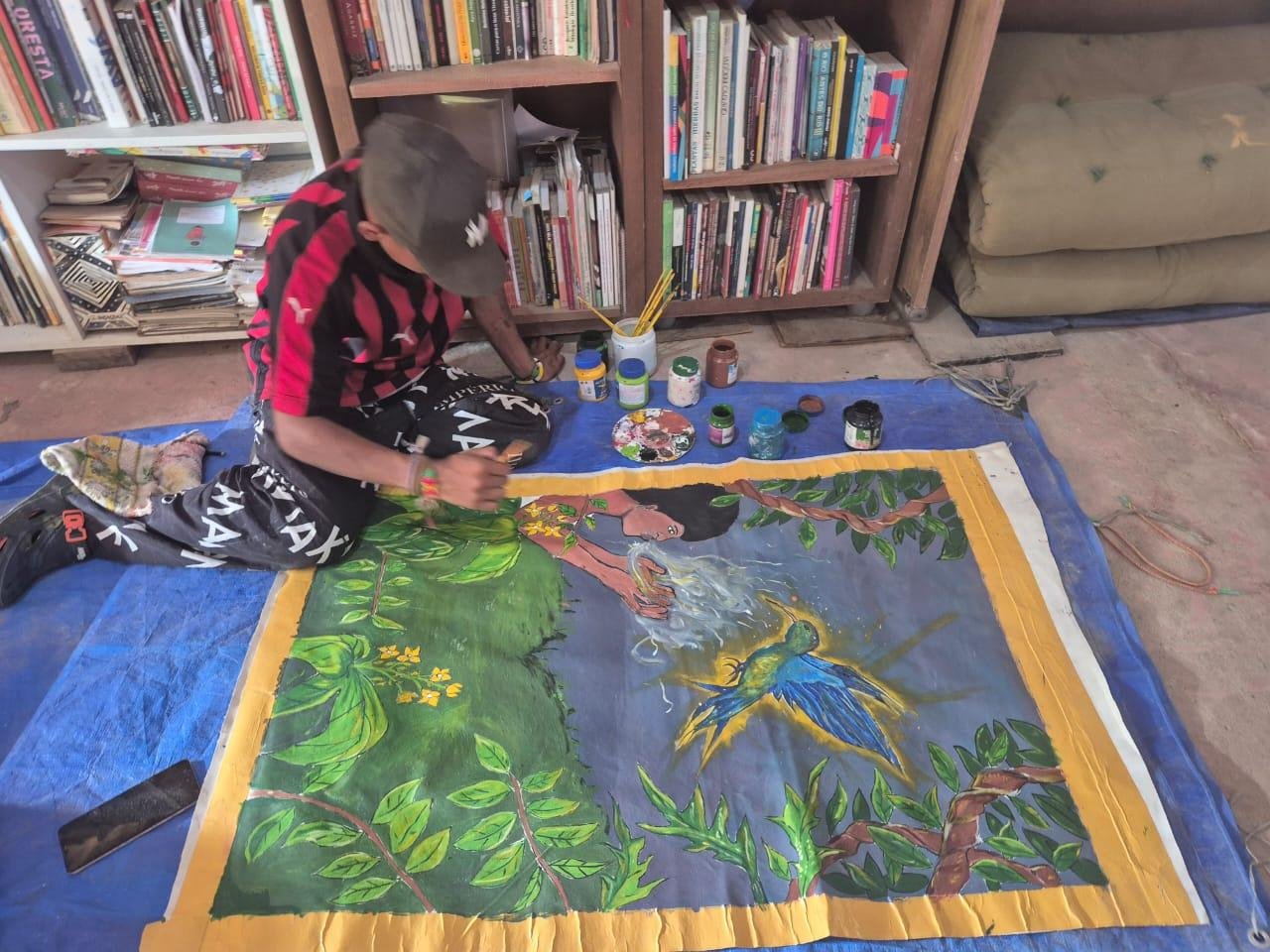
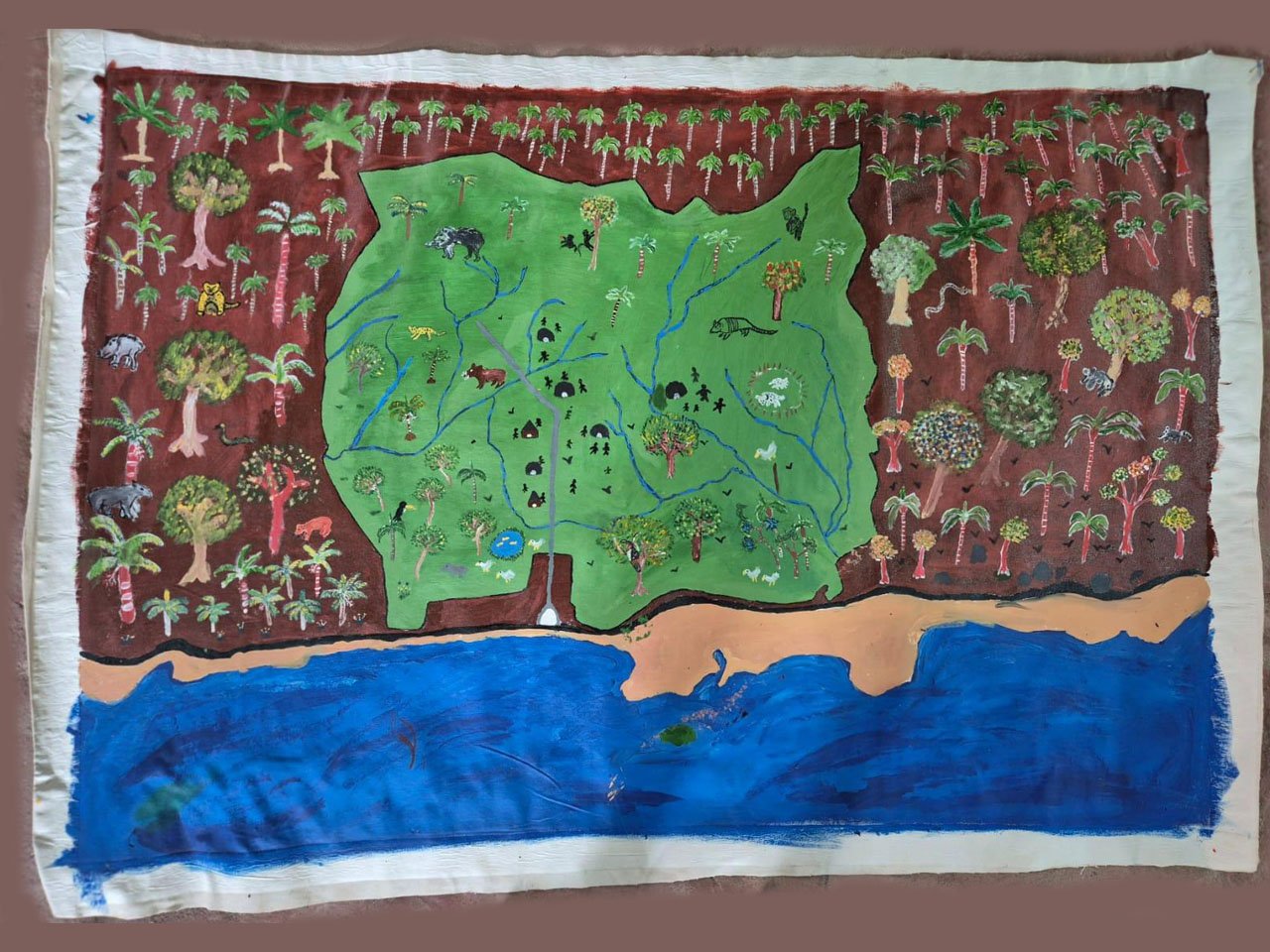
The exhibition features paintings by Rua Yube (José Maia) Huni Kuin and Ayani (Maria Ducila) Huni Kuin, created during the Living School House residency, as well as several canvases produced in a workshop held in the territory of the Huni Kuin Living School, in the Aldeia Coração da Floresta, between April and May 2026, with the participation of Ayani (Maria Ducila), Shuku Bena, Inu Bake, Inu Ibã, José Domingos, Dua Txuwã, Edivaldo Sena da Silva, Aldo Sena da Silva, Luciene Domingos da Silva, Alderina Vandique Domingos, Maria Socorro Sena da Silva, Itã, Teresa Netë, Maspã, Paulino, and Ayani (Francisca Domingos).

ARANDU PORÃ
Guarani Living School
At Arandu Porã, name of the Guarani Living School, young people have begun to awaken their dormant memories. Ancestral practices are in dialogue with agroforestry techniques and bee cultivation. In this territory, where the Guarani language is dominant, children and young people find at the Living School a place to learn the stories of their people, practise their art and science.
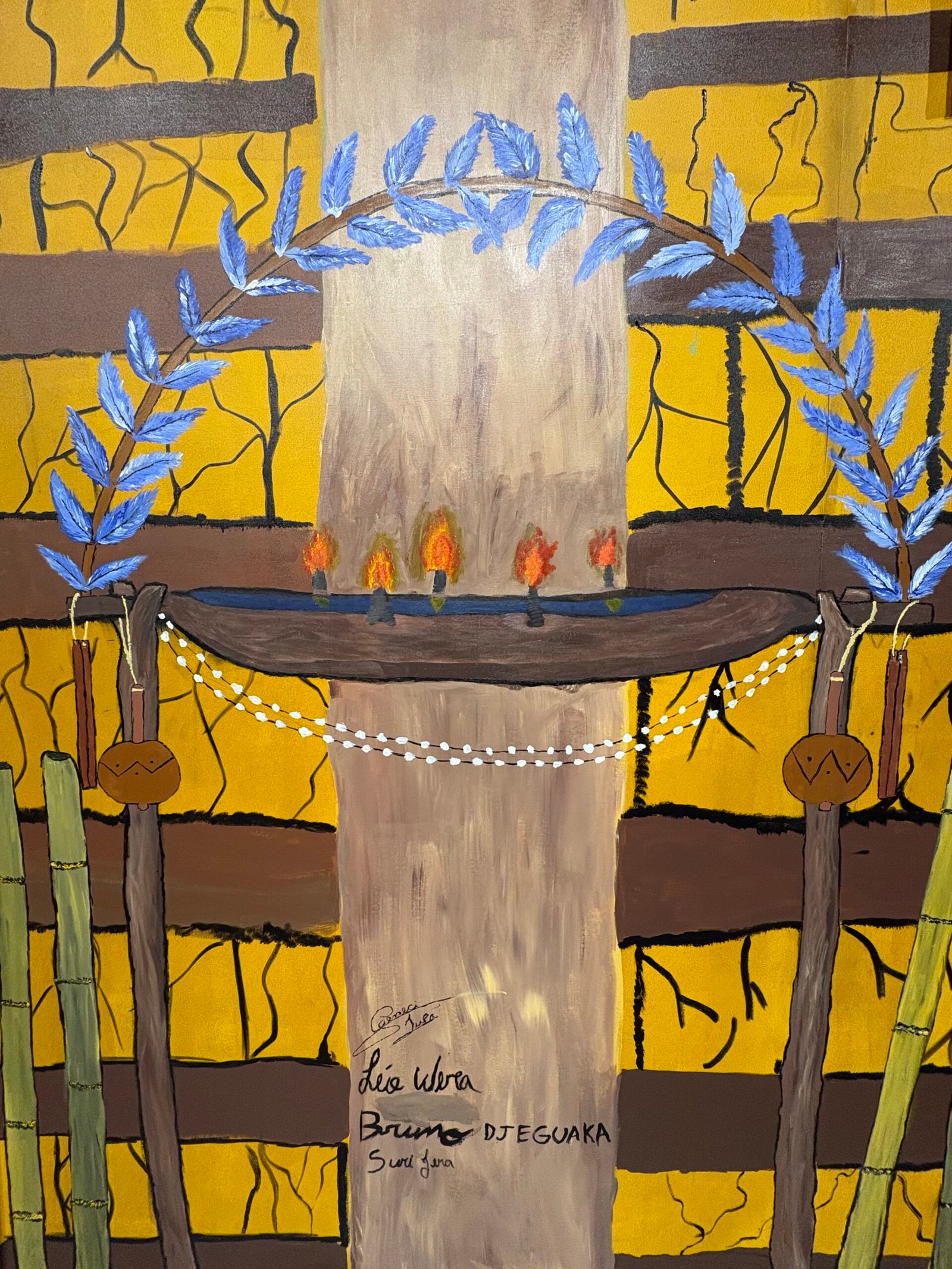
The exhibition includes paintings by Carlos Papá, Bruno Djeguaká, Kauê Karai, and Suri Jera, made during the Living School House residency, as well as the installation The origin of us, and paintings produced in workshops at the Guarani Living School, also featuring Fabiano Kuaray, Léo Wera, Cristine Takuá, Alexandre Wera, Tupã, and Cristiano Wera Poty.

APNE IXKOT HÂMHIPAK
Maxakali Living School
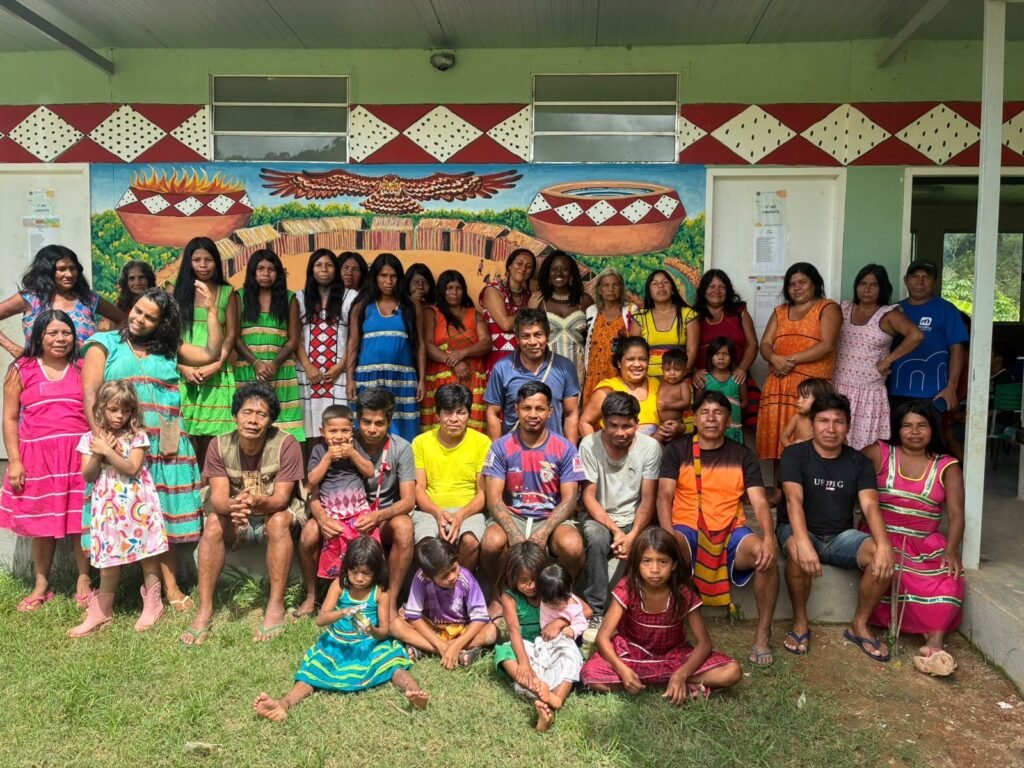
The Maxakali are ancestral inhabitants of the forests that used to cover the north-east of Minas Gerais and the extreme south of Bahia. They are a people of approximately 3,000 who speak the Maxakali language, one of the last native languages of the region. The Forest School Village, Maxakali Living School, was created from the retaking of a federal property, located in the rural area of Teófilo Otoni (MG).
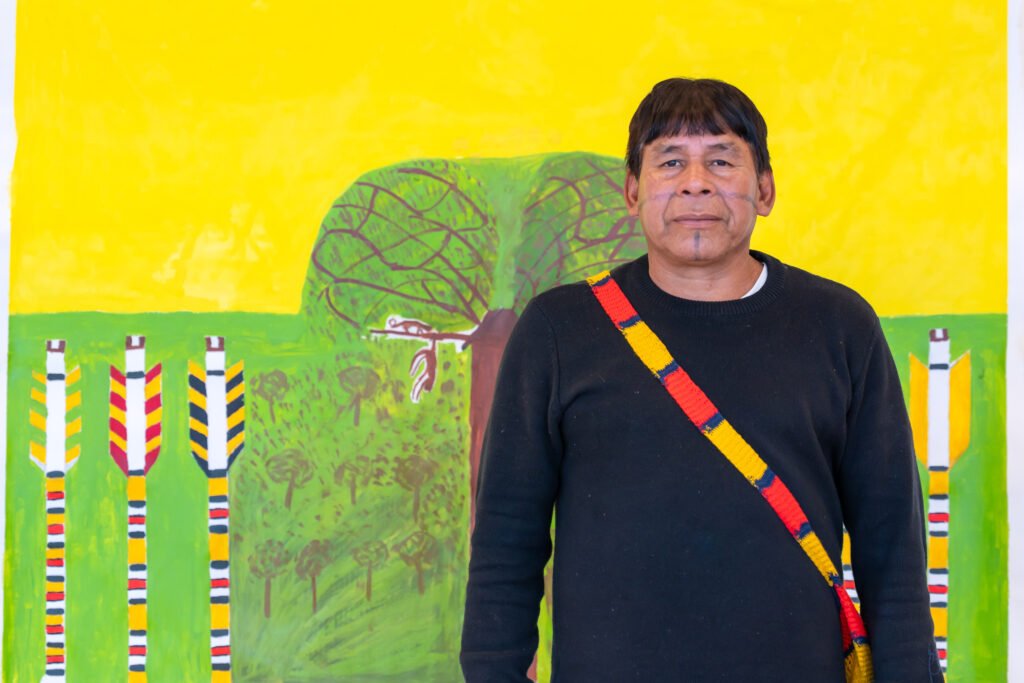
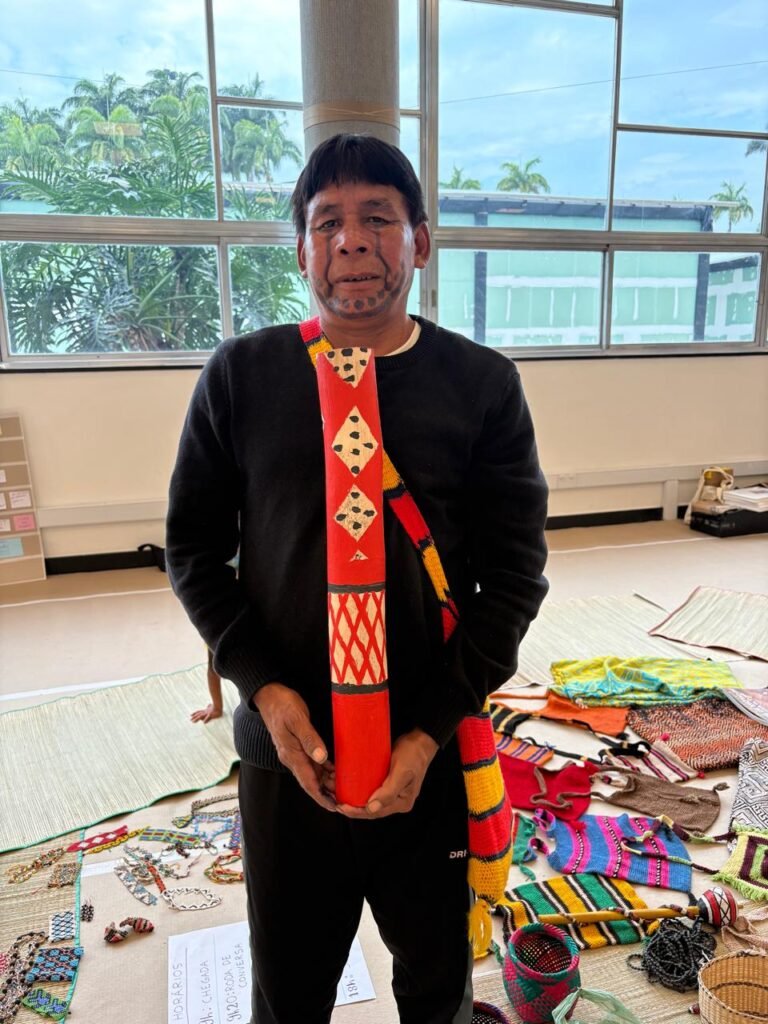
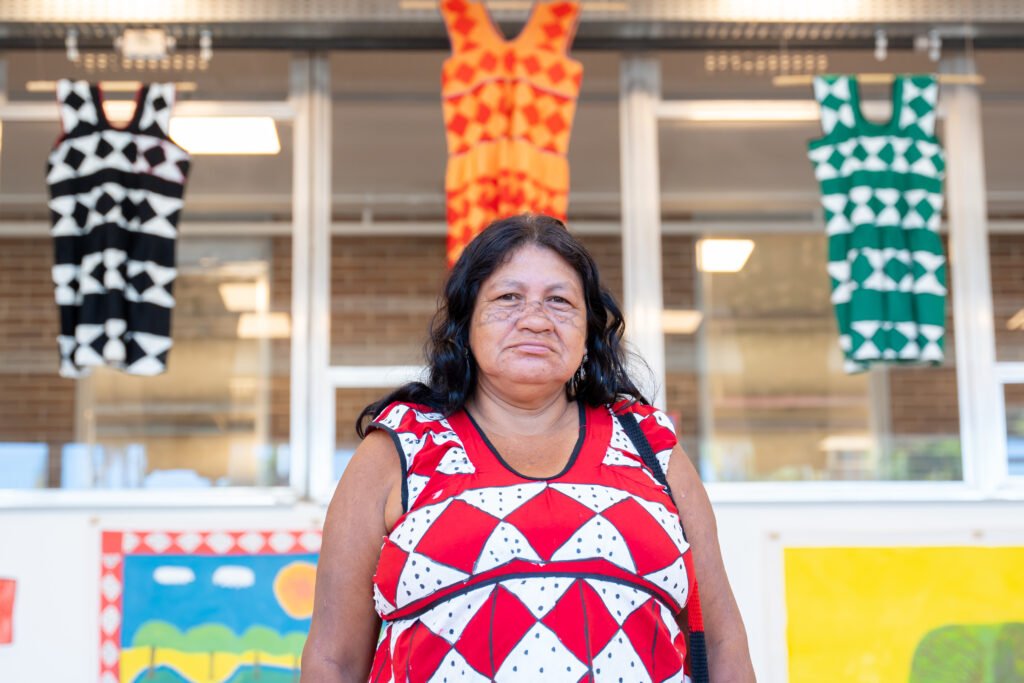
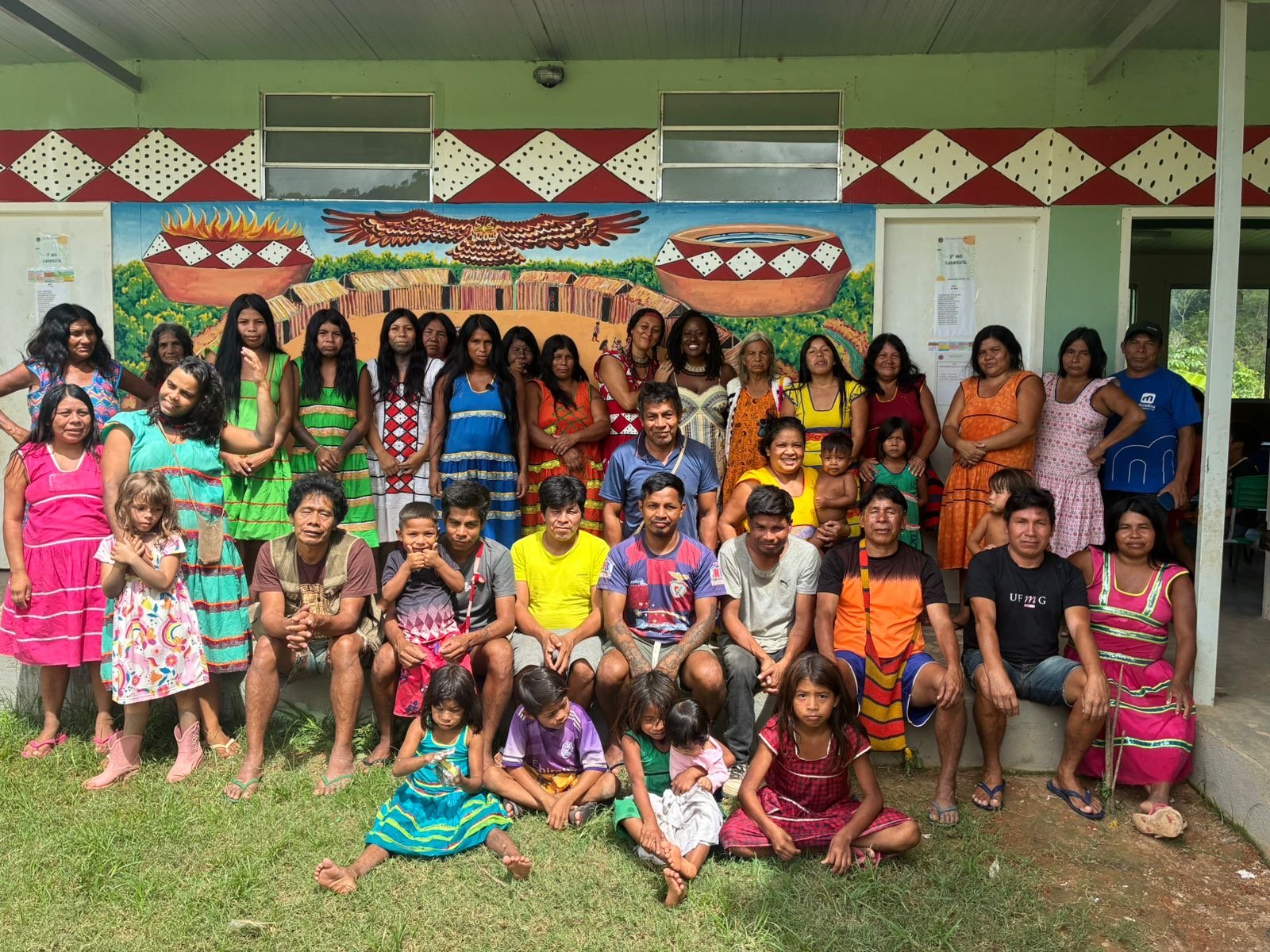
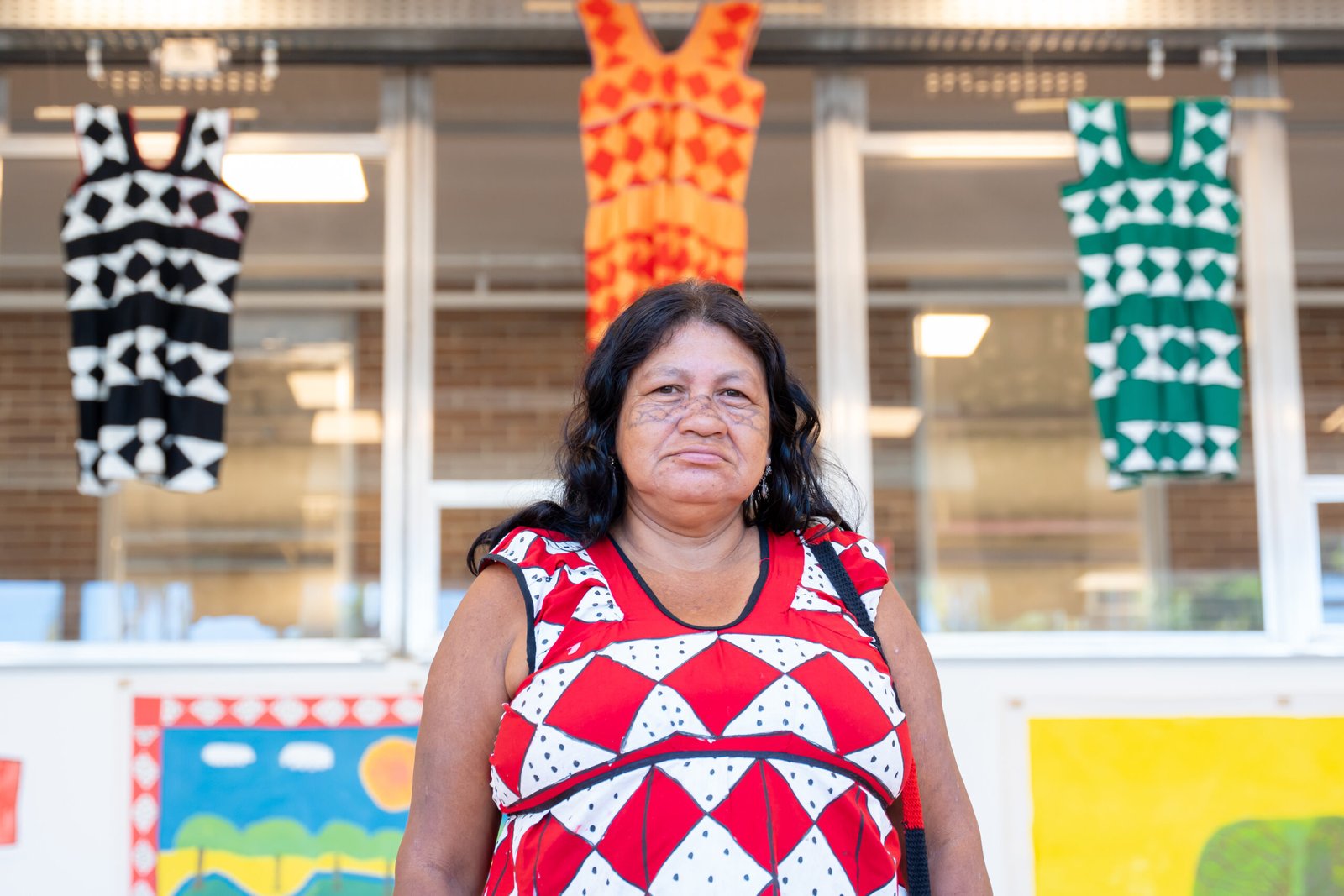
The exhibition presents canvases by Mamei Maxakali and Isabelinha Maxakali, created during the Living School House residency, as well as mīmãnãns [ritualistic wooden poles], traditional garments, and additional paintings produced in workshops at the Maxakali Living School, with the participation of Isael, Sueli, Cassiano, Rolando, Erismar, Veronildo, Marcinho, Marcos, Evaldo, and Voninho, as well as Mamei and Isabelinha.

BAHSERIKOWI
Tukano-Desana-Tuyuka Living School
The Bahserikowi Indigenous Medicine Center is located in the city of Manaus, the capital of the state of Amazonas, and articulates relationships with various institutions, such as the Pan American Health Organization, the Brazilian Secretariat of Indigenous Health (SESAI), the Oswaldo Cruz Foundation (Fiocruz), and the Federal University of Amazonas (UFAM).
The kumuã specialists who consult at the Bahserikowi Indigenous Medicine Center come from the Yepamahsã (Tukano), Utãpirõ-porã (Tuyuka) and Umukori-mahsã (Desana) Indigenous communities of the Upper Tiquié River.
The exhibition also features canvases and drawings by Ivan Tukano and Thais Desana made during the Living School House residency, as well as an Amazonian pharmacy developed in collaboration with the Bahserikowi team and specialists from the Upper Rio Negro region, along with traditional wooden benches carved by Celestino and Valter Tukano.
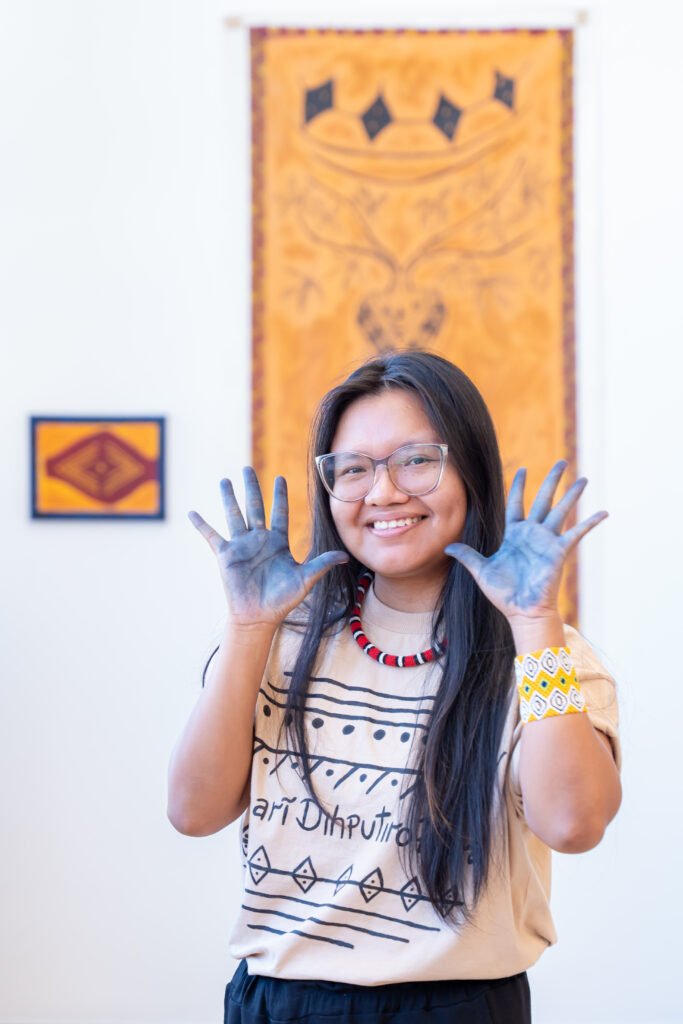
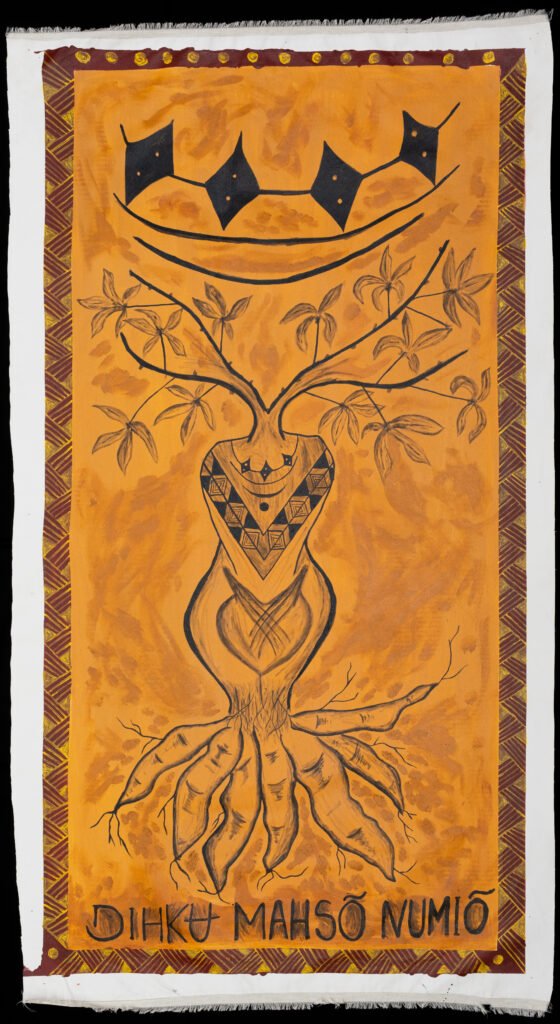
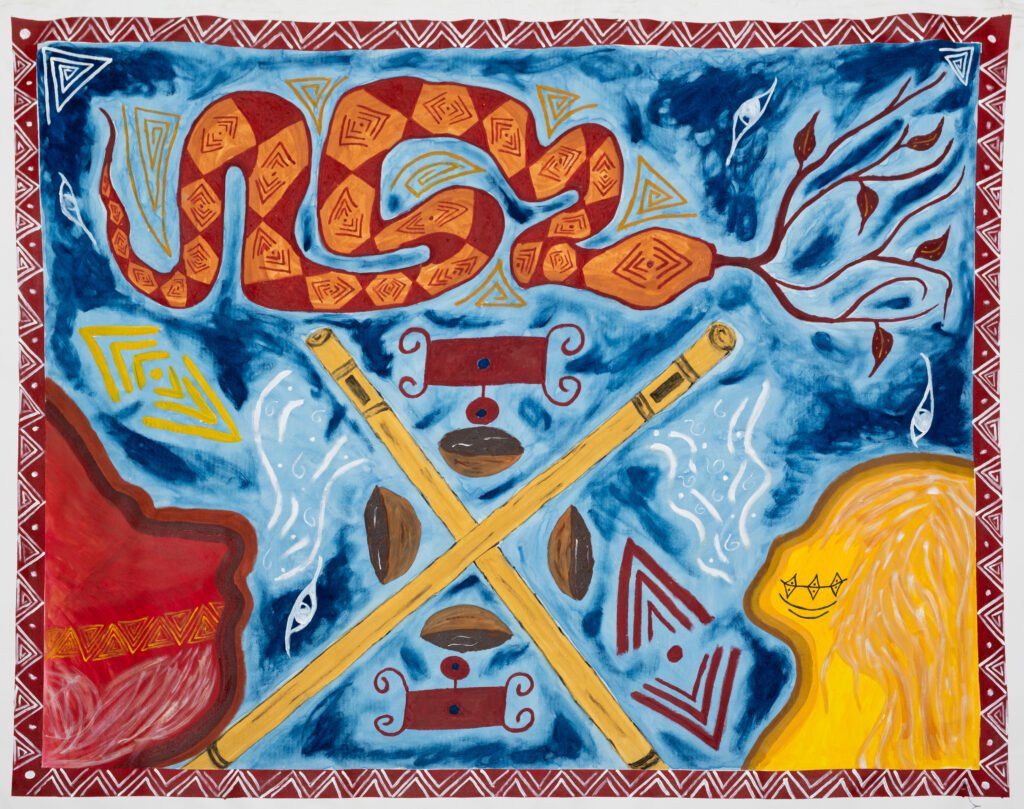
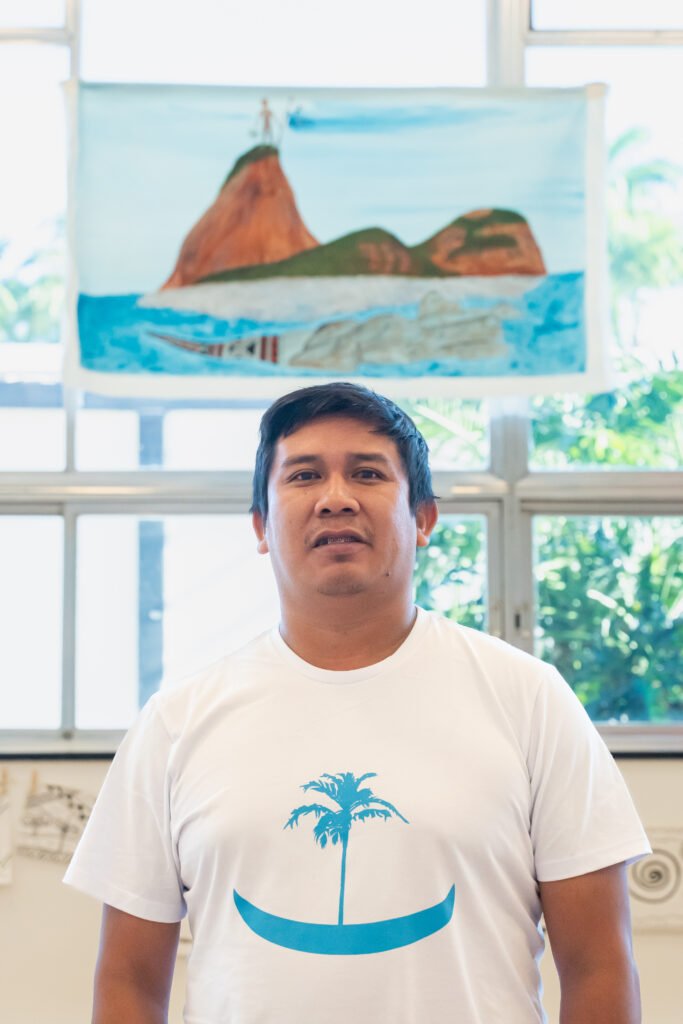
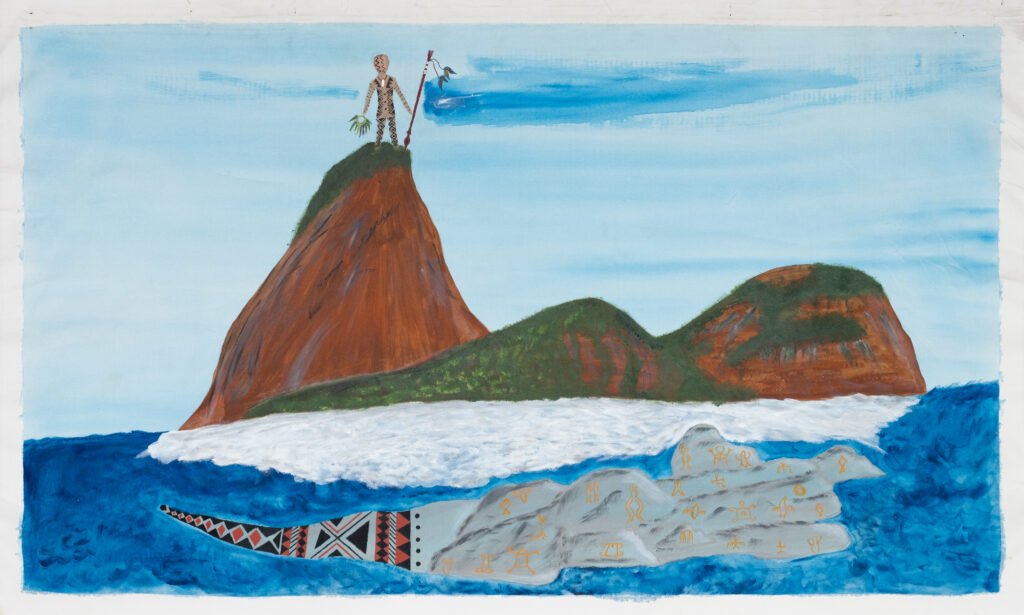
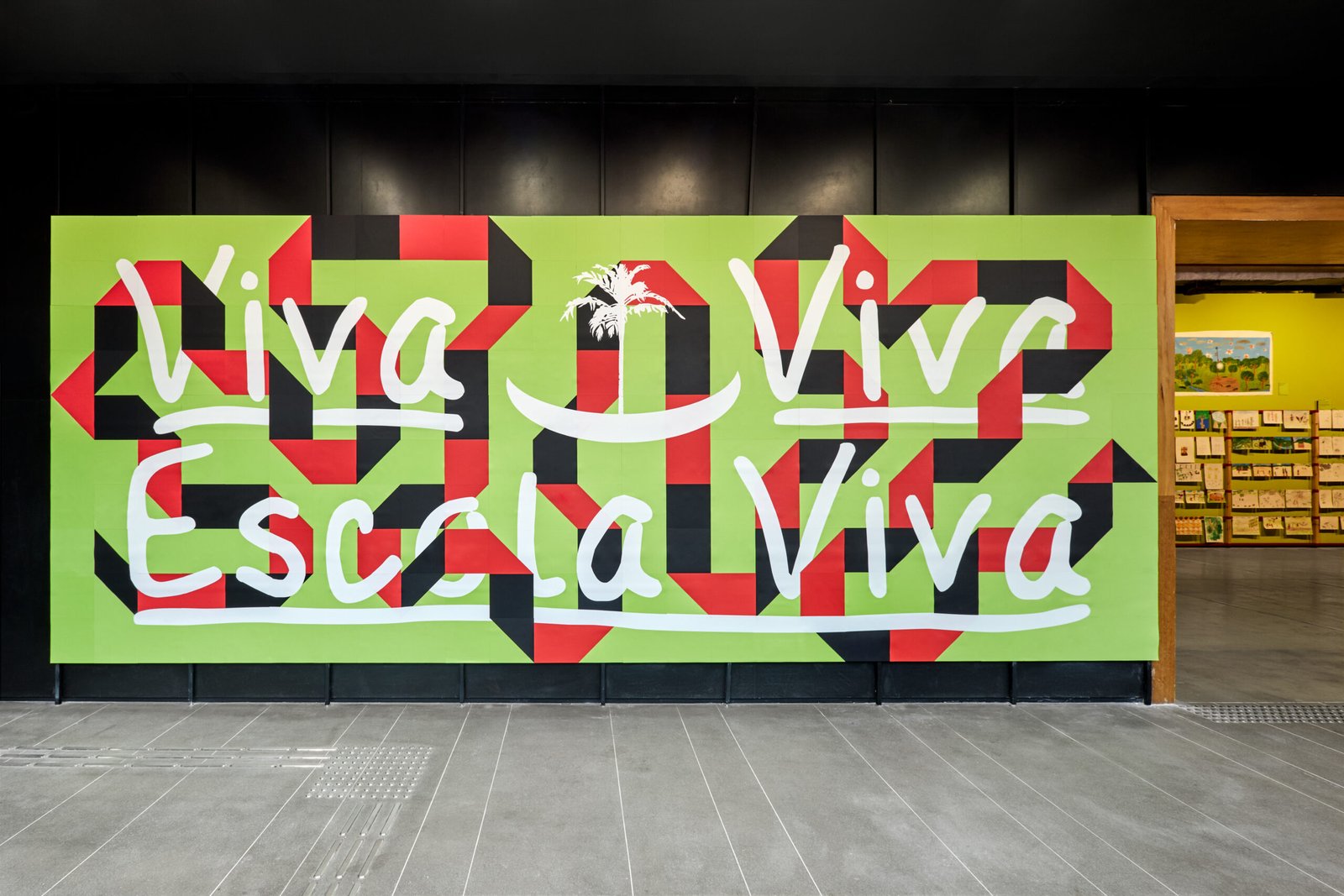
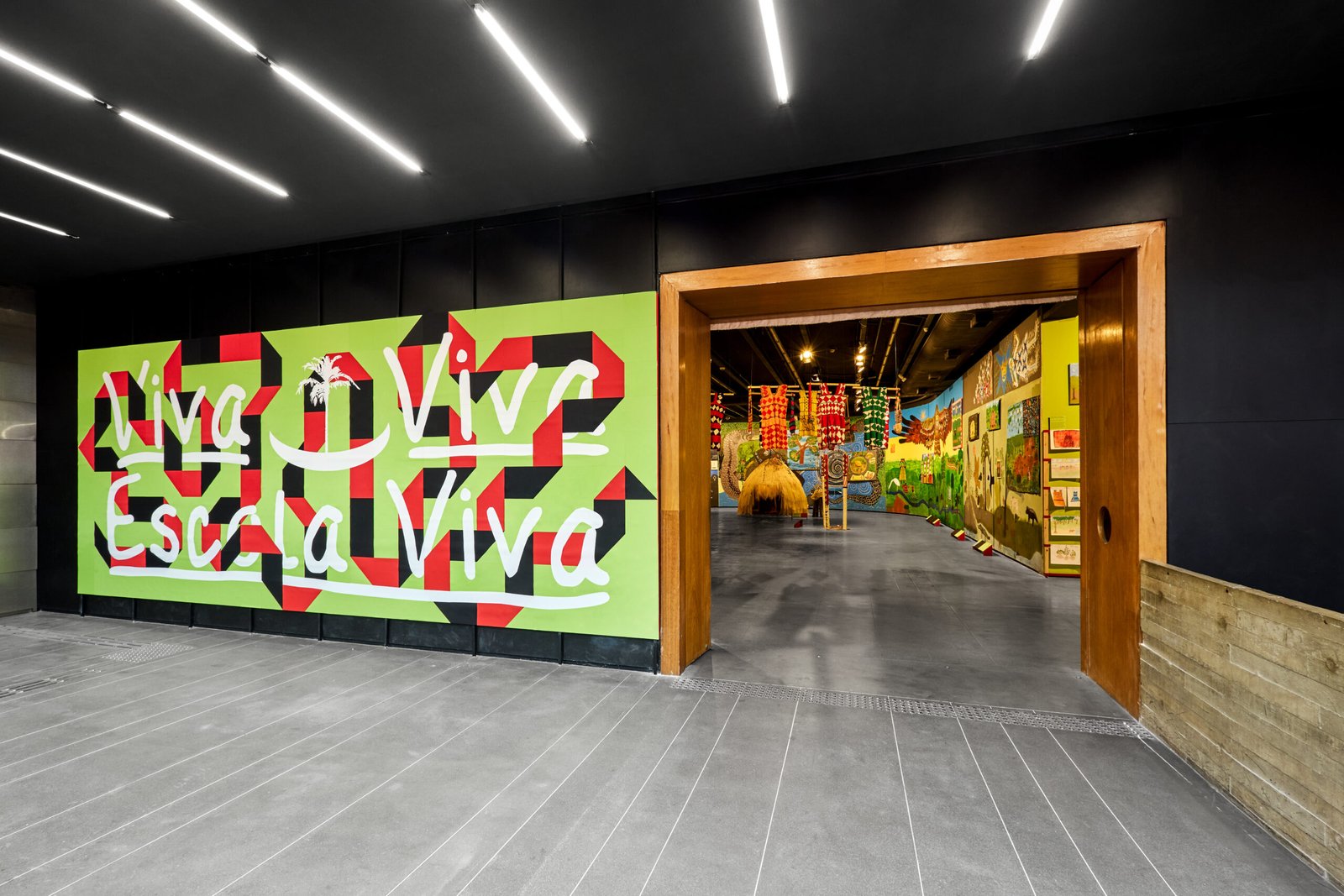
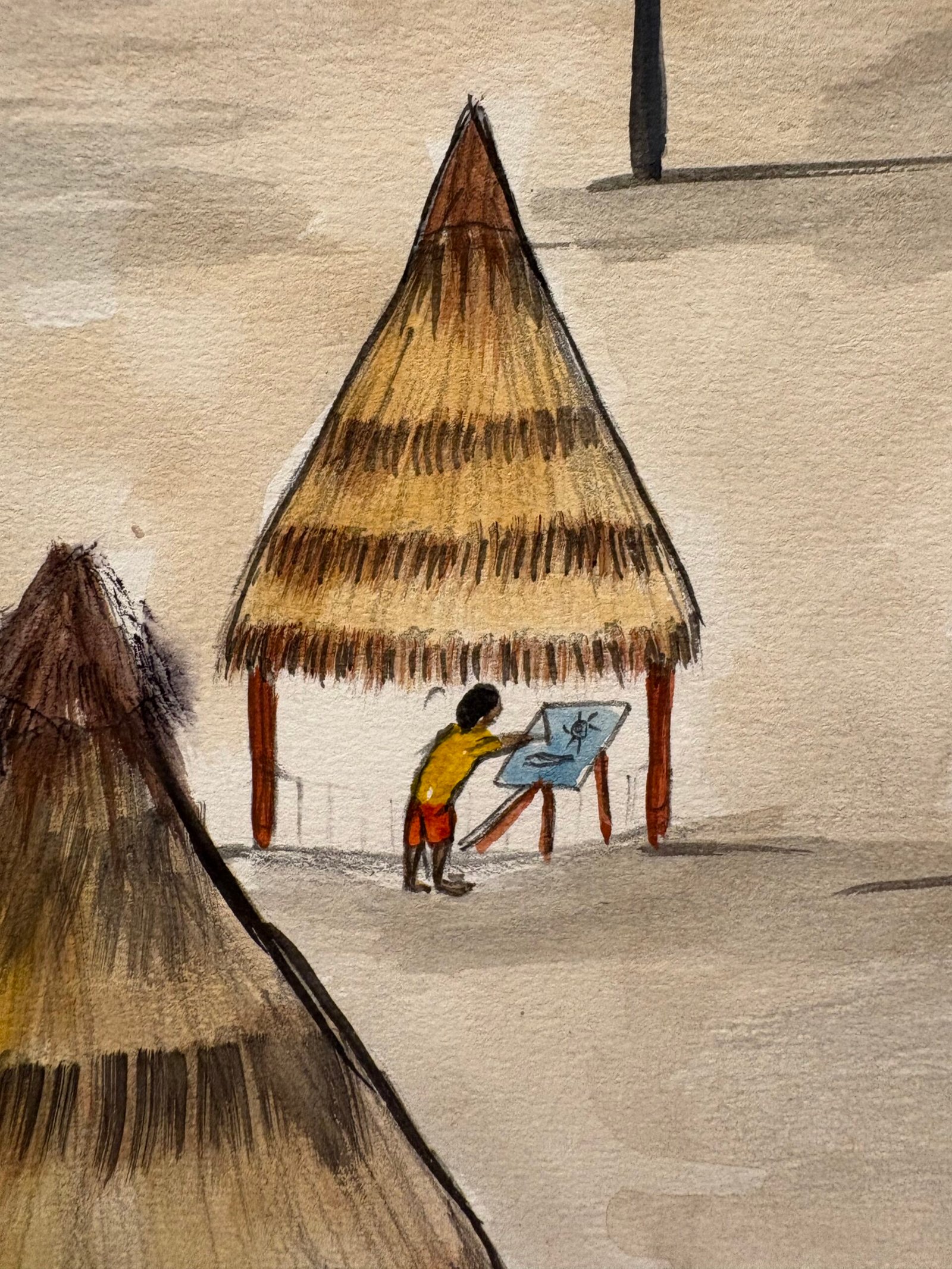
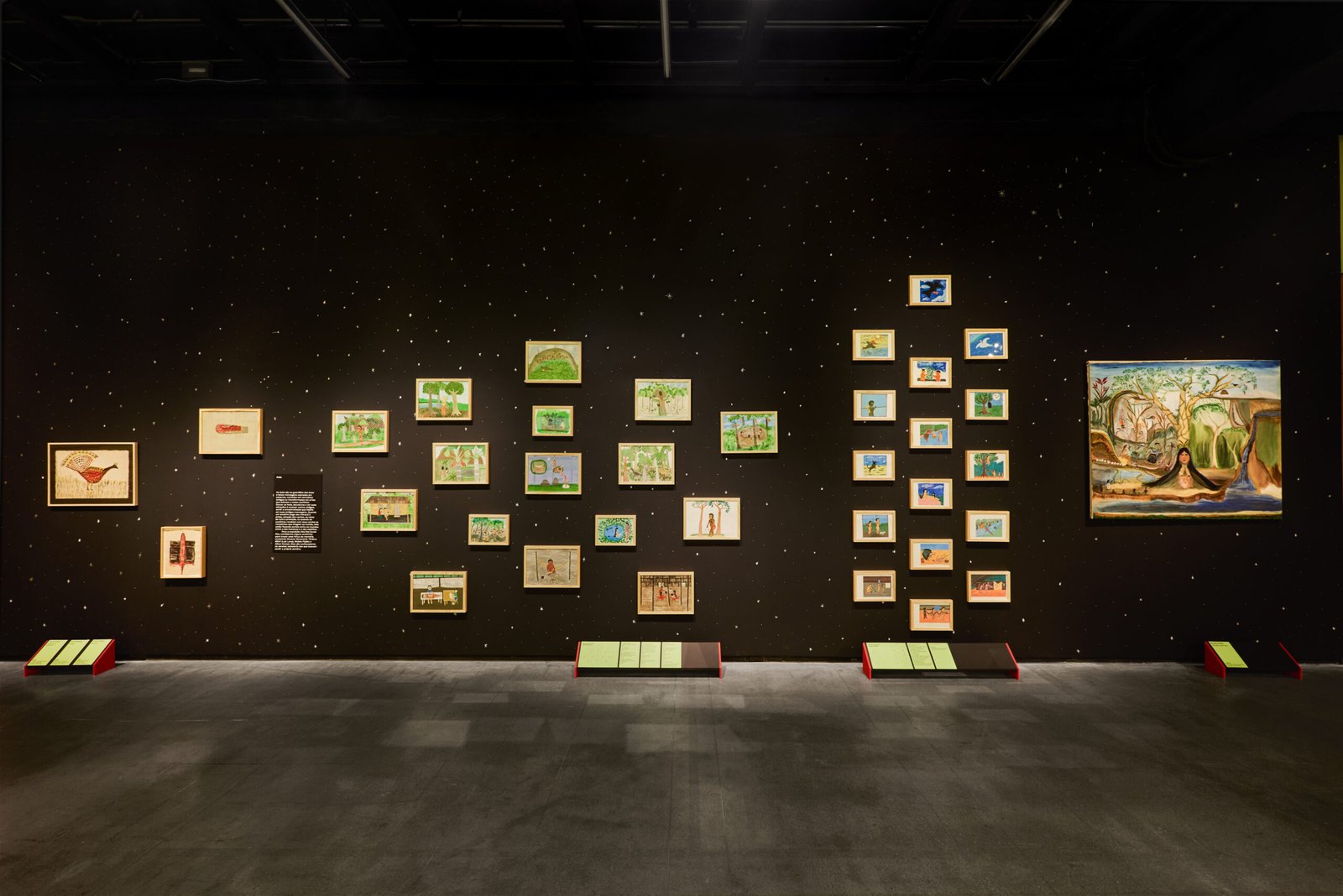


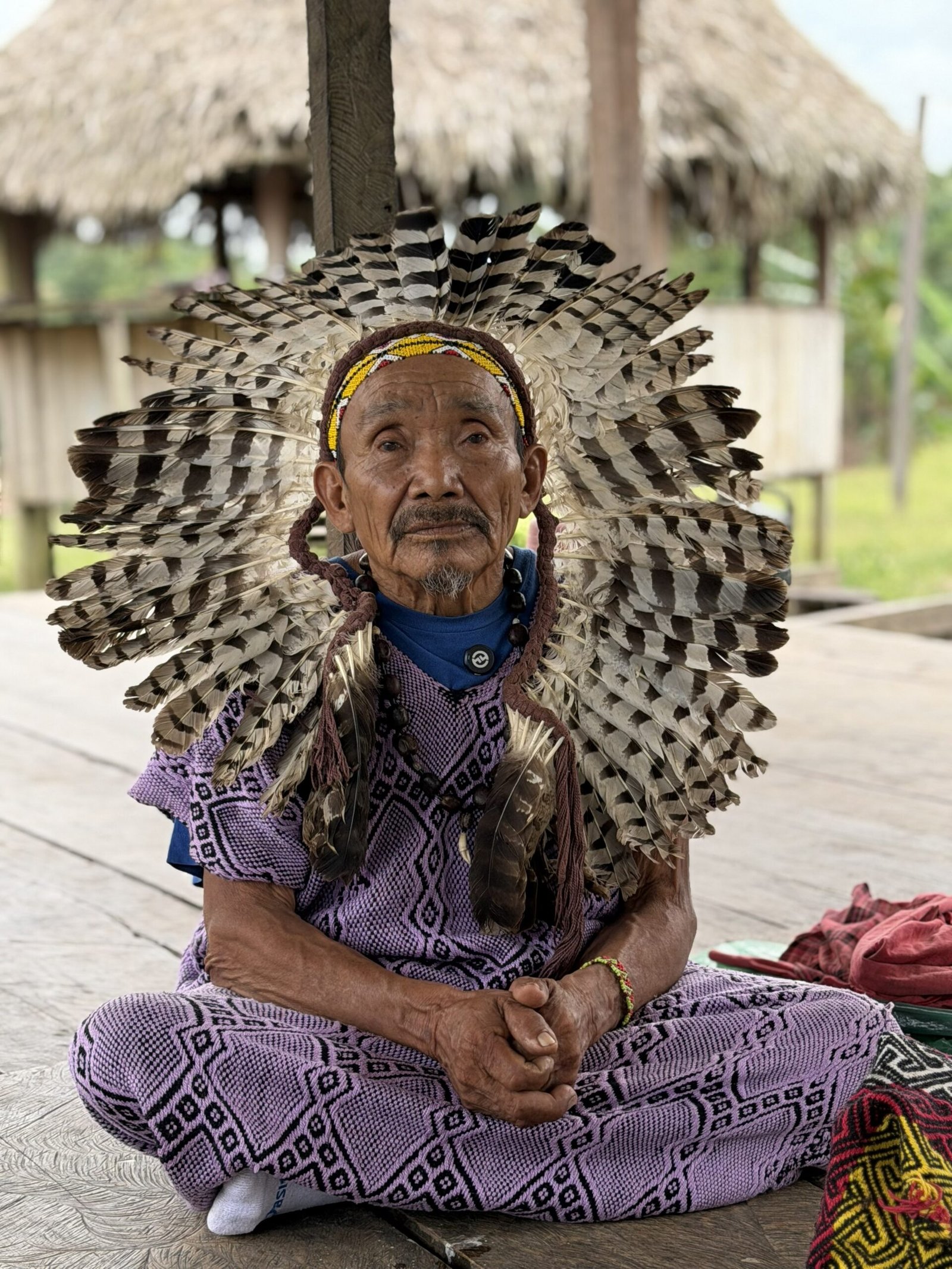
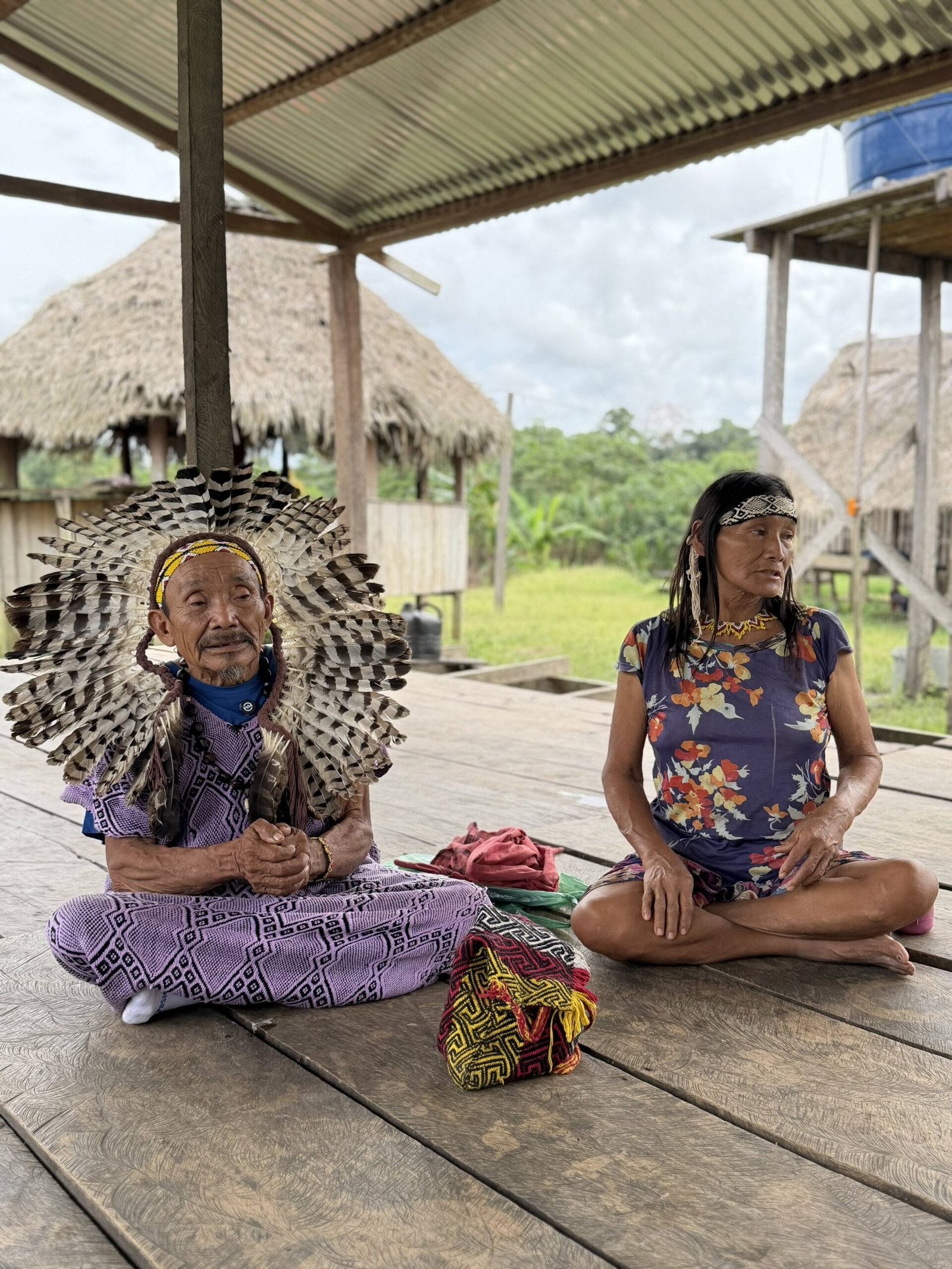
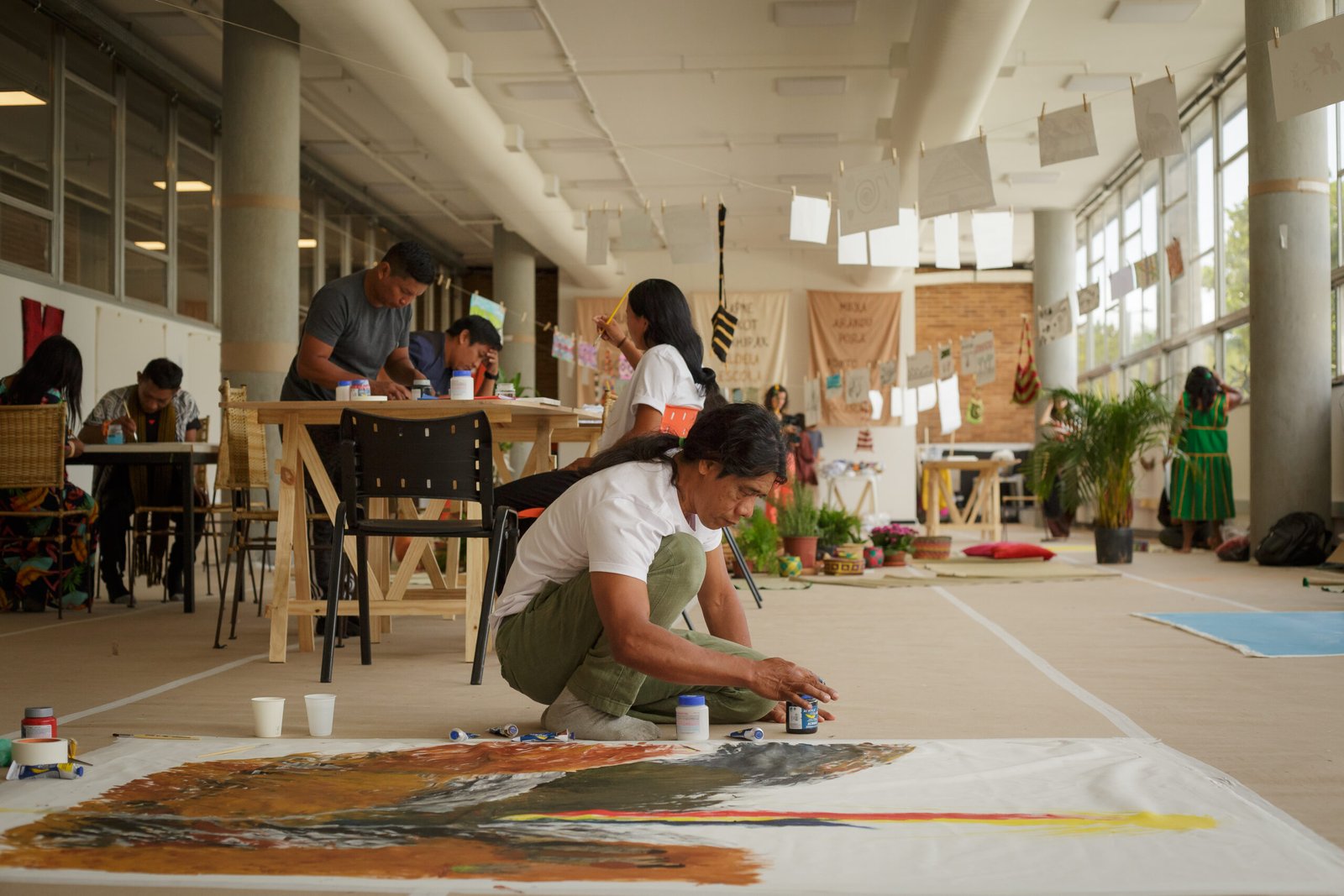
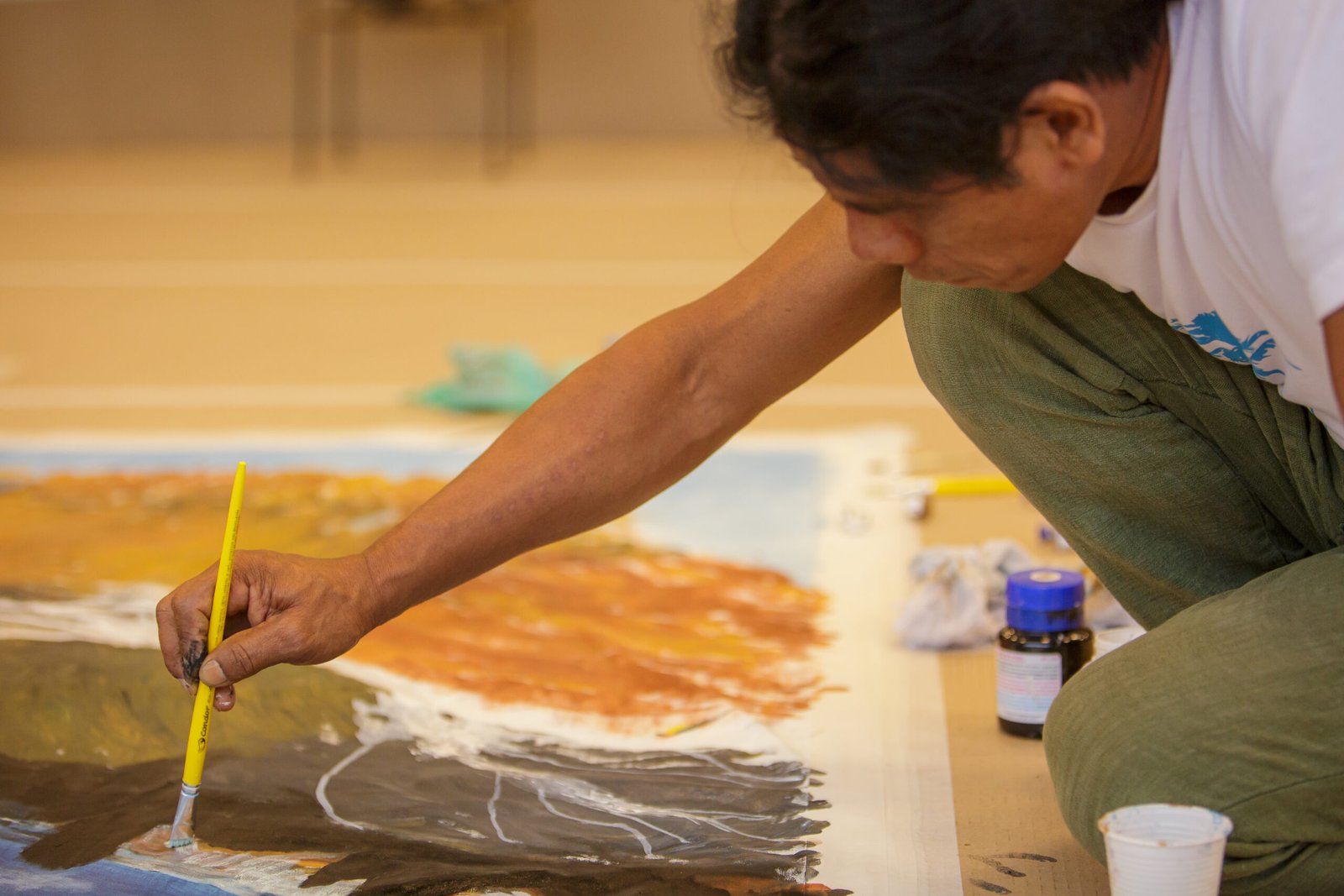
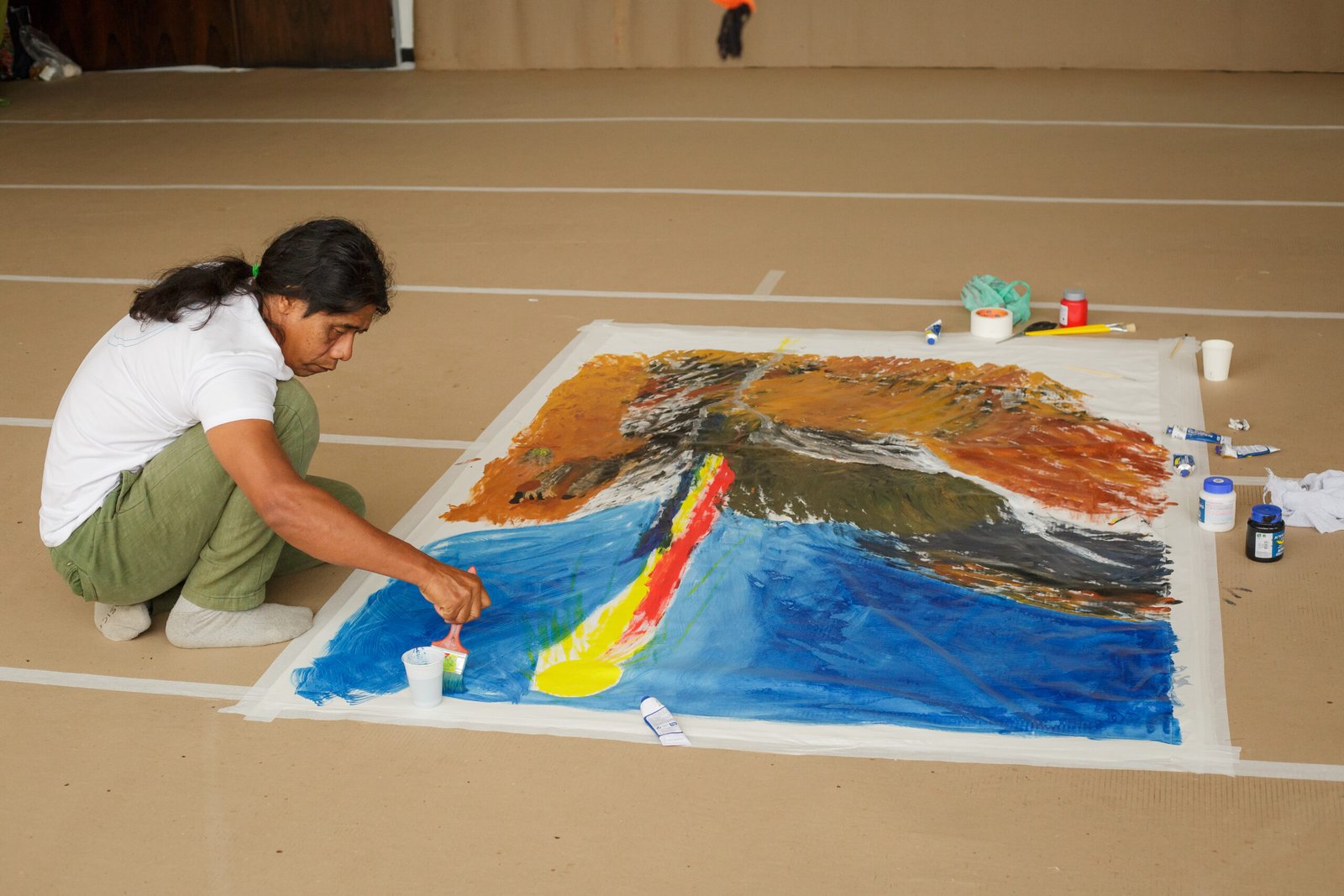
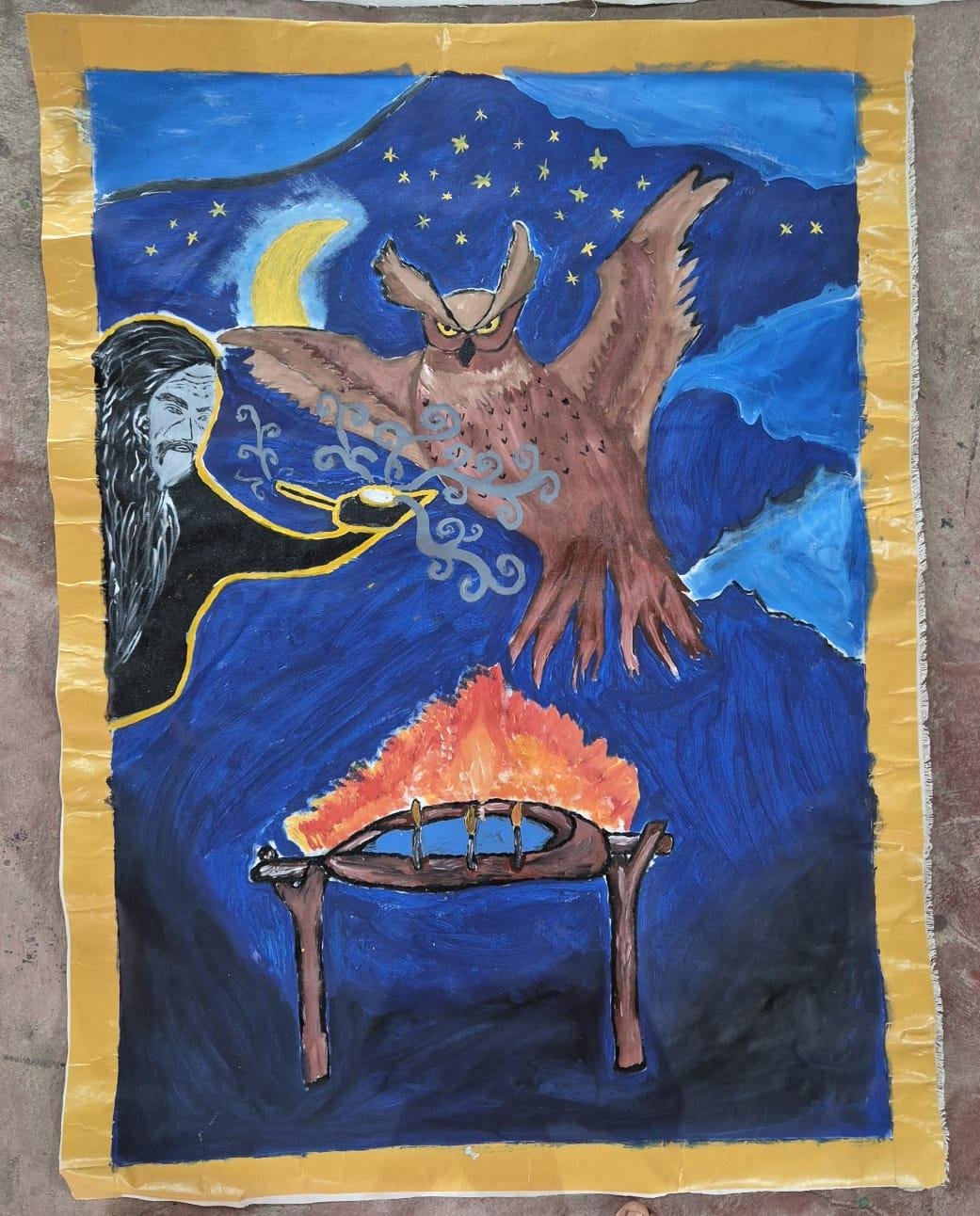
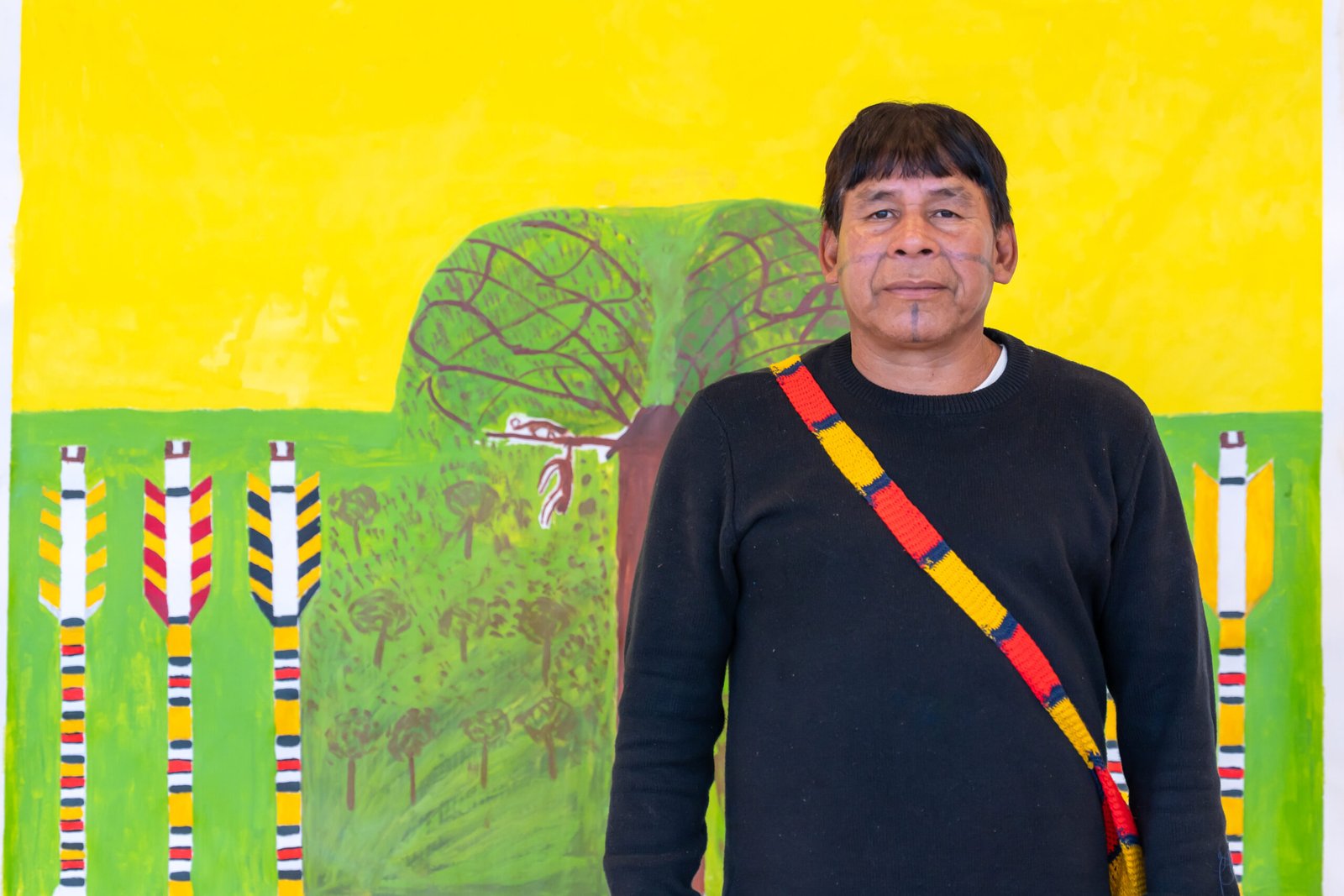

The Grandparents are the guardians of the good and beautiful messages carried in words, told through ancient narratives, or transformed into forms of art that animate our path. To evoke the Grandparents, to listen to them, and to witness their activations is to access other codes, to feel the ancestry that lives within their ancient messages. When an elder takes up his maracá and chants, through song, prayers of healing and protection, or when elder women welcome newborns into the world with their songs, they are building bridges between worlds: between the human world and the world of spirits.
For the exhibition Long Live the Living School, we invited some of these elders to bring the force of ancestral memory: Ehuana Yanomami, Tõrãmü Kẽhíri (Luis Lana), Moisés Piyãko, and Ailton Krenak. They are bearers of a sensitive wisdom belonging to those who seek to feel their own shadow.
Ehuana Yanomami
Ehuana Yaira Yanomami is a Yanomami leader, artist, researcher, and mother of four children. She was born, raised, had her children, and continues to live in the Amazon rainforest, in the Demini region (Amazonas). Around the age of ten, she began studying at the Indigenous school in her community, where she learned to write in her native language, Yanomae. Ehuana became the first teacher in her community in 2010, when she began participating in various research projects and in the production of books in Yanomae, becoming the author of Yipimuwi thëã oni: palavras escritas sobre menstruação [written words about menstruation] (Saberes Indígenas, 2017). Through these projects, she began illustrating books, revealing her talent as an artist. Since 2017, she has been creating drawings and paintings that depict her daily life as a woman of the forest. She also draws inspiration from dreams, given her strong capacity for dreaming, as the daughter of a shaman.
Ehuana stands out as one of the few female leaders among the Yanomami and has gained growing recognition for coordinating the annual Yanomami Women’s Meeting, held in the Yanomami Indigenous Territory. In addition, she participates in events aimed at non-Indigenous audiences, where she speaks about the strength of Yanomami women, the struggle against illegal mining and for the health of her people, and the defense of the forest where she was born, raised, and raises her children.
“If you see the way we Yanomami think, if you truly see it, you will help us. I think about this when I make my art.” – Ehuana Yanomami
Tõrãmü Këhíri (Luis Gomes Lana)
Tõrãmü Këhíri, known as Luis Gomes Lana, is an Indigenous writer recognized for recording the mythology of the Desana people in writing. He was born in 1947 in the community of São João Batista, on the banks of the Tiquié River, in the Alto Rio Negro Indigenous Territory, in the interior of Amazonas. Throughout his life, he became an important Indigenous leader in the region.
In 1980, Luis Lana published Antes o mundo não existia [Before, there was no world], which he wrote along with his father, Firmiano Arantes Lana (Umúsin Panlõn Kumu). Anthropologist Berta Ribeiro was responsible for typing and editing the book, which had been handwritten by Luis in a notebook. Years later, the book was republished in a new edition by Dantes Editora, as part of the Selvagem book series, and included a revision of terms and new illustrations made by the author.
In 1990, he founded the Union of Indigenous Nations of the Tiquié River (Unirt), which, in addition to the Desana, also included the Tukano, Bará, and Barasana peoples.
If there is a thread of memory, Tõrãmü holds it in his hands and can unravel it toward another world, before the world existed.
Tõrãmü Këhírí showed us that the questions “Who am I?” and “Where do I come from?” are only unknown to white people, for he knew his own origin very well. He came from the stars; he was a Këhíríporã, a child of the dream-drawing, of the Desana people or Ümükomahsã, people of the universe, descendants of Yebá Buró, the grandmother of the world.
Moisés Piyãko
Moisés Piyãko is a respected spiritual leader of the Ashaninka people who lives in the Apiwtxa village, in the Kampa Indigenous Territory of the Amônia River, in Acre, Brazil. He is a guardian of ancestral knowledge, culture, and the forest, transmitting knowledge about his people’s history, spirituality, and relationship with nature.
“The Living School… today, many people are becoming interested in learning and understanding what it is, in order to live it as well. Even to be able to show more respect. Often, they are not to blame, because sometimes we do not understand, we do not know how to show respect, we do not know how to carry this forward. Now, the moment is coming when people are being given an opportunity to understand what this is. I see that our Living School did not begin here […] it is very old.” – Moisés Piyãko
Ailton Krenak
Ailton Krenak is a thinker, environmentalist and one of the main voices of indigenous knowledge. Ailton has created, along with Dantes Editora, Selvagem, cycle of studies about life. He lives in the Krenak village, by the margins of rio Doce, in Minas Gerais. He is the author of the books Ideas to postpone the end of the world (2019), Tomorrow is not for sale (2020), Life is not useful (2020) and Ancestral future (2022), all published by Companhia das Letras, as well as Um rio um pássaro [A River a bird] (2023), published by Dantes Editora. In 2022, he was elected a member of the Brazilian Academy of Letters.
“Nobody here is talking about school education. For those who see it from afar, they might understand that we are developing a pedagogical project, an education plan for our communities or for non-Indigenous people. But it’s nothing like that. This is an experience of supporting masters of ancestral expertise, all those who live the exercise of practising. Our support is to enable them to continue transmitting their expertise.” – Ailton Krenak, in the Selvagem notebook The Living Schools’ Expanded Heart